
Tuna Fish Market Trends & Summary
Rising Global Demand, Expanding Canned Consumption, and Strong Sustainability Efforts Define the Future of the Tuna Industry (2025–2033)

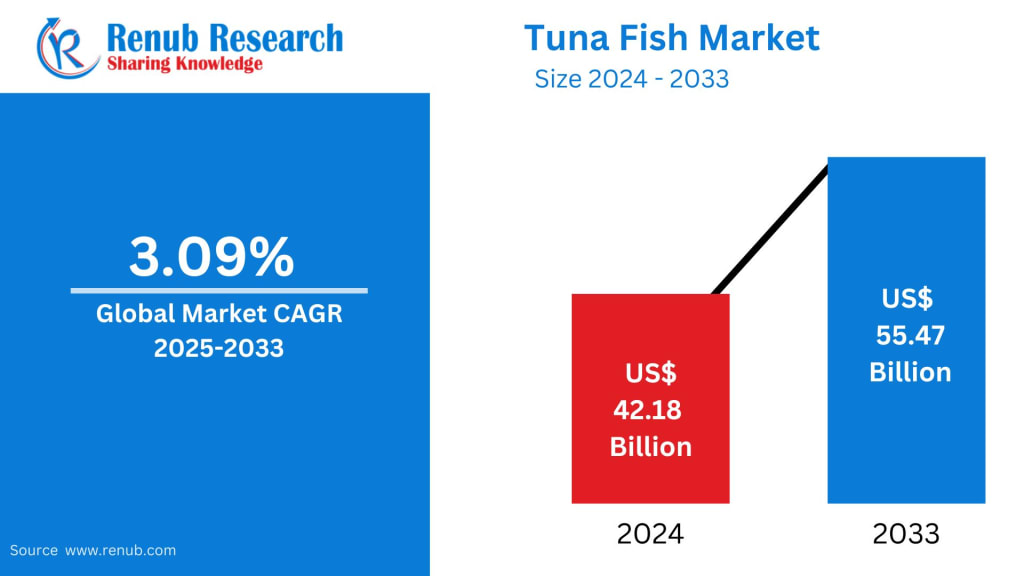
The global tuna fish market continues to anchor itself as one of the most dynamic segments of the seafood sector. According to Renub Research, the market for tuna fish was valued at US$ 42.18 billion in 2024 and is projected to reach US$ 55.47 billion by 2033, expanding at a CAGR of 3.09% from 2025 to 2033. Strong consumer interest in protein-rich diets, rising seafood consumption, and the expanding food processing industry are shaping the growth landscape for tuna across developed and emerging economies.
As a major component of global cuisines, tuna has evolved from a traditional seafood staple to a high-demand, health-oriented product across retail, food service, and industrial applications. From canned tuna’s convenience boom to the rising demand for fresh tuna in fine dining, the sector is positioned for sustained expansion during the forecast period.
What Makes Tuna a Global Seafood Powerhouse?
Tuna belongs to the mackerel family and is widely found in warm-water ocean ecosystems. Its rich flavor, firm texture, and nutritional composition—especially high protein and omega-3 fatty acids—make it a preferred seafood worldwide.
The market spans multiple species, including skipjack, yellowfin, albacore, bluefin, and bigeye, each serving unique culinary purposes. Tuna is consumed raw (in sushi and sashimi), freshly cooked as steaks, or processed into canned and frozen formats—contributing to its unmatched versatility in both home cooking and commercial food service.
Additionally, tuna’s growing role in the wellness industry (via omega-3 supplements) further enhances its importance beyond the culinary domain.
Growth Drivers of the Global Tuna Fish Market
1. Surging Demand for Protein-Rich, Health-Focused Foods
Consumers worldwide are increasingly turning to protein-heavy diets. Tuna, with its low fat and high omega-3 profile, fits perfectly within this trend. Its benefits for heart health, brain function, and overall wellness further boost popularity among fitness-conscious consumers.
An interesting market development came in October 2023, when Vgarden Ltd. introduced fish-free canned tuna made from pea protein, reflecting an expanding crossover between seafood markets and plant-based alternatives. This signals a shift in how consumers and companies view tuna as part of broader protein innovation.
2. Expansion of the Global Food Processing Industry
The rapid growth of the food processing sector—especially ready-to-eat and shelf-stable food categories—has dramatically boosted the demand for processed tuna, especially canned and frozen formats.
Urbanization, fast-paced lifestyles, and the global appetite for convenient meals make tuna an ideal product. In June 2024, Frime S.A.U launched a groundbreaking “Ready to Eat” tuna range that includes the first marinated tuna safe to eat raw, setting new quality and safety standards for commercial kitchens.
3. Growing Worldwide Seafood Consumption
Seafood consumption has risen sharply, driven by health awareness and culinary diversification. The continued popularity of sushi, sashimi, and seafood bowls in Western countries has widened the market for fresh and frozen tuna.
A January 2025 study from the University of Aberdeen revealed that oily fish in the UK can supply up to 73% of daily Omega-3 and 46% of Vitamin B12—yet UK consumption remains low, presenting major growth potential for educating consumers and expanding tuna sales.
Key Challenges Affecting the Tuna Industry
1. Overfishing & Sustainability Pressure
Overfishing threatens several tuna species, particularly bluefin and yellowfin. Governments and conservation bodies are tightening regulations, leading to higher compliance costs for producers. Certifications such as the Marine Stewardship Council (MSC) label have become essential for consumer trust but represent operational challenges for small and medium companies.
2. Fluctuating Raw Material & Operational Costs
Fuel prices, climatic shifts, and regulatory factors significantly influence tuna fishing and processing costs. Supply chain disruptions can reduce profit margins and push up retail prices, particularly in price-sensitive markets across Asia and Africa.
Segment Analysis: Tuna Fish Market Breakdown
Canned Tuna Fish Market
Canned tuna represents a dominant share of global consumption due to its affordability, long shelf life, and versatile use in salads, pasta, and sandwiches. It's a staple in both retail and food service.
Technological innovations—such as flavor-infused varieties and sustainable packaging—continue to strengthen this segment’s growth. Eco-certified canned tuna has become a competitive necessity, especially in North America and Europe.
Fresh Tuna Fish Market
Fresh tuna appeals to premium consumers and is widely used in high-end restaurants, especially for sushi, sashimi, and gourmet meals. Growth in this segment is strongly supported by rising disposable incomes and increasing global interest in Japanese cuisine.
Cold chain development and improved logistics networks are helping expand access to fresh tuna in several developing markets as well.
Skipjack Tuna Market
Skipjack is the most commercially important tuna species, representing the backbone of the global canned tuna industry. It is cost-effective, sustainable relative to other species, and widely consumed.
Despite regulatory challenges due to overfishing concerns, skipjack remains essential for major tuna-processing economies.
Yellowfin Tuna Market
Yellowfin is the preferred choice for sushi-grade dishes and high-quality steaks. Its premium flavor and texture have made it a star ingredient in gourmet meals.
Sustainability issues persist, but advancements in aquaculture and ethical fishing practices are expected to strengthen supply consistency over the coming decade.
Market Outlook by End-Use
1. Retail Sector
This segment includes supermarkets, hypermarkets, convenience stores, and online channels. Health trends, diverse packaging formats, and consumer demand for both fresh and canned tuna continue to drive growth.
Sustainability claims and traceable supply chains are crucial competitive factors.
2. Food Service & Hospitality
Restaurants, hotels, cafes, and catering services represent a high-demand channel for both fresh and frozen tuna. With rising seafood-based cuisine globally, the food service market continues to expand. Premium-grade tuna popularity in sushi chains and quick-service restaurants gives this segment strong growth potential.
3. Industrial Use
Tuna is used widely in processed foods, meal kits, and nutraceuticals. Omega-3 supplements extracted from tuna oil are gaining traction globally.
Geographical Analysis
United States Tuna Fish Market
The U.S. remains one of the top consumers of canned tuna, driven by hectic lifestyles and high preference for convenient, protein-rich foods. Fresh tuna demand continues to grow in sushi restaurants and gourmet kitchens.
In December 2023, Tonnino rolled out premium albacore tuna in new flavor formats—Ginger Soy, Herbs de Provence, Truffle—illustrating strong premiumization trends in the U.S. market.
Germany Tuna Fish Market
Germany’s tuna market is powered by high consumption of canned tuna and rising demand for sustainability-certified products. The popularity of global cuisines, including sushi, continues to drive growth.
In June 2023, BettaFish launched a new plant-based tuna product in Germany, highlighting the market's openness to alternative seafood innovation.
India Tuna Fish Market
India is witnessing rapid growth in tuna consumption due to urbanization, rising middle-class income, and expanding awareness of seafood health benefits.
In November 2024, under PMMSY, the Indian government announced the development of a Tuna Cluster in the Andaman & Nicobar Islands—a major boost for the region’s tuna harvesting and exports, with potential production of 60,000 metric tons.
UAE Tuna Fish Market
The UAE market is flourishing due to its strong food service sector, tourism industry, and demand for fresh and canned premium tuna. The country’s strategic location supports significant trade movement.
In March 2022, SolTuna from the Solomon Islands entered the UAE market, expanding global sourcing options for local distributors.
Key Questions Answered
How big is the Tuna Fish industry?
US$ 42.18 billion in 2024.
What is the growth rate?
CAGR of 3.09% (2025–2033).
What drives the industry?
Protein-rich diets, seafood demand, food processing growth.
Which region dominates?
High demand spans North America, Europe, and Asia-Pacific, with growing markets in the Middle East.
Who are the major players?
Century Pacific Foods Inc.
ITOCHU Corporation
Thai Union Group Inc.
IBL Ltd.
Bolton Group
Grupo Albacore S.A.
Dongwon Enterprises Co. Ltd
Final Thoughts
The global tuna fish market is entering a new era—one driven by health-conscious consumers, sustainable fishing practices, and innovative product development. While sustainability and supply chain challenges remain, companies that prioritize certified sourcing, premium offerings, and value-added formats are expected to lead the next phase of market growth.
With robust expansion across retail, food service, and industrial applications, the tuna industry is set to sustain steady growth through 2033, supported by global food trends and rising seafood demand.
About the Creator
Marthan Sir
Educator with 30+ years of teaching experience | Passionate about sharing knowledge, life lessons & insights | Writing to inspire, inform, and empower readers.
Keep reading
More stories from Marthan Sir and writers in Feast and other communities.
Frozen Vegetables Market Trends & Summary
The global frozen vegetables market is undergoing a massive transformation as consumers worldwide shift toward convenience-driven and health-oriented eating habits. Valued at US$ 35.94 billion in 2024, the market is poised for steady expansion, expected to reach US$ 55.94 billion by 2033, according to Renub Research. This growth translates into a CAGR of 5.04% from 2025 to 2033, reflecting rising acceptance of frozen vegetables for their nutrition, durability, and ease of preparation.
By Marthan Sir2 months ago in Feast
My Tous les Jours Trip
As someone who lives in a rural area, I don't get the chance to visit fancy restaurants or bakeries that often. So, when a friend told me about a French-Asian bakery that's less than an hour away, I knew I had to check it out and grab some pictures for social media. Tous les Jours ended up providing an immersive experience that went above and beyond my expectations--although I did leave with a few reservations.
By Kaitlin Shanks20 days ago in Feast
Bacon Ranch Scalloped Potatoes
There’s something undeniably comforting about a bubbling dish of scalloped potatoes—layers of tender spuds, creamy sauce, and melted cheese all baked to golden perfection. Add the smoky crunch of bacon and the tangy zip of ranch seasoning, and you’ve got a side dish that steals the show. Whether you’re feeding a crowd at a potluck or cozying up for a weeknight dinner, this Bacon Ranch Scalloped Potatoes recipe is a guaranteed crowd-pleaser.
By Kristen Barenthalerabout 15 hours ago in Feast




Comments
There are no comments for this story
Be the first to respond and start the conversation.