
The Ultimate Guide to Stir-Fried Amaranth Greens: Skip the Blanching, Avoid Raw Frying! Master the Technique for Tender, Delicious, Nutrient-Packed Results
The Ultimate Guide to Stir-Fried Amaranth Greens: Skip the Blanching, Avoid Raw Frying! Master the Technique for Tender, Delicious, Nutrient-Packed Results
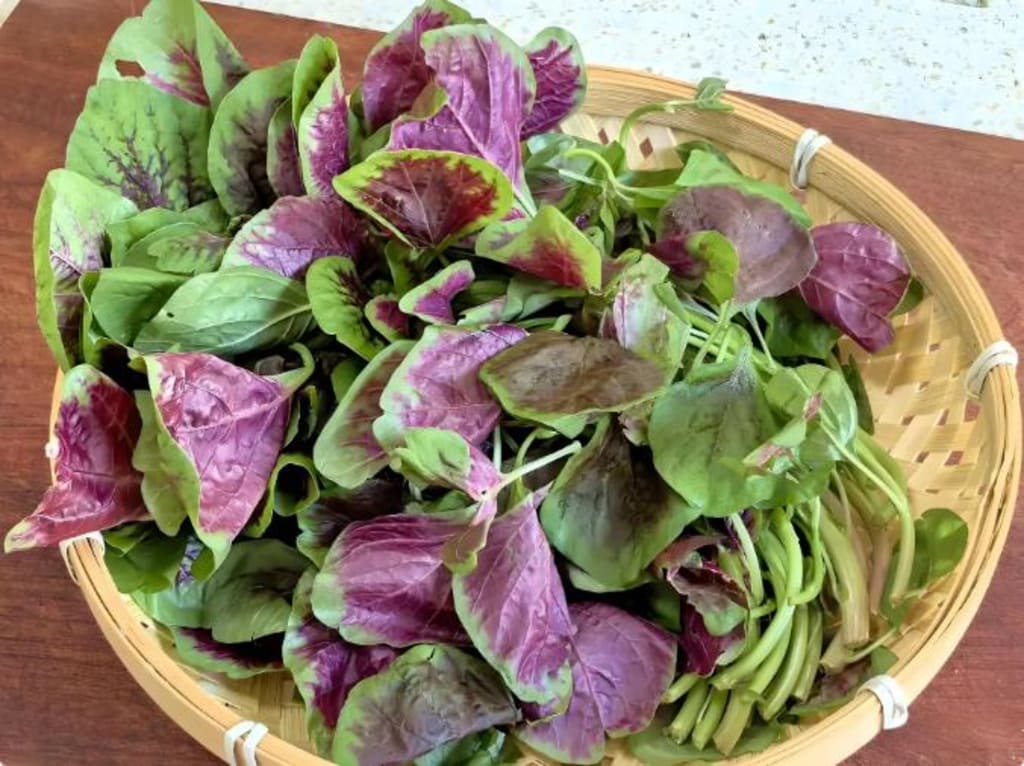
Red amaranth greens (Amaranthus tricolor) are a true seasonal treasure. Bursting with calcium, iron, Vitamin K, and numerous other vital nutrients, they stand as a nutritional powerhouse among leafy greens – a veritable "honor student" of the vegetable world. Yet, how often do enthusiastic home cooks bring these vibrant leaves home, only to serve up a disappointing dish? The result is frequently either a mushy, shapeless mess devoid of texture, or an unpalatably astringent mouthful that’s hard to swallow. The culprit behind these culinary failures almost always lies in one critical misstep: are you still blanching your amaranth? Or perhaps, washing it and tossing it straight into the wok? In the eyes of seasoned culinary experts, both approaches are critical mistakes leading you down the wrong path!
The Pitfall of Blanching: A Silent Farewell to Nutrients
Amaranth greens are inherently tender and delicate. Submerging them in boiling water initiates a rapid exodus of precious nutrients. Heat-sensitive vitamins like Vitamin C and B-complex vitamins readily leach into the water and vanish down the drain. Delicate minerals follow suit. Moreover, the greens' signature vibrant hues – the deep purplish-red pigments (anthocyanins) and the bright chlorophyll green – quickly fade and dull in the boiling water. This visual degradation significantly diminishes the dish's initial appeal before it even reaches the palate. Blanch them even a moment too long, and the leaves collapse into a soft, formless mass, leaving behind only a mouthful of fibrous mush devoid of any satisfying bite.
The Agony of Direct Stir-Frying: Oxalic Acid’s Stubborn Grip
"So, surely just tossing them straight into the hot wok is the solution?" Unfortunately, no! Amaranth naturally contains small amounts of oxalic acid, the compound responsible for that undesirable, puckering astringency. Plunging raw, unprocessed greens into hot oil for a quick stir-fry doesn't allow sufficient time or the right conditions for this oxalic acid to break down effectively. Consequently, that subtle yet persistent bitterness clings stubbornly to every leaf. No amount of added salt or sugar can entirely mask it. Compounding the problem, direct high-heat frying causes the delicate leaves to lose moisture rapidly. The wok quickly floods with purplish-red liquid, while the greens themselves shrivel and become limp. You end up with a soggy, watery dish swimming in juices – a far cry from the crisp, vibrant, dry-fried texture one desires in a proper stir-fry.
The Chef’s Secret: Saltwater Soaking – The Key to Tender, Non-Astringent Greens
1. Prep the Greens: Begin by pinching off any tough, woody stems and older, fibrous parts. Focus on using only the tender stalks and young, vibrant leaves. Gently rinse the greens under cool running water two or three times to remove any surface dirt or grit. There’s no need to aggressively spin or shake them dry after washing; leaving them slightly damp is actually beneficial for the next step.
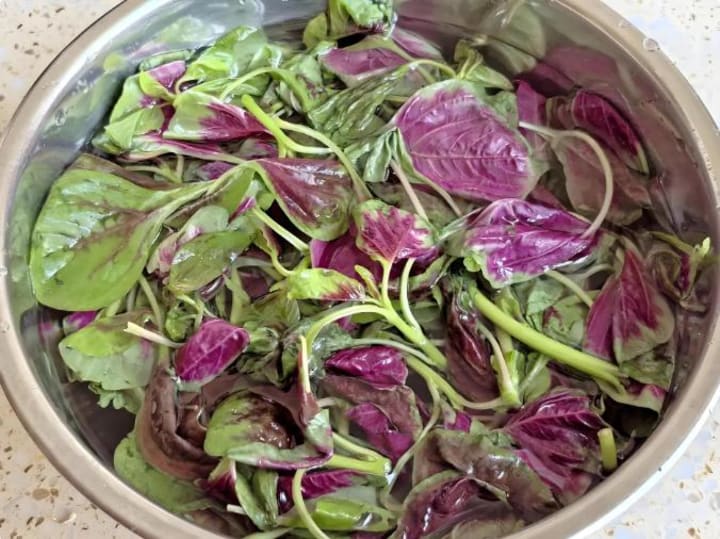
2. The Saltwater Bath: Fill a large bowl with cool, clean water. Dissolve 1-2 teaspoons of salt into the water. Submerge the entire bunch of rinsed amaranth greens into this saltwater solution. Gently swish and turn them to ensure every leaf surface makes contact with the brine. Allow them to soak for 5-8 minutes – no longer is necessary. This simple saltwater soak works its magic in two crucial ways:
• Reduces Astringency: The salt solution effectively draws out and dissolves a significant portion of the soluble oxalic acid directly into the water. This dramatically reduces the harsh, metallic bitterness associated with raw amaranth.
• Improves Texture & Color: The osmotic pressure created by the saltwater helps tighten the cell walls within the leaves. This fortification means the greens are far less likely to collapse, release excessive water, or turn mushy during the subsequent stir-frying. It helps them maintain a pleasingly firm texture, a more upright posture in the dish, and crucially, helps preserve their vivid green and purple colors during cooking.
3. Drain, Don't Rinse or Wring: After soaking, lift the greens out of the saltwater bath. Crucially, do not rinse them again. Rinsing would wash away the beneficial salt absorbed during soaking and potentially reintroduce water that leads to sogginess. Simply give the bunch a gentle shake or allow it to drain briefly in a colander to remove excess surface water. Avoid squeezing or wringing the leaves – handle them gently to preserve their natural, plump shape.
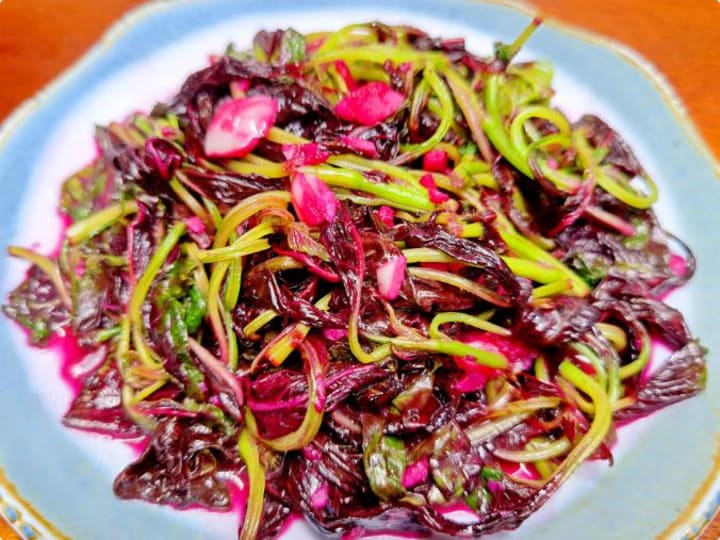
Recipe: Perfect Stir-Fried Amaranth Greens with Eggs
1. Prepare the Eggs: Crack 2-3 large eggs into a bowl. Add a small pinch of salt and about 1 teaspoon of water. Beat the mixture vigorously until completely smooth and slightly frothy. The water helps create fluffier scrambled eggs.

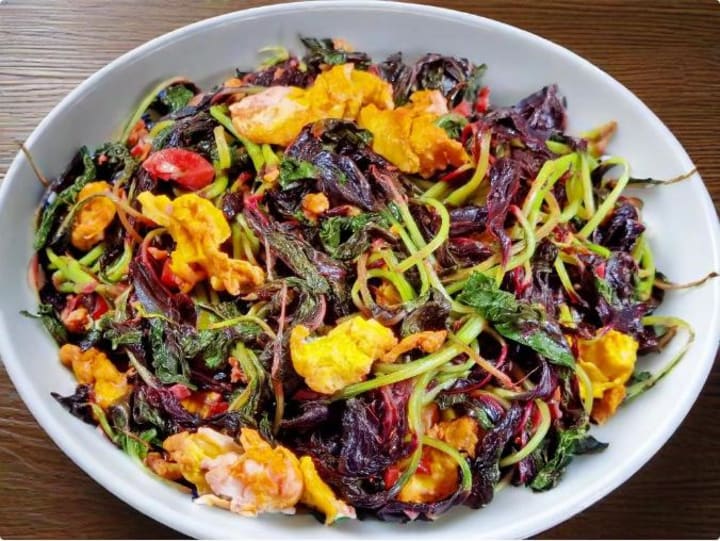
2. Scramble the Eggs: Heat your wok or large skillet over medium heat. Add about 1 tablespoon of cooking oil (like peanut, vegetable, or canola), swirling to coat the surface. Once the oil is shimmering (not smoking), pour in the beaten eggs. As the edges begin to set, gently push and fold the eggs with a spatula or chopsticks, breaking them up into large, soft, golden curds. Once just set but still slightly moist, transfer the scrambled eggs to a clean plate immediately to prevent overcooking.
3. Stir-Fry the Greens: Return the wok to high heat. Add another tablespoon of oil. Once the oil is very hot (a wisp of smoke is a good indicator), add minced garlic (1-2 cloves) and stir-fry for just 10-15 seconds until fragrant and golden – be careful not to burn it. Immediately add the prepared amaranth greens (drained after the saltwater soak). Stir-fry constantly and vigorously using a scooping motion for 1-2 minutes, just until the leaves wilt and turn a deep, vibrant green and the thicker stems become tender-crisp. They should retain their structure and not release excessive liquid.
4. Combine and Season: Return the scrambled eggs to the wok, nestling them amongst the greens. Toss everything together gently but quickly, just to combine and heat the eggs through – about 30 seconds. Season lightly with salt (about 1/4 teaspoon, taste first as the greens absorbed some salt) or a small splash of light soy sauce (approx. 1/2 teaspoon) for umami depth. Avoid overcooking at this stage.
5. Serve Immediately: Transfer the stir-fry to a serving dish immediately. The visual appeal is stunning: golden-yellow egg curds beautifully intertwined with deep purple-red and bright green leaves. The aroma is a perfect harmony of savory egg and the fresh, earthy sweetness of the amaranth. This dish offers a truly satisfying experience for both the eyes and the palate.
In-season amaranth greens are nature's freshest, most vibrant ode to June, gracing our markets with unparalleled vitality. Don't let the well-intentioned but misguided practice of blanching, or the careless shortcut of direct stir-frying, squander this gift of peak-season freshness and dense nutrition. Commit the "eight-character mantra" to memory: Saltwater Soak, Hot Oil Quick-Fry. This is the key to unlocking amaranth's true potential. Let the dish that graces your table showcase leaves that stand proud and retain their crisp-tender integrity, colors that glow with unmatched intensity, and a flavor profile that sings purely of tender sweetness reminiscent of early summer sunshine – utterly free from any hint of unpleasant astringency. The taste of June, captured on your tongue, should be nothing less than exquisitely fresh, vibrantly tender, and supremely satisfying. Mastering this technique ensures you honor the vegetable's delicate nature and maximize its considerable health benefits, making every bite a celebration of the season. Experiment with adding a pinch of sugar to balance any residual sharpness, or a dash of toasted sesame oil for fragrance just before serving. Remember, high heat and speed are essential for locking in color, nutrients, and texture – have all your ingredients prepped and ready before you fire up the wok. Enjoy the vibrant, nutritious bounty that is perfectly cooked stir-fried amaranth!
About the Creator
My Tous les Jours Trip
As someone who lives in a rural area, I don't get the chance to visit fancy restaurants or bakeries that often. So, when a friend told me about a French-Asian bakery that's less than an hour away, I knew I had to check it out and grab some pictures for social media. Tous les Jours ended up providing an immersive experience that went above and beyond my expectations--although I did leave with a few reservations.
By Kaitlin Shanks23 days ago in Feast
Fish Farming Market Size and Forecast 2025–2033
Introduction: A Market Anchored in the Future of Food The global food system is undergoing a profound transformation, and fish farming—also known as aquaculture—is emerging as one of its most critical pillars. With wild fish stocks under pressure from overfishing, climate change, and habitat degradation, the world is increasingly turning to controlled, farm-based fish production to meet its growing appetite for seafood.
By Marthan Sir6 days ago in Feast




Comments
There are no comments for this story
Be the first to respond and start the conversation.