

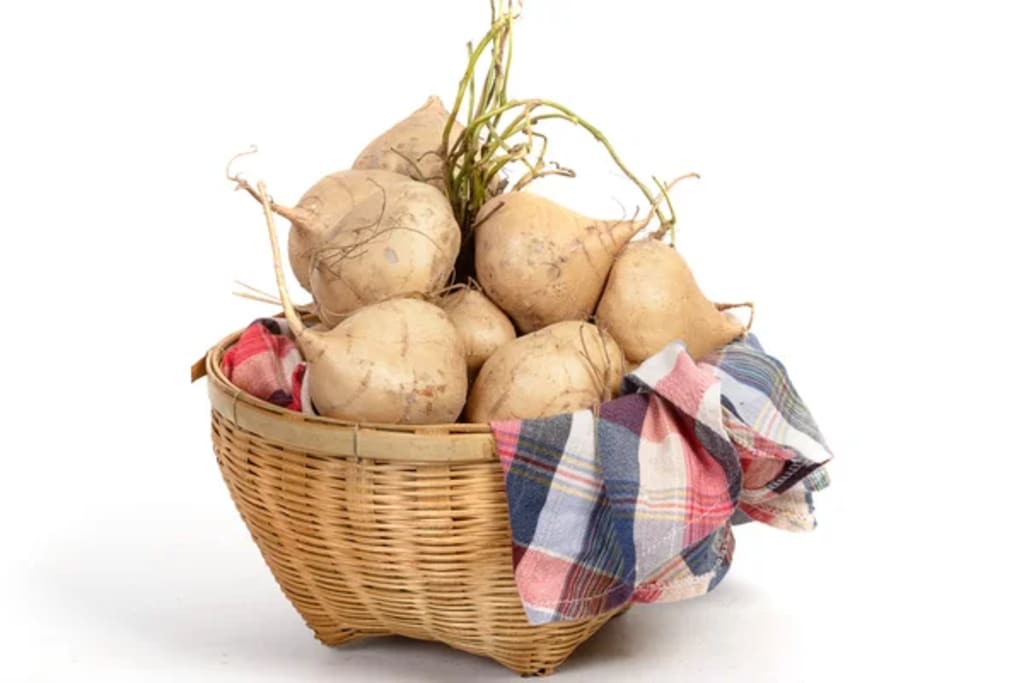
I'm always fascinated how jicama (pronounced hee-kah-ma) and rutabaga are similar in appearance, but differ in taste.
Jicama is a circle-shaped root vegetable with a golden brown exterior and starchy pale interior.
Alternatively known as a Mexican potato, the root vegetable originates from Mexico. Jicama is a vegetable staple in the Philippines and Asia.
Jicama grows in warm tropical weather and upwards of 20 feet high.
The Chinese turnip is the root of the bean-producing Pachyrhizus erosus vine.
Here are a few profound facts about jicama.
Jicama is loaded with antioxidants.
Shockingly, jicama is an excellent source of vitamins and minerals. Diets filled with antioxidant-enriched foods, such as jicama, can combat oxidative stress and develops life-changing diseases.
The low-calorie vegetable is a source of Vitamin K which can lower blood pressure by calming blood vessels. The potassium found in jicama can lower blood pressure.
Jicama protects your cardiovascular system.
A long life begins with taking care of your cardiovascular system.
According to the National Center for Complementary and Integrative Health suggests oxidative stress contributes to aging and the development of cardiovascular diseases.
A 2017 review proved vitamin C can reduce the risks of cardiovascular diseases.

Jicama is a great source of fiber.
The Mexican water chestnut is high in prebiotics and fiber.
The fiber found in jicama can reduce inflammation, blood pressure, and improve blood circulation.
A 2016 study with 1600 participants that were over 49 years of age showed consuming fiber-enriched foods, like jicama, can help the body age graciously.
Diets high in prebiotics can improve "good bacteria" while lowering the unhealthy bacteria in your gut.
The Chinese turnip is also high in soluble dietary fiber which can help reduce cholesterol levels.
Healthy bowel movements are important to your digestive health. Foods with high water content, like jicama, can help soothe your digestive tract and promotes constipation.
There are various ways to eat jicama.
Many have their opinion about the taste of flavor.
A few of my food influencer friends think the taste of jicama is between apple and water chestnuts. Others suggest the flavor is earthly and nutty.
My food influencer friends and I agree the crunchy root should not be overcooked. When selecting jicamas in the grocery store, be sure your jicama isn't browning or soggy to touch. The bigger the size of the jicama the less flavor and texture the vegetable possess prior to eating.
Jicama is a low-sugar alternative for diabetics.
Remember to rinse your jicama before preparing and eating. Jicamas sold in grocery stores and supermarkets are coated with a protective wax. Be sure to remove the skin of the jicama prior to eating and preparing.
It's safe to eat the root of jicama. The remaining plant and beans are toxic.
Similar to rutabaga, jicamas are available in Latin and Hispanic markets.
I think the flavor of jicama is versatile especially when I want a substitute for hashbrowns [in the morning].
Whole and unpeeled jicamas last up to two weeks in the refrigerator. If you're like me, I like to keep my jicama on the countertop until I use it. Jicamas are good for up to one week if you store them on the countertop.
You can enjoy jicama raw or cooked.
I've found the easiest way for me to prepare jicama is to peel, julienne cut, and fry in extra virgin olive oil and Stella Bistro Foods Rustic Italian Sultry Spice.
You can add raw jicama to your salads for a nice crunch and texture.
How do you prepare jicama?
Have you tried jicama? What's your favorite recipe?
Let's begin the conversation below!
About the Creator
Ashley Terrell
Bestselling author. Entrepreneur. Seasonings and spices saved my life. Where sheep and angels share the same color. Newport News, VA. Conqueror and lover of all things Fine Arts.
Keep reading
More stories from Ashley Terrell and writers in Feast and other communities.
Catch The Facts About Cactus
I remember the first time I came across cactus on a menu. I was working at a Guatemalan restaurant when I noticed a vegetable similar to a bell pepper being sauteed on a sizzling flat top with minced garlic, lemon juice, and a pinch of seasoning.
By Ashley Terrell4 years ago in Feast
Freeze-Dried Powder Microgreens: The Complete Guide to Nutrient-Dense Greens
Getting enough fresh vegetables into your daily routine can be harder than it sounds. Busy schedules, travel, and reliance on convenience foods often mean leafy greens get overlooked. Freeze-dried microgreens powder offers a practical way to bridge that gap. Produced from young vegetable greens harvested at peak nutritional value, these powders provide a concentrated source of vitamins, minerals and antioxidants in a format that is simple to store and use.
By Emily Jones4 days ago in Feast


Comments
There are no comments for this story
Be the first to respond and start the conversation.