
The Secret of Guangxi’s Border Delicacy: Betel Leaf-Wrapped Beef — A Unique Aroma Unleashed by Ancient Leaf Prep
The Secret of Guangxi’s Border Delicacy
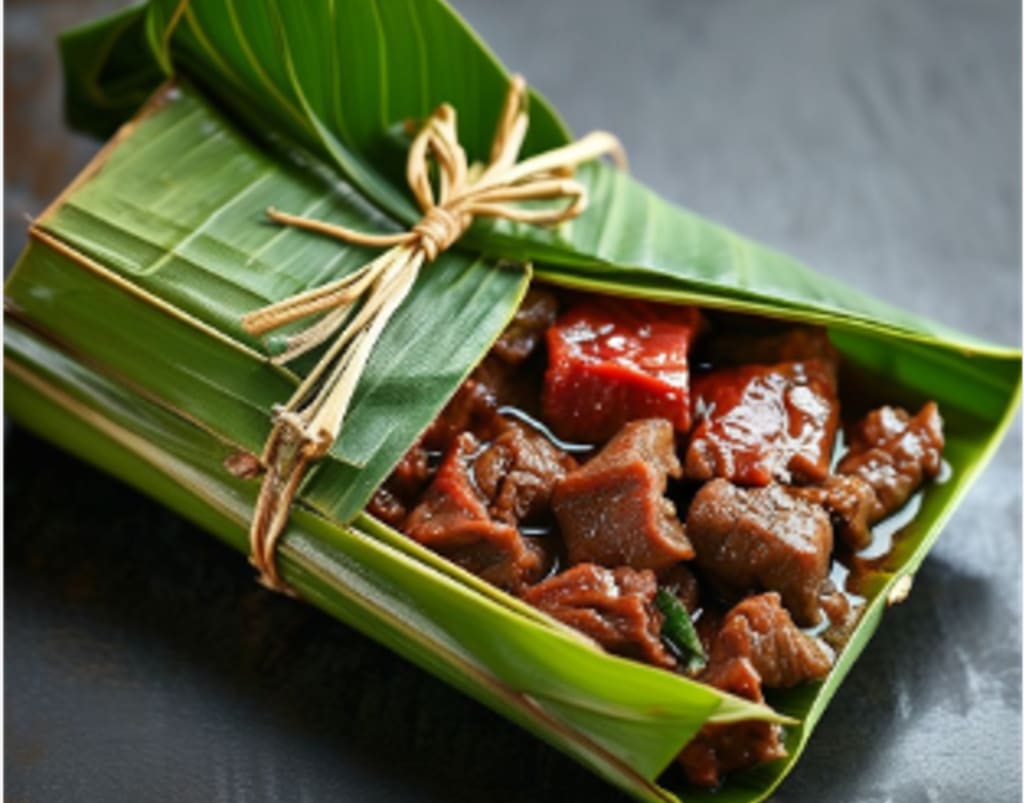
A Leaf That Carries Borderland Memories
My first encounter with jiǎ lóu bāo niú ròu (假蒌包牛肉), or betel leaf-wrapped beef, happened on a rain-washed evening in Chongzuo, Guangxi. A local friend led me to a humble eatery where clusters of dried leaves swayed like wind chimes at the entrance. "This is a borderland specialty—you’ve never tasted anything like it," he whispered. Whether it was the cool evening breeze or the earthy aroma of leaves mingling with beef, that modest shop instantly became my definition of "culinary soul."
The betel leaf (Piper sarmentosum), locally called jiǎ lóu shàn (假蒌扇), belongs to the pepper family. Thicker and sturdier than lotus leaves, it grows in the misty highlands along Guangxi’s Vietnam border. For generations, ethnic minorities like the Zhuang and Yao have used these leaves as edible wrappers, harnessing their unique fragrance to elevate humble ingredients into transcendent dishes.
The Symphony of Leaf and Meat
The magic of this dish lies in a centuries-old leaf preparation ritual. Freshly picked betel leaves are never used raw—they undergo "leaf awakening" (xǐng yè), a process guarded like a family heirloom.
Step 1: The Awakening
1. Soak: Submerge leaves in lukewarm water (40°C/104°F) for 5 minutes to soften fibers.
2. Dry: Pat gently with cotton cloth—avoid paper towels, which strip natural oils.
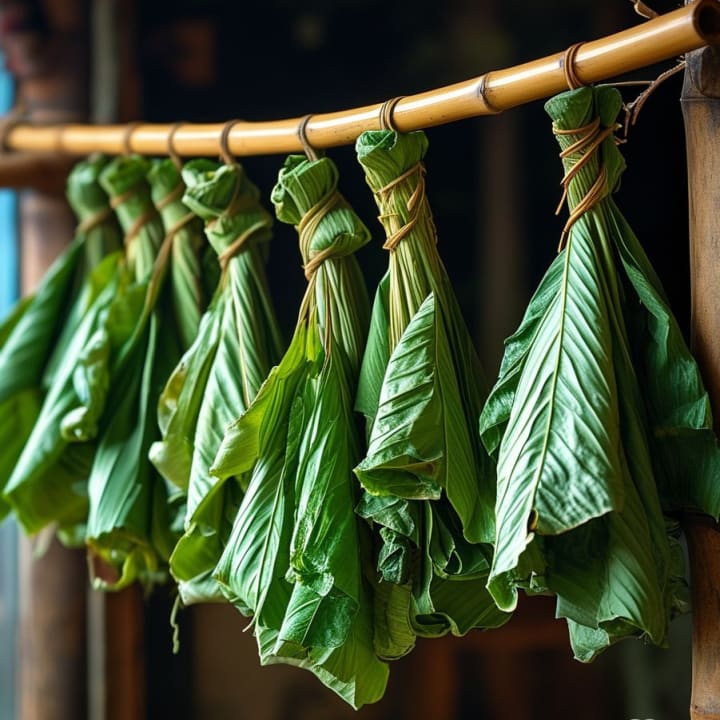
3. Cure: Hang in shaded, breezy areas for 24 hours.
Science Behind It:
This controlled dehydration concentrates volatile oils like eugenol and caryophyllene, which give the leaves their citrusy-spicy aroma. Too fresh, and the leaves taste grassy; over-dried, they lose their soul.
Auntie Huang, who’s crafted this dish for 30 years, demonstrated: "The perfect leaf should feel like supple leather—pliable but not brittle."
Step 2: The Beef
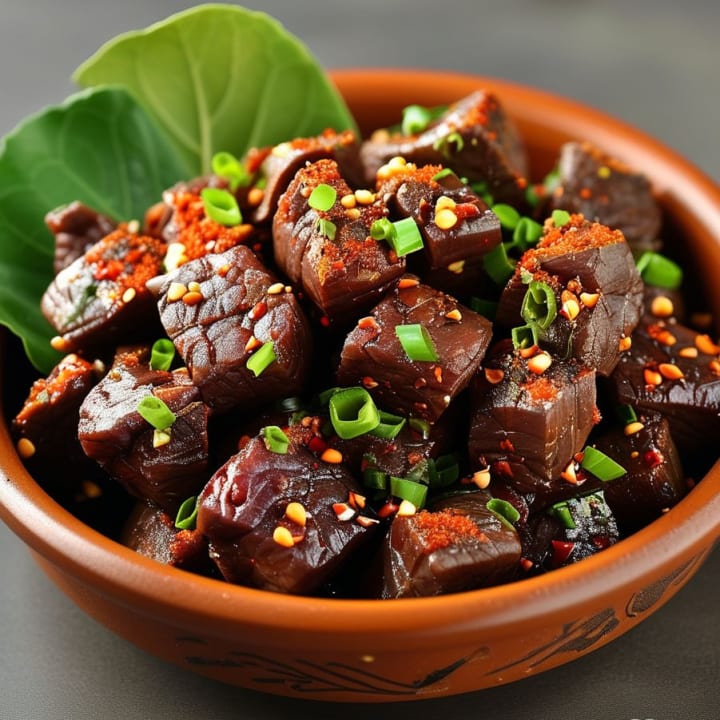
• Cut: Free-range mountain beef (shank preferred), diced into 2cm cubes.
• Marinate: Ginger, garlic, star anise, and Guangxi chili flakes—a mix of dried red chilies and sand ginger. For tenderness, some add a splash of baijiu (rice liquor) to denature proteins gently.
Pro Tip:
Borderland cattle graze on wild herbs, giving their meat a distinct mineral tang. Substitute with supermarket beef, and you lose 60% of the magic.
Wrapping Wisdom: Where Technique Meets Tradition
Wrapping is an art I failed miserably at first. My clumsy attempts either burst during steaming or leaked juices. Watching experts, though, was like observing a dance:
1. Leaf Prep: Place leaf vein-side up to prevent tearing.
2. Filling: 3-4 beef cubes per leaf—overstuffing drowns the aroma.
3. Fold: Cup hands like praying, roll vertically, then secure with rice straw.
"Tighter than a hug, looser than a handshake," chuckled Master Wei, whose family has sold these parcels at the Ningming border market since the 1950s.
The Alchemy of Steam
Traditional cooking uses earthen steamers over wood fire. As heat rises:
• 0-15 minutes: Starches gelatinize, beef fibers relax.
• 15-30 minutes: Leaf oils (linalool, limonene) infuse the meat.
• 30-45 minutes: Collagen breaks into gelatin, creating a juicy bounce.
Opening the steamer releases a perfume that’s 50% forest, 50% hearth—an aroma UNESCO once dubbed "intangible cultural heritage in a breath."
Serving Rituals & Cultural Roots
The Dip
Locals pair the parcels with a zesty sauce:
• 2 parts lime juice
• 1 part fish sauce
• Bird’s eye chili + crushed lemongrass
The acidity cuts through richness while amplifying the leaf’s citrus notes.
Medicinal Lore
Traditional healers prescribe betel leaf wraps for:
• Summer heat: Its cooling properties (attributed to rosmarinic acid)
• Rheumatism: Leaf poultices applied to joints
Though unproven, labs confirm the leaves contain antioxidants that rival green tea.
Why This Dish Defies Replication
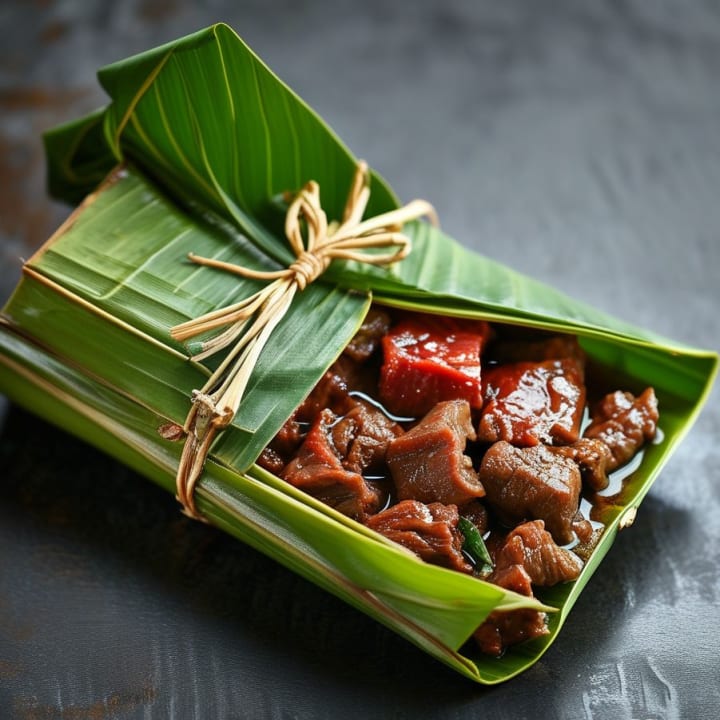
During my ill-fated home experiment, I learned:
1. Leaf Matters: Substituting banana leaves? "Like replacing champagne with soda," scoffed a Guangxi chef.
2. Water Quality: Guangxi’s karst-filtered water (high in calcium) affects starch binding.
3. Altitude: At 500m+ elevations, slower boiling alters texture.
This dish isn’t just food—it’s a living map of Guangxi’s terrain, climate, and cultural crossroads.
A Taste of Borderland Soul
Eating betel leaf beef in Guangxi feels like time travel. Each bite holds:
• The patience of leaf curers monitoring humidity like watchmakers.
• The grit of mountain cattle herders.
• The whispers of Vietnam-influenced spice routes.
An elder in Pingxiang told me: "When I was a girl, we wrapped these for soldiers patrolling the border. The leaves kept the meat warm for hours—it was food that hugged back."
Epilogue: The Language of Leaves
In our industrialized food era, this dish stands as a rebel—a reminder that some flavors can’t be rushed or mass-produced. That betel leaf in your hand? It’s been touched by monsoons, mountain winds, and generations of hands that know:
True nourishment isn’t just consumed—it’s felt.
Your Turn:
Have you encountered dishes that are impossible to replicate outside their homeland? Share your stories of culinary terroir below!
About the Creator
My Tous les Jours Trip
As someone who lives in a rural area, I don't get the chance to visit fancy restaurants or bakeries that often. So, when a friend told me about a French-Asian bakery that's less than an hour away, I knew I had to check it out and grab some pictures for social media. Tous les Jours ended up providing an immersive experience that went above and beyond my expectations--although I did leave with a few reservations.
By Kaitlin Shanks23 days ago in Feast
Fun Facts About Popcorn
There are over 50 fun facts about popcorn, the popular snack loved by children and adults. All the popcorn trivia is interesting, but my favorite fun fact is that the popcorn sold in theaters around the world today was once banned in movie theaters.
By Margaret Minnicksabout 7 hours ago in Feast
Wild Card Weekend Recap: What Happens Now?
I think I figured out why I love Wild Card Weekend so much. It's because it's the first playoff anything of the calendar year. The NFL season starts in the fall, and once upon a time, the champion was crowned either on or slightly before New Year's. The evolution of the NFL schedule has resulted in the playoffs starting just into the New Year, and currently, the final week of the season falls on the first weekend of the New Year, with Wild Card Weekend coming a week after that. So yes, chronologically, the NFL's Wild Card Weekend serves as the first playoff anything of the calendar year.
By Clyde E. Dawkins6 days ago in Unbalanced




Comments
There are no comments for this story
Be the first to respond and start the conversation.