
The Secret Craft of Fuzhou's Legendary Fish Balls: 200 Beats to Achieve the Ultimate Bouncy Texture
The Secret Craft of Fuzhou's Legendary Fish Balls
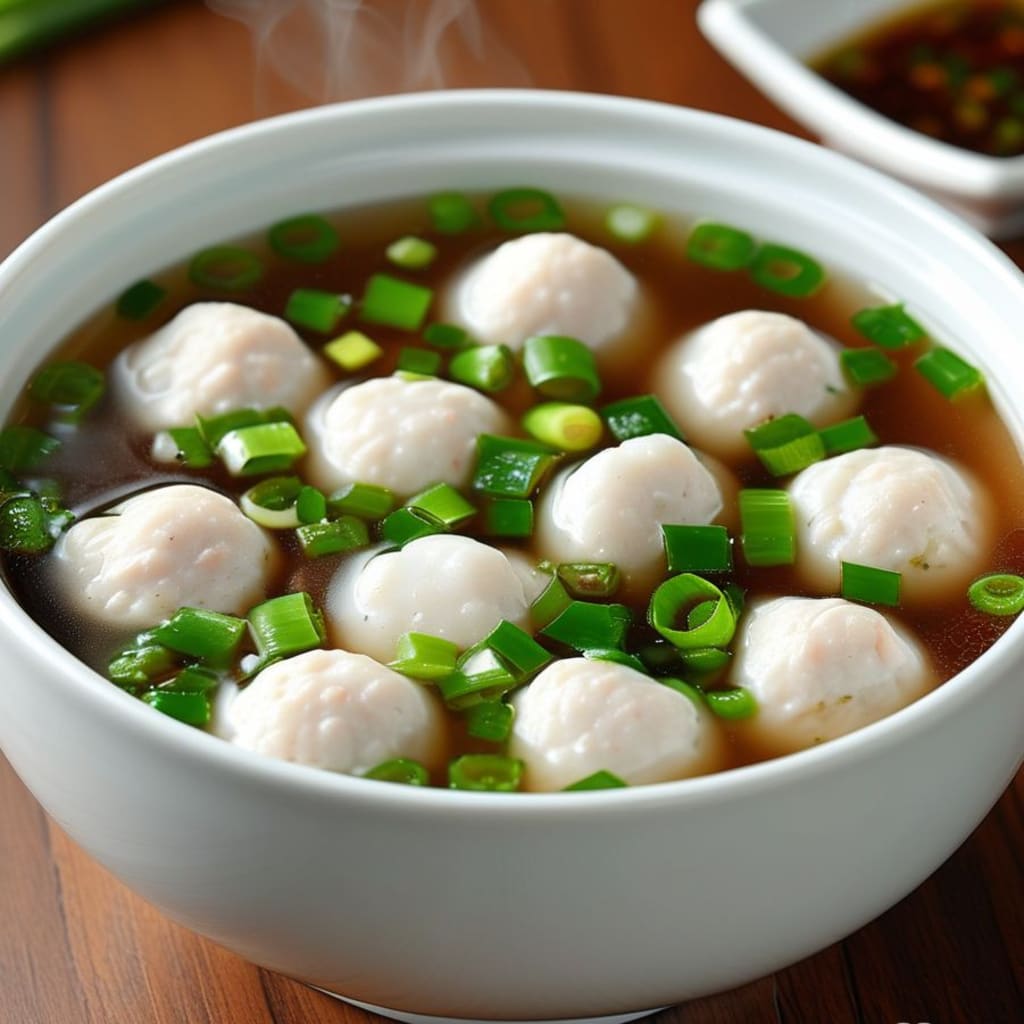
A Fateful Encounter with Fish Balls
My first taste of Fuzhou fish balls happened on a misty morning during my culinary school days. Skipping class with classmates, I wandered into Fuzhou’s ancient alleys—narrow lanes where neighbors had to turn sideways to pass. Guided by an intoxicating aroma, we stumbled upon a 40-year-old fish ball shop tucked between moss-covered walls.
The owner, a sun-weathered elder with veins like tree roots crawling up his arms, ladled a snow-white fish ball into my bowl. As it quivered in the broth, I took a bite. The texture—bouncy yet tender, resilient yet yielding—imprinted itself on my memory. Over the next decade, I sampled fish balls across China, but none rivaled that first transcendent bite.
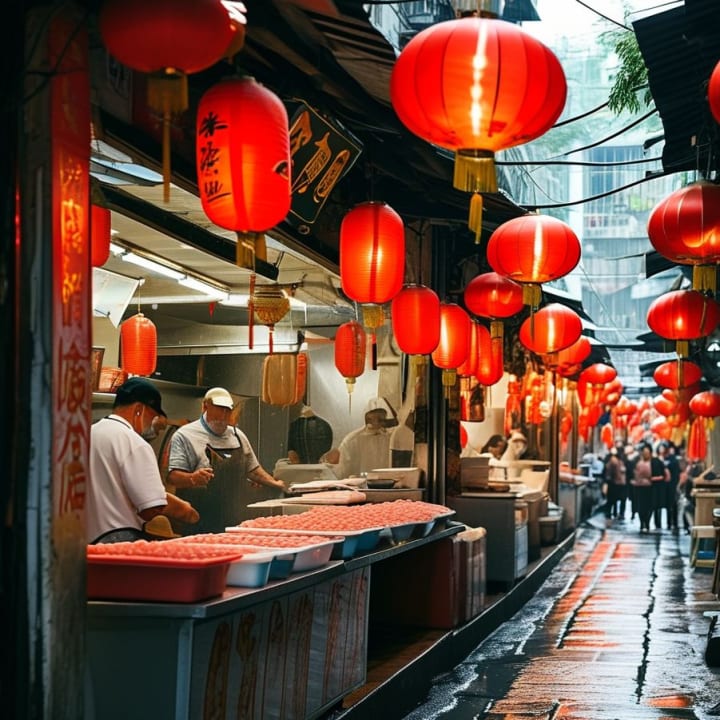
The Art of "Smooth Wrapping": Eel and Mackerel Alchemy
Fuzhou fish balls are defined by their huá bāo xiàn (滑包馅) technique: a silky eel paste wrapping a mackerel filling. This pairing, honed over centuries by Fujian’s fishermen, is a masterclass in texture and flavor synergy.
• Outer Layer: Freshwater eel, rich in collagen, is pounded into a glossy paste that delivers springy elasticity.
• Inner Filling: Mackerel, with its loose, umami-packed flesh, melts into a savory core when cooked.
Selecting the Fish:
• Eel: Spring-caught eels are prized for their tender, pink-tinged bellies.
• Mackerel: Harvested in September-October, these fish boast firm flesh and balanced fat.
A veteran chef once taught me: "Judge eels by their underbellies, mackerel by their eyes—plump and gleaming means freshness."
The 200-Beat Ritual: Where Science Meets Tradition
The magic of Fuzhou fish balls lies in a relentless 200-beat pounding process. Skeptics ask: Why not 150 beats? The answer is etched in generations of sore arms and perfected technique.
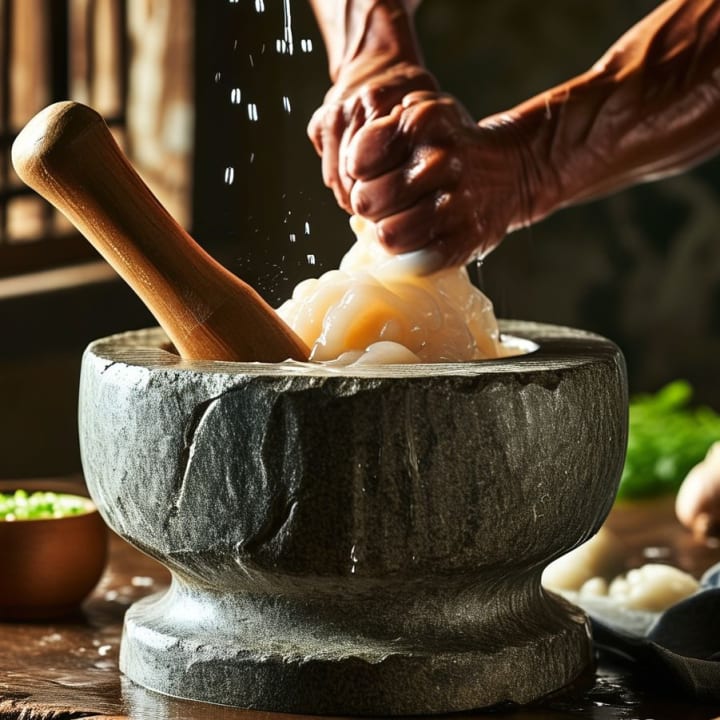
Step-by-Step Craftsmanship:
1. Prep: Debone and skin eels, cut into chunks, mix with salt and starch.
2. Initial Beats (1-50):
• Using a stone mortar and wooden pestle, pound until the paste loosens.
• At this stage, the mixture resembles lumpy dough.
3. Mid-Stage (50-100):
• Proteins begin aligning; the paste gains elasticity.
• Skilled hands can now lift strands of paste without breaking.
4. Final Beats (100-200):
• Lift the paste high and slam it down with full force.
• Each impact realigns collagen fibers, creating a 3D protein matrix that traps moisture and air.
Science Insight:
This violent process denatures proteins, forcing them into tighter bonds. The result? A texture that’s 20% bouncier than machine-processed versions, measured by food labs using texture analyzers.
A Bowl of Memories: Fuzhou's Culinary Heritage
Serving Fuzhou fish balls follows the "three boils, two scoops" rule:
1. Boil until floating, remove.
2. Reboil twice to lock in texture.
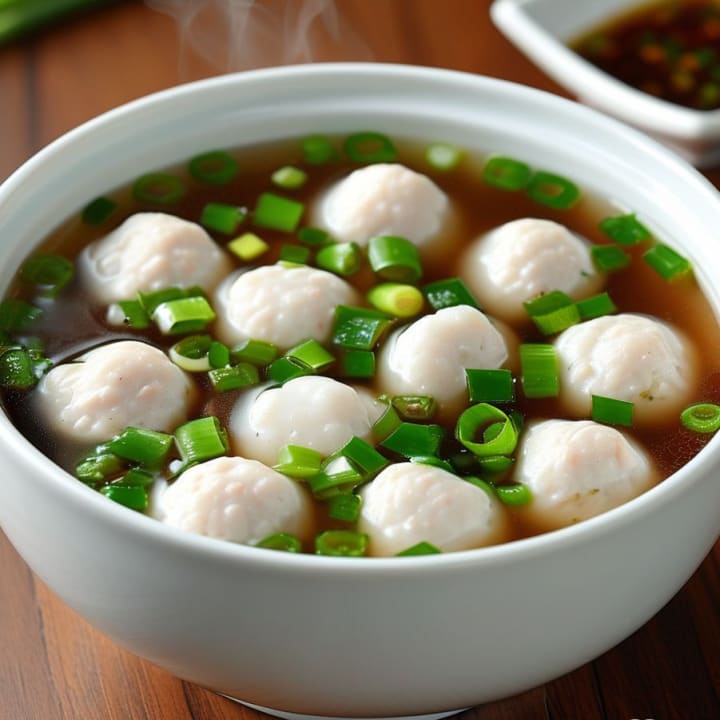
3. Serve in rich fish broth with scallions.
Behind this simplicity lies generations of family stories. An 80-year-old regular once shared: "As kids, we shaped fish balls during New Year—small ones for children, larger ones for elders, each size a wish for growth and prosperity."
Why Masters Persist: The Soul of Handmade
I once asked chefs why they endure this backbreaking work:
• Chef Lin: "This craft is our ancestors’ legacy. Lose this, and we lose our roots."
• Auntie Chen: "When customers close their eyes and smile after the first bite, every sore muscle fades."
Modern shortcuts exist—food processors, premixed pastes—but veterans swear by hand-pounding. As one put it: "Machines can’t feel when the paste reaches qīng míng (清明)—that clear, jade-like translucency signaling perfection."
Beyond the Bowl: Fish Balls in Local Culture
1. Festival Must-Have: Lunar New Year tables feature fish balls shaped like coins, symbolizing wealth.
2. Bridal Gifts: Newlyweds receive fish balls dyed red—a wish for resilience in marriage.
3. Street Food Star: Night markets serve them skewered, brushed with peanut sauce and chili.
DIY: Recreating the Magic at Home
Pro Tips for Amateurs:
1. Temperature Control: Keep fish paste chilled—warmth weakens elasticity.
2. Water Ratio: Add ice water gradually; 100ml per 500g fish maintains ideal viscosity.
3. Cooking Test: Drop a tiny ball into water. If it sinks, beat more; if it floats, it’s ready.
Common Pitfalls:
• Overbeating: Beyond 220 beats, paste turns rubbery.
• Wrong Fish: Substituting eel with carp? Expect a mushy disaster.
The Philosophy in Every Bite
Fuzhou fish balls embody a truth: Perfection demands patience. Each 200-beat cycle mirrors life’s struggles—transformative force shaping raw potential into brilliance.
Next time you bite into a fish ball, remember: That bounce isn’t just texture—it’s centuries of wisdom, countless sore arms, and undying respect for craft.
Food for Thought:
Have you encountered other dishes where tradition defies modern efficiency? Share your stories below!
About the Creator
My Tous les Jours Trip
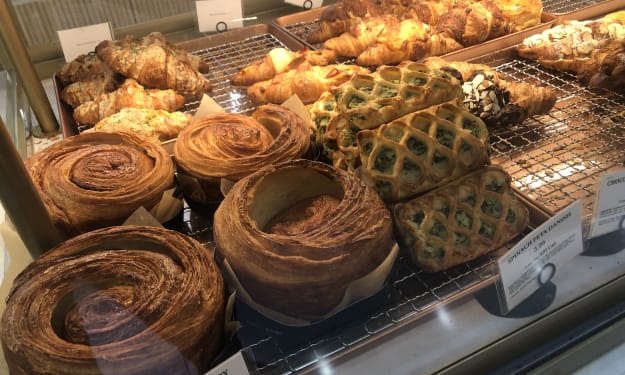
As someone who lives in a rural area, I don't get the chance to visit fancy restaurants or bakeries that often. So, when a friend told me about a French-Asian bakery that's less than an hour away, I knew I had to check it out and grab some pictures for social media. Tous les Jours ended up providing an immersive experience that went above and beyond my expectations--although I did leave with a few reservations.
By Kaitlin Shanks24 days ago in Feast


Comments
There are no comments for this story
Be the first to respond and start the conversation.