
The Pride of Japan: Why Sushi Represents One of the World’s Most Extraordinary Food Cultures
“How Japan’s Iconic Dish Became a Global Symbol of Craftsmanship and Purity”

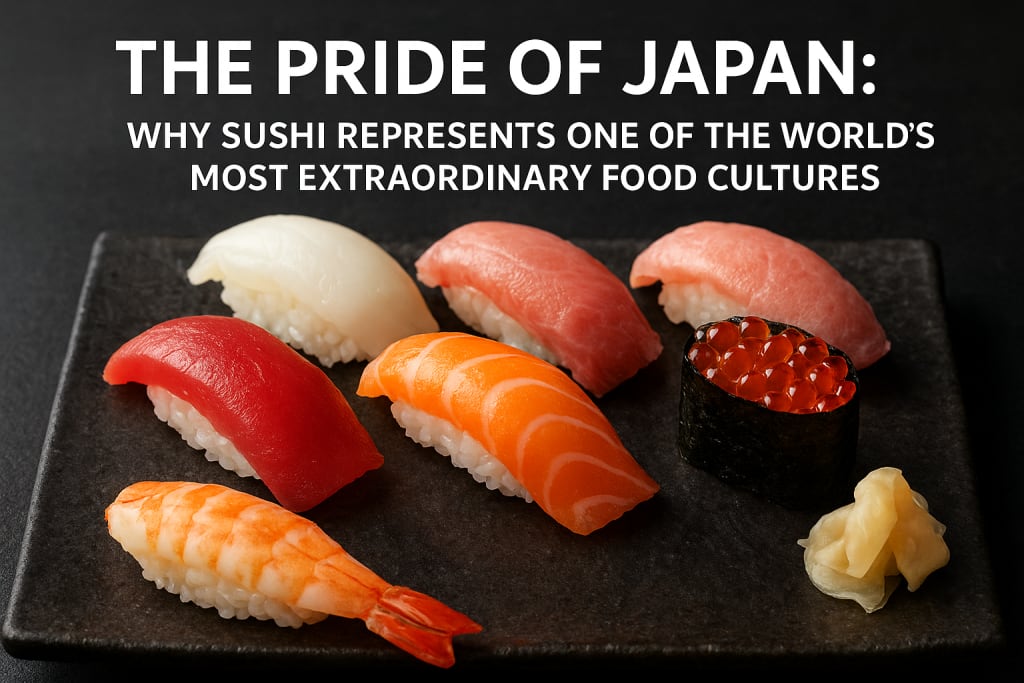
How a simple combination of rice and fish became a global symbol of craftsmanship, purity, and culinary philosophy
When people around the world talk about Japanese culture, sushi almost always appears at the top of the list. Elegant, minimalist, and deeply tied to tradition, sushi is more than just food—it is a symbol of Japan’s identity. What began centuries ago as a preservation method has evolved into one of the most admired culinary arts on the planet. But what exactly makes sushi so extraordinary? And why has it become one of Japan’s greatest cultural exports?
This article explores the traditions, skills, and philosophy behind sushi, and why it continues to captivate diners worldwide.
⸻
A History Rooted in Preservation
Sushi’s origins can be traced back over a thousand years to Southeast Asia, where people preserved fish by fermenting it with rice. This method spread to Japan, where it transformed into narezushi, a preserved dish that could last for months. Over time, Japanese culture reshaped the concept—reducing fermentation, then eliminating it entirely—and eventually created edomae sushi in the 19th century.
This Tokyo-born style, consisting of fresh fish on seasoned rice, is the foundation of modern sushi. What once was a preservation technique became an expression of freshness, balance, and craftsmanship unique to Japan.
⸻
The Philosophy Behind Sushi: Simplicity, Purity, Perfection
At its core, sushi is deceptively simple: fish, rice, and sometimes seaweed. But this simplicity is what makes it so demanding. Without heavy sauces or complex cooking, there is nowhere to hide imperfections. The entire dish depends on:
• The quality of the fish
• The precision of the cut
• The balance of the rice seasoning
• The temperature and texture of each element
A sushi meal becomes a showcase of technique. Master chefs train for years—sometimes a decade—before they are allowed to prepare certain ingredients. Something as basic as cooking rice is treated with reverence.
Where many cuisines celebrate bold flavors or elaborate presentations, sushi is built on restraint and perfectionism, reflecting deeper Japanese cultural values.
⸻
Craftsmanship: The Art of the Itamae
The sushi chef, or itamae, embodies a rare combination of roles: artisan, scientist, storyteller, and guardian of tradition. The most prestigious sushi restaurants do not rely on menus; instead, the itamae prepares each piece to create a flow of flavors called omakase.
A great itamae must master:
• Knife skills refined over years
• Knowledge of seasonal fish and where they come from
• Techniques for curing, aging, or lightly cooking seafood
• Emotional intelligence, reading the pace and reactions of each diner
• Precision timing, as even a slight change in temperature affects taste
This craftsmanship pushes sushi into the realm of high art—similar to fine music or calligraphy—where mastery is a lifelong journey.
⸻
Health Benefits: A Dish Aligned with Longevity
Japan is known for having one of the longest life expectancies in the world, and its cuisine plays a major role. Sushi contributes to this in several ways:
• Rich in lean protein from fish
• Loaded with omega-3 fatty acids that support heart and brain health
• Low in saturated fat and heavy seasoning
• Served in small, intentional portions
• Often accompanied by seaweed, vegetables, and fermented foods
Unlike many global fast-food trends, sushi encourages mindful eating: slow, appreciative, and centered around quality rather than quantity.
⸻
Global Influence Without Losing Its Soul
Sushi’s global popularity is extraordinary. From New York to Paris to São Paulo, sushi bars have become mainstream. Creative rolls such as the California Roll or spicy tuna are Western inventions, showing how sushi has expanded and adapted.
Yet, even with this global evolution, the heart of sushi—respect for ingredients, balance, and craftsmanship—remains unchanged.
Where many international dishes lose authenticity when exported, sushi maintains a strong connection to its Japanese roots. This unique balance of tradition and innovation is part of what makes sushi one of Japan’s greatest cultural gifts.
⸻
Why Sushi Represents the Pride of Japanese Food Culture
Sushi stands at the intersection of history, art, health, and philosophy. It reflects the Japanese spirit: appreciation for nature, focus on “less is more,” and relentless pursuit of perfection. It is a cuisine where every detail matters—from the temperature of the rice to the angle of a knife cut.
More than a global trend, sushi is a living cultural heritage—one that continues to inspire admiration, curiosity, and respect around the world.
About the Creator
Takashi Nagaya
I want everyone to know about Japanese culture, history, food, anime, manga, etc.
Keep reading
More stories from Takashi Nagaya and writers in Feast and other communities.
Beyond Sushi: Why Japanese Cuisine Stands Out for Health and Culture
How Japanese food differs from other countries—and what it can teach us about living well When many people outside Japan think of Japanese food, the first image that comes to mind is sushi: neat rolls of rice, raw fish, and seaweed served with soy sauce and wasabi. While sushi is iconic, it represents only a small fraction of what Japanese cuisine—known as washoku—has to offer. In fact, Japanese food was recognized by UNESCO as an Intangible Cultural Heritage, celebrated for its seasonal sensitivity, variety, and emphasis on harmony. But beyond its artistry, Japanese cuisine is also deeply linked to health and longevity, setting it apart from many other food cultures around the world.
By Takashi Nagaya5 months ago in Feast
My Tous les Jours Trip
As someone who lives in a rural area, I don't get the chance to visit fancy restaurants or bakeries that often. So, when a friend told me about a French-Asian bakery that's less than an hour away, I knew I had to check it out and grab some pictures for social media. Tous les Jours ended up providing an immersive experience that went above and beyond my expectations--although I did leave with a few reservations.
By Kaitlin Shanks25 days ago in Feast
Miss Persephone's Manual to a Seemingly Ordinary Life
Miss Persephone was found at the dining table, her blue eyes swollen, her tears arriving and retreating like the tides of the ocean. Earlier that day, her family had visited her in the retirement home where she had lived for eight years. It was her eightieth birthday.
By Imola Tóth5 days ago in Fiction



Comments
There are no comments for this story
Be the first to respond and start the conversation.