
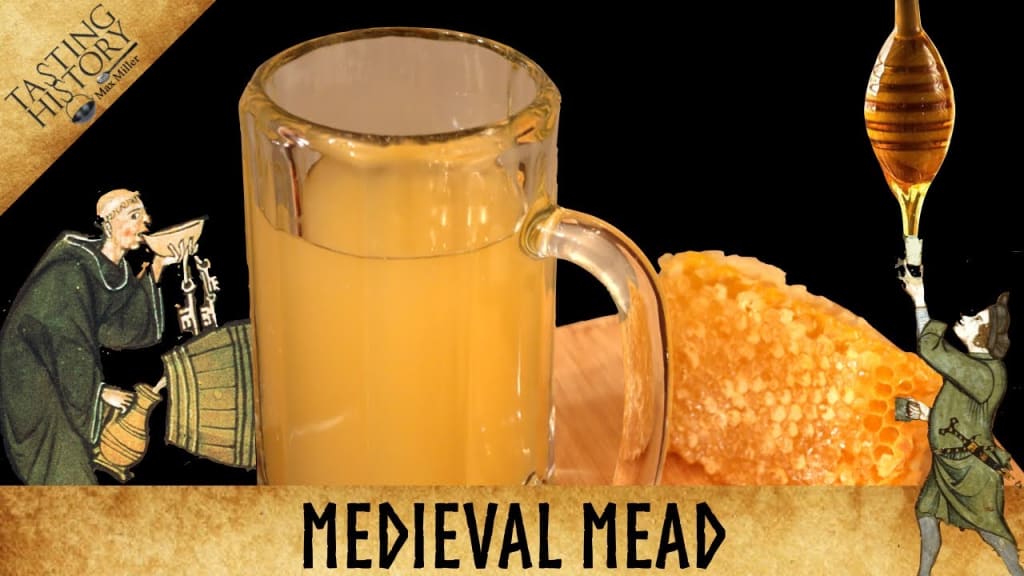
Have you ever wondered where the term "honeymoon" comes from? Allow me to enlighten you with a delightful historical tidbit. In the Middle Ages, when a young couple got married, their family would present them with a "moon," which was essentially a month's worth of honey mead. The newlyweds would then set off on their honeymoon, frolic, and make merry for a few weeks, hoping to return with a bun in the oven. But fear not, today we're not making a baby, but rather, we'll be delving into the world of alcoholic honey mead. So whether you imagine yourself as a Saxon warrior in your shield wall or a marauding Norse Viking, get ready for the sweet, sweet taste of mead.
Welcome to Tasting History! Before we embark on our mead-making adventure, I want to clarify that this article is for informative purposes only and not a guide to making mead. Also, if you're new here, remember to check out the merchandise below and consider subscribing for more content. Now, let's dive into the 13th-century Tractus Manuscript Folio 20r, which holds the recipe for our mead-making journey.
The ancient recipe calls for one gallon of fine honey dissolved in four gallons of water, heated until it reaches a certain temperature, and then boiled while skimming off any impurities. After boiling, the mixture is allowed to cool until it reaches the temperature of fresh cow's milk. Next, the finest ale dregs or barm are added, and everything is stirred together before being left to stand for three days and nights. Finally, the mead is drawn from the dregs, transferred to another vessel, and served forth.
You might notice that this mead-making process differs from the traditional method used by contemporary mead makers. Normally, mead ferments for weeks and ages for months. However, the 13th-century recipe suggests a quick fermentation process, perhaps due to the limited resources and brewing techniques of the time.
The recipe also offers instructions on how to create "eglyn," a mead infused with various herbs such as hyssop, bettony, moonwort, heartstongue, and white horehound. Eglyn, a shortened version of "meddyglyn" (meaning healing mead), highlights the medicinal use of herbs in mead-making during the Middle Ages.
As we explore the rich history of mead, we discover that its origins date back thousands of years. The earliest evidence of mead-making comes from pottery found in northern China around 7000 BC. Throughout history, various cultures have embraced mead, attributing it to goddesses, using priestesses named "Melissa" (meaning bee), and employing mead for religious and social ceremonies.
In Norse mythology, mead played a significant role, with tales of its origin involving the brilliant poet-god, Kvasir. Norse gods and humans alike sought the knowledge and inspiration that came from the "Mead of Poetry." The love for mead spread from the Minoans to the Greeks and Romans, eventually finding its way to Britannia and Ireland, where mead halls became central to their culture.
Mead continues to be celebrated in various forms across the world, with different names for the different kinds of mead depending on their ingredients, alcohol content, and honey concentration.
For our mead-making adventure, we use water, honey, and ale dregs or dried ale yeast. The recipe calls for four gallons of water and one gallon of honey, but we make a smaller batch using a quart of honey and one gallon of water. The yeast amount might vary, so it's best to test its activity before adding it to the mixture.
Once the mead is prepared, it goes through a quick fermentation process, lasting just three days. After that, it is transferred to another container and aged for a couple of nights. If aged for a longer period, the mead would become clearer and develop a rich golden hue.
Throughout history, mead has been enjoyed by various cultures, often accompanied by songs and tales of valor and bravery. It has inspired poets, writers, and artists, and has earned its place as a beloved beverage of the ages.
Now, as you savor the taste of your homemade mead, whether it's sparkling or flat, sweet or dry, remember the ancient traditions and the vibrant stories that this delightful drink carries with it. So raise your glass, and let's toast to the timeless legacy of mead! Cheers!
About the Creator
Andrew
I really enjoy branching out and learning new and interesting things about the world around me and the history behind it. I try very hard to keep an open mind and dig as far down as the rabbit hole goes.
Hundreds of Thousands of NHS Staff in England Attacked and Harassed, Survey Shows
A major workforce survey has revealed that hundreds of thousands of employees working in England’s National Health Service have faced violence, harassment and abuse while carrying out their duties. The findings have sparked renewed concern among health leaders and unions, who warn that hostility toward healthcare workers is reaching unacceptable levels. The data comes from the latest NHS Staff Survey, one of the largest workplace surveys in the United Kingdom. More than 760,000 NHS employees took part, providing a detailed picture of working conditions across hospitals, clinics and ambulance services. The results highlight a troubling pattern of aggression directed at staff from patients, visitors and, in some cases, colleagues. According to the survey, around one in seven NHS employees reported experiencing physical violence from patients or members of the public during the previous year. This represents roughly 14 percent of staff—equivalent to more than 200,000 workers across the healthcare system. Even more widespread was verbal harassment and bullying. Over a quarter of respondents said they had experienced harassment, abuse or bullying in the workplace within the last 12 months. Experts say this includes a range of incidents, from aggressive threats and verbal insults to racist abuse and intimidation. Healthcare unions have described the situation as deeply worrying, arguing that violence against medical staff is becoming increasingly normalized in some settings. Nurses, ambulance crews and emergency department staff are often the most exposed because they deal directly with patients during stressful situations such as medical emergencies or long waiting times. In particular, ambulance workers reported some of the highest levels of violence in the survey. In certain services, nearly a third of staff said they had faced at least one incident of aggression from patients or the public. Experts note that frontline responders frequently encounter unpredictable situations involving intoxication, mental health crises or highly distressed individuals. Healthcare leaders say the consequences of this violence go far beyond physical injury. Many staff report psychological stress, anxiety and burnout after repeated exposure to abuse. Some workers take sick leave following violent incidents, while others consider leaving the profession entirely. In response to the survey findings, NHS leaders stressed that abuse toward healthcare workers is unacceptable. Officials emphasized that staff should be able to perform their duties without fear of violence or harassment. “NHS staff work tirelessly to care for patients and deserve to feel safe and respected at work,” said one senior health official responding to the survey results. Healthcare organizations have increasingly called for stronger protections, including better security in hospitals and clearer reporting systems for incidents of abuse. The issue of violence against healthcare workers has grown more visible in recent years. Data from hospitals and trusts across England shows that incidents of aggression have risen since the COVID-19 pandemic, partly driven by strained healthcare services, staff shortages and long patient waiting times. At the same time, experts say many incidents likely go unreported. Some staff fear that reporting abuse will not lead to meaningful action, while others believe such behavior has become an unfortunate but expected part of the job. Unions and professional groups are now urging the government to take stronger action. They have called for tougher penalties for individuals who assault healthcare workers, as well as increased funding for workplace safety measures. Campaigners also emphasize the need for cultural change. Many healthcare leaders argue that public awareness is crucial, reminding patients and visitors that doctors, nurses and paramedics are there to help. Despite the troubling statistics, NHS officials say steps are being taken to improve staff safety. Initiatives include violence-prevention standards, staff training on managing aggressive situations and improved cooperation with police in serious cases. However, unions warn that unless the root causes—such as staff shortages and overloaded emergency departments—are addressed, the pressure on frontline workers will continue. For the hundreds of thousands of NHS employees who dedicate their careers to saving lives, the message from health leaders is clear: caring for patients should never come with the risk of being attacked or abused on the job.
By Fiaz Ahmed 2 days ago in Feast
Foods Seniors
As we age, maintaining a balanced diet becomes increasingly important for overall health and vitality. Alkaline foods help regulate the body's pH levels, reduce inflammation, and support bone health—all crucial concerns for older adults. These ten recipes transform simple, nutrient-dense ingredients into delicious meals that are gentle on digestion and big on flavor. Best of all, they're incredibly easy to prepare.
By yue . shui2 days ago in Feast



Comments
There are no comments for this story
Be the first to respond and start the conversation.