
Saudi Arabia Wine Market Trends & Growth Summary (2025–2033)
A Market Defined by Cultural Boundaries, Non-Alcoholic Innovation, and Vision 2030 Transformation

Introduction
Saudi Arabia’s wine market represents one of the most unconventional and carefully regulated beverage industries in the world. While the consumption of alcoholic beverages remains prohibited under Saudi law, the market has evolved in a distinctive direction, shaped largely by non-alcoholic wine alternatives, luxury hospitality demand, and changing consumer behavior driven by tourism and expatriate communities.
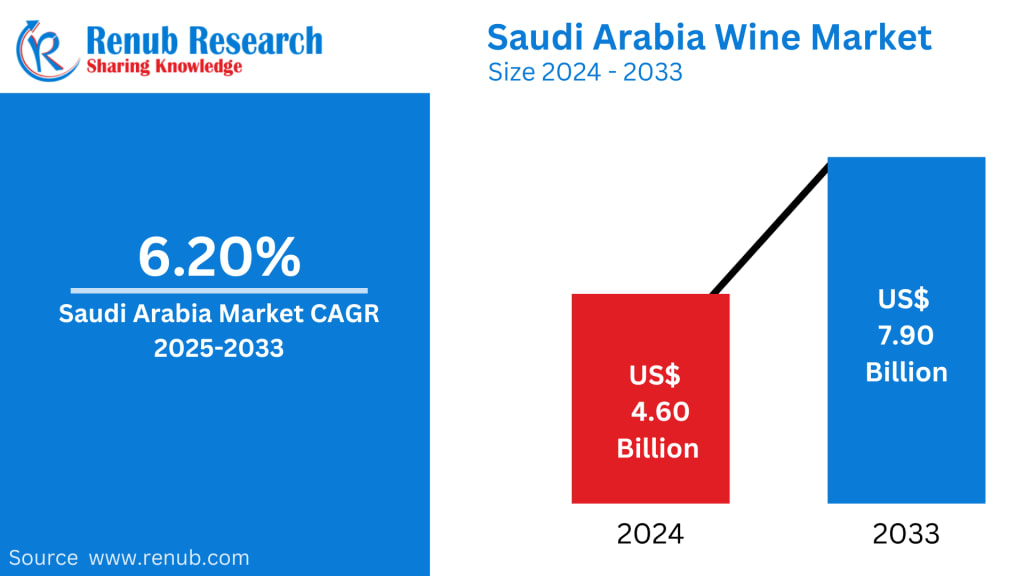
According to Renub Research, the Saudi Arabia Wine Market was valued at US$ 4.60 billion in 2024 and is projected to reach US$ 7.90 billion by 2033, growing at a compound annual growth rate (CAGR) of 6.20% from 2025 to 2033. This growth is not rooted in traditional alcohol consumption but instead reflects rising demand for alcohol-free wine substitutes, premium dining experiences, and innovation within the food and beverage (F&B) sector.
Saudi Arabia’s ambitious Vision 2030 initiative continues to reshape consumer markets by encouraging tourism, hospitality, entertainment, and international engagement—creating new opportunities even in sectors constrained by cultural and religious frameworks.
Saudi Arabia Wine Market Overview
The wine industry in Saudi Arabia operates under a unique socio-cultural and regulatory environment. Alcoholic wine is prohibited; however, the concept of wine in the Saudi market primarily refers to non-alcoholic wines that replicate the taste, aroma, and sophistication of traditional wine without violating legal or religious restrictions.
In recent years, the country has witnessed a noticeable shift in consumer preferences. Expatriates, international tourists, and health-conscious consumers are increasingly seeking premium alcohol-free beverages that align with global dining standards. Non-alcoholic wines, produced through advanced fermentation and dealcoholization techniques, are gaining acceptance in upscale hotels, fine-dining restaurants, private clubs, and luxury hospitality venues.
A notable development occurred in January 2024, when Saudi Arabia reopened a wine shop in Riyadh after nearly 70 years. This highly controlled outlet serves a limited diplomatic community, offering premium wine selections and personalized services. While not accessible to the general public, this move reflects the Kingdom’s broader push toward controlled modernization and cross-cultural engagement.
Market Size and Forecast
Market Size (2024): US$ 4.60 Billion
Forecast Market Size (2033): US$ 7.90 Billion
Growth Rate: 6.20% CAGR (2025–2033)
Base Year: 2024
Historical Period: 2020–2024
Forecast Period: 2025–2033
The steady expansion of the Saudi Arabia wine market underscores rising interest in premium, non-alcoholic beverage categories rather than traditional alcoholic consumption.
Key Growth Drivers
1. Vision 2030 and Economic Diversification
Saudi Arabia’s Vision 2030 agenda aims to reduce reliance on oil by diversifying the economy across tourism, entertainment, hospitality, and lifestyle sectors. Massive investments in luxury hotels, resorts, restaurants, and international events have significantly increased demand for sophisticated beverage offerings.
Non-alcoholic wines have emerged as a natural fit for this transformation. They offer the prestige and experience of wine while respecting cultural boundaries, making them ideal for high-end hospitality environments. As Saudi Arabia positions itself as a global tourism and business hub, demand for refined, alcohol-free alternatives continues to grow.
2. Rising Demand for Non-Alcoholic Alternatives
Consumer preferences in Saudi Arabia are increasingly influenced by health, wellness, and moderation trends. Non-alcoholic wines appeal to individuals who seek the sensory experience of wine without alcohol-related concerns.
For expatriates and internationally exposed consumers, alcohol-free wine provides familiarity and social sophistication. These products are increasingly viewed as premium lifestyle beverages, rather than substitutes, especially at formal events, business dinners, and upscale social gatherings.
3. Expansion of Tourism
Tourism is a central pillar of Vision 2030, with Saudi Arabia welcoming millions of international visitors annually. Mega-events such as Riyadh Season, global sporting competitions, cultural festivals, and luxury entertainment experiences have expanded hospitality demand.
Tourists often expect premium dining and beverage options aligned with global standards. Non-alcoholic wines provide a culturally appropriate solution, enabling hotels and restaurants to cater to diverse international preferences while remaining compliant with local regulations.
4. Growth of High-End Dining and Luxury Hospitality
The rapid growth of fine-dining restaurants, five-star hotels, and international hospitality brands has accelerated the adoption of premium beverage offerings. Alcohol-free wines are increasingly featured on curated menus, wine-pairing experiences, and exclusive dining concepts, reinforcing their role in the luxury F&B segment.
Challenges Facing the Saudi Arabia Wine Market
Strict Alcohol Laws
Saudi Arabia’s complete prohibition of alcohol remains the most significant constraint on the wine industry. The production, sale, possession, and consumption of alcoholic beverages are strictly forbidden under Sharia law, eliminating any opportunity for traditional wine market development.
As a result, companies must focus exclusively on non-alcoholic wine products, carefully navigating regulatory frameworks and cultural sensitivities. This legal environment limits market scope and requires precise positioning and compliance.
Limited Market Acceptance
Despite growing interest, non-alcoholic wine is still considered a niche product among the broader Saudi population. Traditional beverages such as tea, coffee, and juices continue to dominate everyday consumption habits.
Cultural perceptions, limited awareness, and lack of wine education pose challenges to mass adoption. While expatriates and tourists are more receptive, broader market acceptance will depend on targeted marketing, consumer education, and strategic positioning.
Regional Market Insights
Western Region
The Western Region, particularly cities like Jeddah, plays a vital role in the Saudi wine market due to its multicultural population and strong tourism presence. Luxury hotels, upscale restaurants, and international visitors drive demand for premium non-alcoholic beverages.
As tourism expands under Vision 2030, the Western Region is expected to remain a key growth area for alcohol-free wine products.
Eastern Region
Cities such as Dammam, Khobar, and Jubail host large expatriate communities linked to industrial and energy sectors. Demand for non-alcoholic wine is gradually rising, supported by expanding hospitality infrastructure and international business activity.
However, cultural and regulatory constraints continue to limit widespread adoption.
Northern & Central Region
The Central Region, including Riyadh, benefits from government investment, diplomatic activity, and luxury development. High-end dining, international events, and premium retail contribute to niche demand for non-alcoholic wine offerings.
Southern Region
The Southern Region remains a smaller market due to limited tourism and hospitality infrastructure. Growth potential exists but remains modest compared to other regions.
Market Segmentation
By Product Type
Still Wine
Sparkling Wine
Dessert Wine
Fortified Wine
Other
By Color
Red Wine
Rosé Wine
White Wine
Other
By Distribution Channel
Online
Offline
By Region
Northern & Central Region
Western Region
Eastern Region
Southern Region
Key Players Operating in the Market
Accolade Wines
Alko
Allagash Brewing Company
Allied Blenders & Distillers
Arkell’s Brewery
Anchor Brewing Company
Asahi Breweries
Bass Brewery
These companies focus on innovation, premium branding, and alcohol-free product development to align with Saudi Arabia’s regulatory environment.
Final Thoughts
The Saudi Arabia wine market is a compelling example of how cultural constraints can drive innovation rather than restrict growth. With a forecast value of US$ 7.90 billion by 2033, the market’s expansion is powered by non-alcoholic wine alternatives, luxury hospitality demand, tourism growth, and Vision 2030 reforms.
While challenges remain, particularly regarding market acceptance and legal limitations, the long-term outlook remains positive. As Saudi Arabia continues to integrate with global markets and redefine its lifestyle sectors, premium alcohol-free wines are set to play an increasingly important role in the Kingdom’s evolving food and beverage landscape.
About the Creator
Janine Root
Janine Root is a skilled content writer with a passion for creating engaging, informative, and SEO-optimized content. She excels in crafting compelling narratives that resonate with audiences and drive results.
Keep reading
More stories from Janine Root and writers in Feast and other communities.
Saudi Arabia Foodservice Market Size and Forecast (2025–2033)
The Saudi Arabia Foodservice Market is expected to reach US$ 51.64 billion by 2033, increasing from US$ 26.61 billion in 2024, and registering an impressive CAGR of 7.66% from 2025 to 2033, according to Renub Research.
By Janine Root about a month ago in Feast
My Tous les Jours Trip
As someone who lives in a rural area, I don't get the chance to visit fancy restaurants or bakeries that often. So, when a friend told me about a French-Asian bakery that's less than an hour away, I knew I had to check it out and grab some pictures for social media. Tous les Jours ended up providing an immersive experience that went above and beyond my expectations--although I did leave with a few reservations.
By Kaitlin Shanks17 days ago in Feast
Organic Baby Food Market Companies Analysis (2025–2033)
Introduction: A New Standard for Infant Nutrition The global Organic Baby Food Market is undergoing a transformative shift as modern parents increasingly demand clean, transparent, and sustainable nutrition for their children. Organic baby food—made without synthetic fertilizers, artificial preservatives, genetically modified organisms (GMOs), or chemical pesticides—has moved from a niche category to a mainstream necessity. Rising awareness of food safety, health outcomes, and environmental sustainability is reshaping consumer behavior worldwide.
By Aaina Oberoiabout 5 hours ago in Feast



Comments
There are no comments for this story
Be the first to respond and start the conversation.