
Salt
Everything You Need To Know About Salt


My buddy Steve came over to cook dinner with me. His tiny apartment up the hill didn't have an oven, so I offered mine. I live in an older apartment with a three-quarter sized yellow range the perfect size for Shepherd's Pie. We didn't know each other very well yet, so I mostly watched him quietly from the corner and let him explain things about cooking to me: how to wash, how to cut, how to season.
When I cook, I keep things simple -- trust my gut. Reach for the essential seasonings we all take for granted. Sometimes the basics are all you need to prepare a flavorful, filling dish. Steve wasn't shocked by my barebones spice cabinet but excited by the opportunity to share his vast knowledge with me as he grabbed the large tube of salt. The smell of sautéing garlic and onions wafted between us. I smiled at him, eager to learn.
What is Salt?

Steve broke it down for me like I had never tasted anything before in my life. "Salt," he declared, "is what brings any ordinary dish to life!" He was a very dramatic man.
Salt used for cooking, the chemical compound NaCl, sodium chloride, is a mineral prevalent on the planet and is essential for life. It's a big part of the human diet as it. provides necessary nutritional value in addition to the irresistibly tangy flavor that brings bland, unseasoned foods back to life in the simplest way. While the ingredient has its own distinct flavor, it often acts to enhance the sweetness or other distinct tastes of the food you add it to. Some earthy flavors can also be evident depending on the other minerals present in the variety you choose.
What are the Nutritional Facts of Salt?

Not only is the seasoning a surefire way to make your food delicious, but salt consumption can impact your health. At least that's what Steve told me, and at this point I'd believe anything that charismatic man said.
Salt contains sodium, which is an important part of any diet. However, it is important to be aware of how much salt and sodium you consume -- the FDA indicates that too much can lead to increased risk of high blood pressure. Including an appropriate amount of salt and sodium in your diet is important in maintaining your fluid electrolyte balance, muscles, hydration, and more (per Healthline). Some salt also contains iodine, which is another essential mineral that promotes bodily functions (per GoodRx).
How is Salt Made?

Since it's used all over the globe, there is a high demand for commercially available salt. It can be bought in grocery stores, specialty shops, and more! There are a few ways salt is made, but Steve clued me into three major methods.
First, solar evaporation: Saltwater is held in shallow ponds and exposed to sunlight and wind so the water evaporates, leaving the salt behind. The water can already be salty or the ponds can be used to form salt crystals before evaporation. Second, rock salt mining: Layers of deposits underground are uncovered and machinery is used to extract the salt. Finally, solution mining: Water is sent underground to dissolve salt deposits into a briny solution, which is the brought to the surface and evaporated, sometimes using vacuum chambers.
The Difference Between Table Salt and Sea Salt

The several methods of salt production lead to a few different types commonly found in kitchen cabinets. Perhaps two of the most likely types you may use are table salt and sea salt -- that's what Steve seemed to uncover form my kitchen cabinets, at least!
You may notice several differences including the processing methods, mineral content, texture, and taste. While table salt is typically sourced in underground deposits, mined, processed to remove many minerals, and fortified with iodine, sea salt is made by evaporating saltwater to leave behind flaky crystals or finer grains that may have color, more residuals minerals, and varying hints of flavor. The former is the standard in tabletop saltshakers, but the latter is popular as the benefits of sea salt are sometimes marketed to health-minded consumers. The rich textures and flavors also make sea salt popular as a finishing salt.
What are Himalayan Salt and Hawaiian Salt?

"If you're feeling fancy," Steve beamed -- he knew I was occasionally a fancy boy -- "Then you're gonna need something a bit more upscale." He recommended I try getting my hands on Himalayan or Hawaiian salts to bring an extra bit of flair to my home cooking.
While the pink and red colors of these salt varieties may appear similar, they are acutually very different. The Himalayan rock salt is sourced from South Asia, specifically Northern Pakistan. Its color comes from the rich array of minerals like iron, magnesium, zinc, and potassium. This mineral content and the pure flavor are why many people enjoy using it! On the other hand, Hawaiian, also known as alaea salt, is a form of evaporated sea salt. Its color comes volcanic clay, and can be either red alaea salt or black lava salt. This adds a mild, earthy flavor that is a common ingredient in several classic Hawaiian dishes.
When Should You Use Kosher Salt?

"But Steve," I cut him off. "Those all sound delicious, but what about good old-fashioned Kosher salt? When should I use that?" I'm going to be honest with you, I was trying to get under his nerves. However, my question delighted him and he relished the opportunity to flex his salty knowledge some more.
The main feature of Kosher salt is its large flakes. This is what makes it useful when drawing liquids out of meat in its namesake koshering process. The large flakes also make it take up more space, which is an important consideration if a recipe calls for a specific volume of kosher salt; the same volume of finer table salt or coarser-grained sea salt won't do in that instance. It's also easier to handle and be exact when grabbing with your fingers and sprinkling, allowing you to be more exact when adding it to your food.
Who is Salt Bae?

As he sprinkled the salt into the pan, Steve made an almost swan-like shape with his arm and dropped the seasoning from a height over the food. It glittered and swayed in the air almost magically before landing in the pan. "Salt Bae!" he exclaimed.
He took me on a pop culture detour: Salt Bae is the nickname of Turkish chef Nusret Gökçe who went viral on the internet when he posted a video seasoning steak in his signature way. He's most recognizable for his side-swooped hair with a ponytail, thin-framed sunglasses, and signature pose. Although he has had some controversies, his fans love to emulate his motions and keep up with his business ventures, which includes a global chain of Salt Bae restaurants. The luxury steakhouses are called Nusr-Et with locations in New York, Miami, Dubai, and London.
Who is the Iconic Morton Salt Girl?

Since we were talking about salt icons, I had to bring up my favorite one. "But Steve," I waited for him to look at me before continuing, "What about the Morton Salt Girl?" The kid wears a yellow dress and carries and umbrella to project her from the rain as she carries a tube of salt, seemingly oblivious to it pouring out behind her. I always loved the logo, so of course it's the can I have on hand in my pantry. She's been around since 1911 and has changed designs a few times over the past century, but stands firm on Morton Salt packaging all these years later.
"Thanks for all the information, Steve!" It filled me with glee to have him and his warm energy in my home. "But can we get back on track and make this Shepherd's Pie? I'm starting to get really hungry!"
Read More About Salt On Vocal
About the Creator
Keep reading
More stories from Joe Nasta | Seattle foodie poet and writers in Feast and other communities.
7 Sweet Spots to Celebrate National Dessert Day in Seattle
You work hard! You deserve a sweet little treat and a refreshing beveragino any time of year, but when National Dessert Day comes each October 14 you absolutely must savor something delicious. I asked friends on X which desserts they'd be most excited for and made sure to include their choices on my list.
By Joe Nasta | Seattle foodie poetabout a year ago in Feast
Eat During Chinese New Year
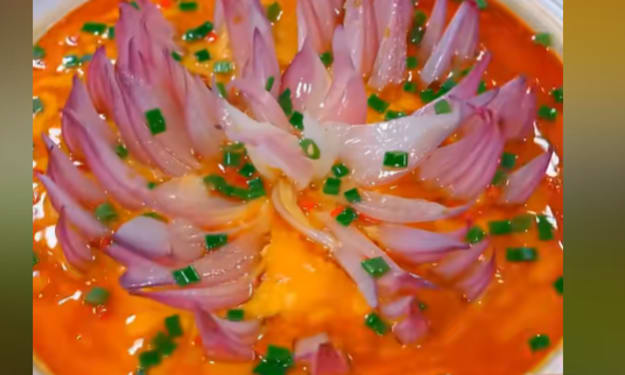
The Chinese New Year feast is traditionally abundant with meat dishes, but these 15 vegetarian recipes prove that plant-based eating can be just as festive, flavorful, and meaningful. Each dish carries auspicious symbolism while delivering incredible taste that will have everyone reaching for seconds—even the meat lovers at your table. From crisp greens to creative vegetable transformations, these recipes are designed to impress.
By yue . shuiabout 21 hours ago in Feast


Comments (1)
Fascinating reading! So factual. I loved the Morton Salt Girl excerpt, though I thought you should've elaborate a little more. Still - simply beautiful! 😁🩵🩷