

What is SALT?
I used to think buying the round blue box with the little girl under the umbrella constituted the ultimate, singular source of the condiment, spice, or whatever you want to call the thing named “salt.”
Geez, was I wrong.
Thanks to a certain degree of maturity and exposure to the outside world, I have found a few (lol) other types of salt and LOTS of other uses for it besides making my food taste better.
But for now, let’s concentrate on the food aspect since this is a ‘food series.’ Salt is a mineral composed mainly of sodium chloride (NaCl). And there is a large family of salts around the world. It’s found in the oceans, inland lakes, caves, and even deserts.
The human body has salt in it – if not, we would die, so consuming a lot of salt is good. Wrong. There is a delicate balance, so even though we love LOTS of salt in our food, we have to keep it to a reasonable level. Too much salt in our diet can be lethal. Literally, but let’s not get morbid here; let’s get back to the great things salt is and can do…
Salt is a flavor enhancer. It brings out the savoriness in the stew. It brings out the yeasty goodness of bread. It brings out the sweetness in fruit – it really does! I’m a huge advocate of a good dash of salt on watermelon – YUM.
If you doubt any of this, try making a dish without it. While it may still be tasty and probably a bit healthier, it won’t taste the same. Now I’m not saying pour a cup of the stuff in your soup or something like that, ugh, that would be disgusting and inedible. Make the dish without salt, taste it at least twice, then add a touch of salt, taste it again. You’ll notice a difference, trust me.
Now, let’s explore a few types of salt – we have table salt, processed with and without iodine. Why? You ask. Iodized salt means a minute mixture of salts with iodine has been included in the mixture to prevent a common deficiency of iodine in the human body. It may sound medieval, but it still happens today and can lead to intellectual and developmental disabilities.
Many people opt for table salt without the additive, which is fine if they get their required minerals elsewhere.
But the classic, most common, and most likely the least costly table salt is definitely not the only kind or source of the flavor enhancer we all love.
Many variations occur naturally on our big blue marble, not including the mixtures or combinations of flavors chefs have created over the years. Let’s look at some of the naturally occurring types of salt.
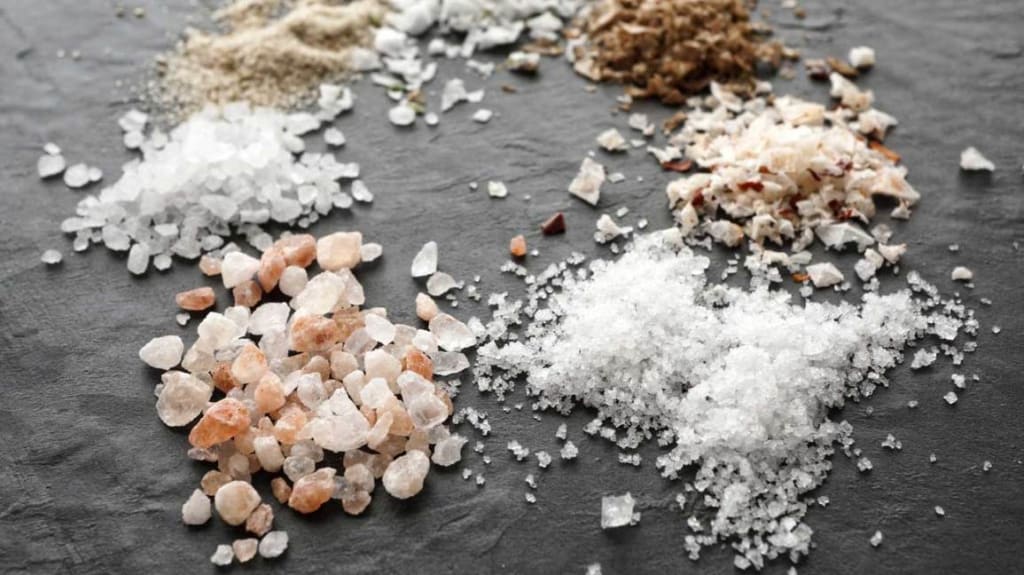
Pink Salt – sourced primarily from Pakistan in the Himalayan mountains, its beautiful pink hue gives it its name. They also mine it in Bolivia. Personally, my daughter introduced me to pink salt, and I like it better than standard table salt – it seems to have a more intense flavor. And it takes less pink salt than table salt to get the same flavor.
Kosher Salt – a widely popular and widely used salt, it has a coarse texture, no additives, and dissolves easily. It’s used in a lot of foods, both kosher and not.
Sea Salt –like the name says, sea salt comes from evaporated seawater. Over the centuries, it’s been used for cooking, drinks, bathing, and body scrubs.
Fleur de sel (flower of salt) – claimed to be the most expensive and rare of salts worldwide; it’s harvested from the Brittany Coast of France. They say it has less sodium and tastes brinier.
Himalayan Black Salt – only the original name of kala manak means black salt. The salt itself is actually purplish-red. It contains sulfur which gives it a harsh smell and a square crystal structure.
Hawaiian Alaea Red Salt – a mixed salt derived from clay or alaea and harvested unrefined sea salt, it’s primarily used in native Hawaiian dishes.
Sel Gris (grey salt) – hand-harvested from pools in France, grey salt has a unique grey color, is flakier, and has a softer texture than other salts.
So you see, my salty friends, there is an abundance of salt worldwide depending on your tastes, preferences, and choice of uses.
Let’s explore the alternative uses of salt outside of the kitchen:
Skin Care - coarse salts are natural exfoliants. When mixed with natural oils, fragrances, etc., they’re almost a necessity.
Toothpaste – a common use before (sweet) toothpaste was a mixture of baking soda and salt to brush those pearly whites. Even straight salt was considered acceptable.
Cleaning – ever scrub a cast iron pot with salt? Or used salt in your over to clean a burnt spill? Or how about cleaning out a well-loved coffee pot with a salt scrub (though many a coffee aficionado will tell you you NEVER clean a well-loved coffee pot, it removes a lot of the good flavor)?
Deodorant – no, I don’t mean the underarm kind; salt can help remove smells such as garlic or various other smells from kitchen surfaces.
Soothe a bee sting – though I hope you never have to try this one; if you or someone near you gets stung, wet the sting area right away and cover it with salt.
Kill Poison Ivy – I found this but haven’t tried it yet. It is recommended to add three pounds of salt to a gallon of soapy water. Spray it on the leaves and stems of the poison ivy.
Remove watermarks from wood - use a paste made from salt and water to scrub on a stubborn watermark, then finish with furniture polish. Wa-La!
Put out a grease fire – don’t have a fire extinguisher handy and the French fries caught on fire? Douse it with some good old table salt or baking soda, then cover with a lid.
Natural mouthwash – while the bottled stuff is good, it can also do more harm than good, so try a mixture of salt and baking soda in H2O and gargle. There are natural germ killers that can eliminate that bad breath!
Make that vase sparkle again – if you have a favorite vase that has lost its shine because you can’t reach the bottom, use some salt to clean away any deposits or scum, then wash with good old dishwashing liquid.
The list goes on and on and on – you need only go to the internet, and you’ll find an abundance of ideas, suggestions, creations, and uses for our beloved sodium chloride, aka salt.
Thank you for reading! May your food be just salty enough. And may you always have a pinch extra to share!
About the Creator
Hellen Rae Gable
Traveler (in mind & body) - Free Spirit (in mind) - Lover of God & People (in that order)
Keep reading
More stories from Hellen Rae Gable and writers in Feast and other communities.
Frozen Blueberries Recalled: What Families Need to Know
You open your freezer to grab a handful of blueberries for a smoothie. It is part of your routine. Maybe you add them to oatmeal for your child before school. Maybe you bake them into weekend muffins. Frozen fruit feels safe. It feels simple. But then you see the headline: frozen blueberries recalled. Suddenly, that bag in your freezer does not feel harmless anymore. Questions rush in. Are they safe to eat? What brands are involved? What should you do next? Food recalls can be unsettling, especially when they involve everyday items. This article explains why frozen blueberries recalled announcements happen, what risks are involved, and how to protect yourself and your family without panic.
By Muqadas khan3 days ago in Feast



Comments
There are no comments for this story
Be the first to respond and start the conversation.