
North America Jam, Jelly, and Preserves Market Size and Forecast 2025–2033
How Evolving Food Choices, Health Trends, and Premiumization Are Reshaping One of North America’s Most Beloved Breakfast Staples

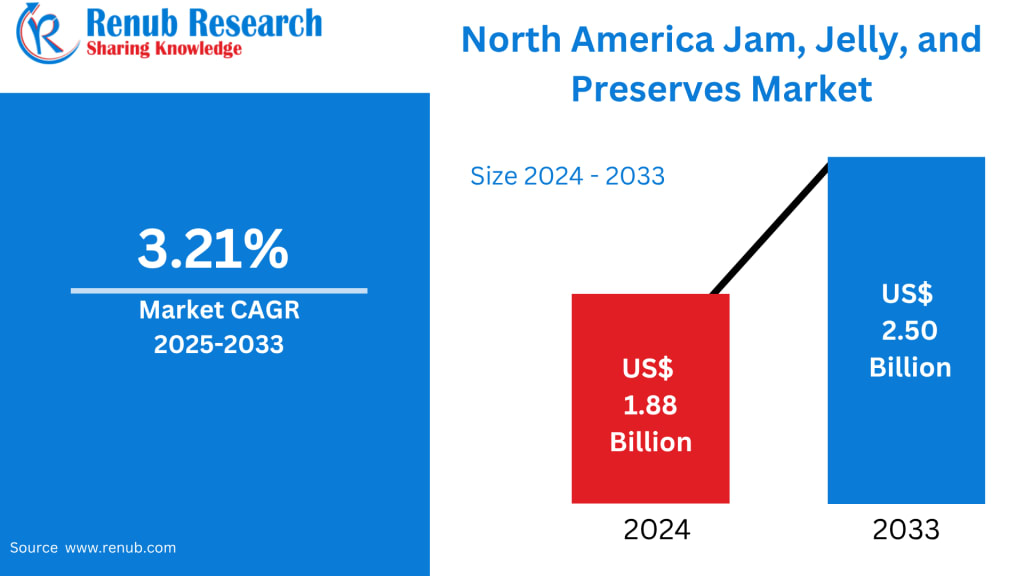
The North America Jam, Jelly, and Preserves Market is on a steady upward trajectory, growing from US$ 1.88 billion in 2024 to a projected US$ 2.5 billion by 2033, according to Renub Research. This growth reflects a CAGR of 3.21% between 2025 and 2033—an indicator of both evolving consumer preferences and the resilience of fruit-based spreads in a competitive packaged foods landscape.
What was once a simple breakfast accompaniment has evolved into a dynamic, innovation-driven category shaped by health consciousness, convenience, artisanal production, and sustainability-focused consumption patterns. From premium preserves made with local berries to low-sugar, functional, and organic spreads dominating supermarket shelves, the North American market is undergoing an impressive transformation.
This article dives deep into the industry overview, market drivers, challenges, regional trends, recent developments, and key players shaping the future of jams, jellies, and preserves across North America.
North America Jam, Jelly, and Preserves Industry Overview
The North American market is witnessing consistent, long-term demand driven by the widespread popularity of fruit-based spreads as a versatile food item used in breakfast meals, bakery applications, snacks, and specialty recipes. The category includes:
Traditional fruit jams
Reduced-sugar and sugar-free jellies
Artisanal and small-batch preserves
Organic, non-GMO, and clean-label spreads
Functional spreads enriched with fibers, vitamins, or botanical extracts
A key pivot in the market stems from a shift toward healthier eating, where consumers are consciously reading labels, scanning for natural sweeteners, and gravitating toward products with minimal processing. Innovations in flavor combinations, texture enhancement, and premium packaging have brought new life to a category once dominated by traditional offerings.
Technological improvements in processing and preservation have also enabled brands to maintain flavor integrity, reduce added sugar, and extend shelf life without relying on artificial additives—an important selling point for health-first consumers.
Meanwhile, the rise of e-commerce, subscription food services, and direct-to-consumer (D2C) brands has widened product accessibility. Online platforms now feature everything from farm-style, small-batch fruit spreads to exclusive seasonal flavors that appeal to premium buyers.
At the same time, collaborations between producers and major retail chains ensure that even niche and gourmet products make it to mainstream supermarket shelves. The increasing popularity of holiday gifting, themed assortments, and limited-edition flavors has further boosted consumer engagement.
Despite notable growth, the industry still faces structural challenges—chief among them supply chain disruptions, fruit price volatility, and competition from alternative spreads like nut butters, chocolate hazelnut spreads, and plant-based dips.
Yet, with sustained product innovation and a loyal consumer base, the North American Jam, Jelly, and Preserves Market shows no signs of slowing down.
Key Factors Driving Market Growth
1. Growing Demand for Natural and Organic Products
One of the strongest forces reshaping the market is the shift toward organic, clean-label, and naturally sweetened fruit spreads. Consumers are ditching products with artificial additives, preservatives, and high-fructose corn syrup in favor of:
Organic fruit-based jams
Low-sugar or no-sugar-added jellies
Keto-friendly and diabetic-friendly spreads
Products sweetened with honey, stevia, or agave
This trend is fueled by heightened awareness of diet-related health concerns, including:
Obesity
Diabetes
Cardiovascular issues
Brands are responding with cleaner labels, transparent sourcing, and eco-friendly packaging. Organic certification is becoming a major differentiator and a trust-building factor, especially for premium buyers. The success of health-focused grocery stores and the availability of specialty products online have further accelerated this shift.
2. Rising Popularity of Convenience and Breakfast Foods
Busy lifestyles across North America continue to push consumers toward quick, ready-to-use, and nutritious food options, making jams and preserves a pantry staple.
Key demand drivers include:
Growing consumption of grab-and-go breakfast items
Widespread use of spreads in sandwiches, bakery products, dairy snacks, and desserts
Increased home cooking and baking, especially among younger, urban consumers
Rising demand from foodservice, cafés, and fast-casual restaurants
To meet modern convenience demands, manufacturers are innovating with:
Squeeze bottles
Mini-portion packs
Resealable lightweight jars
Functional spreads—with added vitamins or fiber—are gaining traction among wellness-focused consumers, further solidifying the category’s relevance.
3. Innovation in Flavors, Formats, and Premiumization
Creativity is becoming a key competitive tool in the market. Flavor experimentation has led to exciting, gourmet-style products such as:
Mango-chili
Blueberry-lavender
Strawberry-basil
Raspberry-rose
Spiced fall blends (pumpkin-apple-cinnamon)
Artisanal and small-batch producers are focusing on:
Locally sourced fruit
Handcrafted production methods
Seasonal ingredients
Nontraditional textures and infusions
Packaging innovations—like recyclable glass jars, biodegradable lids, and gift-ready designs—have also elevated the category, appealing to eco-conscious buyers and premium gift shoppers.
This emphasis on novelty and premium quality has enabled brands to stand out amid heavy competition and capture the attention of younger, experimental consumers.
Challenges Facing the Market
1. High Sugar Content and Rising Health Concerns
Sugar content remains the most critical challenge facing the industry. Traditional jams and jellies rely heavily on sugar for taste and preservation, but rising consumer awareness about:
obesity
diabetes
metabolic disorders
has resulted in greater scrutiny of sweetened spreads.
While brands are trying to reduce sugar levels or adopt natural sweeteners, striking the right balance between taste, cost, and preservation remains difficult. Moreover, meeting regulatory requirements for nutritional labeling is increasingly complex, especially for products that aim to make health claims.
2. Supply Chain Volatility and Fruit Dependency
Seasonal fruit availability, climate fluctuations, and rising logistic costs are major constraints. Many fruits essential to the category—such as strawberries, raspberries, blueberries, and apricots—are highly sensitive to:
droughts
frost
heavy rainfall
pest outbreaks
Fruit imports expose companies to tariffs, transportation delays, and currency shifts. Manufacturers are now using strategies to mitigate risks such as:
partnering with local farmers
diversifying sourcing regions
investing in cold storage infrastructure
Still, volatility remains a pressing challenge that affects pricing, quality consistency, and production planning.
Regional Analysis
United States Jam, Jelly, and Preserves Market
As the dominant market in North America, the U.S. is driven by:
High consumer demand for natural, clean-label, organic, and low-sugar options
Rapid flavor innovation and premium product introductions
Strong distribution through supermarkets, big-box retailers, and online platforms
Rising preference for sustainable, ethically sourced spreads
However, competition from alternative spreads and price sensitivity among mid-income groups pose challenges. Even so, the U.S. remains the innovation hub of the region, with brands investing heavily in product diversification and nutritional reformulation.
Canada Jam, Jelly, and Preserves Market
Canada’s market is expanding due to:
Growing preference for locally sourced, small-batch, and artisanal products
Higher consumer awareness of sugar reduction and clean-label ingredients
Increasing popularity of organic and specialty fruit spreads
Rising presence of farmers’ markets, boutique stores, and premium grocery chains
While competition from imported U.S. and European brands exists, Canadian producers benefit from a strong push toward sustainability and ethical sourcing. The focus on regional fruit varieties—such as wild blueberries and chokeberries—adds a unique competitive edge.
Recent Developments in the Market
April 2025: St. Cousair Inc. (SCI), the U.S. affiliate of Japan’s St. Cousair, announced the acquisition of the jam division of Oregon-based Kelly’s Jelly—expanding its footprint in North America’s artisanal jam segment.
January 2025: The J.M. Smucker Co. finalized the sale of its Cloverhill and Big Texas brands, along with certain private-label products, to JTM Foods for USD 40 million. The move aligns with Smucker’s strategy to streamline its portfolio and prioritize fast-growing sweet baked goods.
Market Segmentations
By Product Type
Jams and Jellies
Marmalade
Preserves
By Distribution Channel
Supermarkets / Hypermarkets
Convenience Stores
Online Retail
Other Channels
By Country
United States
Canada
Key Players Covered
Each company includes an overview, key executives, recent updates, revenue highlights, and SWOT insights:
B&G Foods Inc.
The J.M. Smucker Company
Andros Group
F. Duerr & Sons Ltd
Orkla ASA
Wilkin & Sons Ltd
Unilever PLC
National Grape Cooperative Association (Welch’s)
Perfetti Van Melle
Conagra Brands Inc.
Final Thoughts
The North America Jam, Jelly, and Preserves Market is entering a new era of evolution, driven by changing consumer habits, growing health consciousness, and demand for premium, sustainable products. While challenges such as sugar scrutiny and supply chain volatility persist, brands are responding through innovation, reformulation, and diversification.
With an expected market valuation of US$ 2.5 billion by 2033, the category remains one of the most resilient and creatively dynamic segments in the packaged foods industry. As consumers continue to embrace breakfast convenience, artisanal craftsmanship, and wellness-focused eating, jams and preserves hold a strong future across North American households—both on the breakfast table and beyond.
About the Creator
Renub Research
Renub Research is a Market Research and Consulting Company. We have more than 15 years of experience especially in international Business-to-Business Researches, Surveys and Consulting. Call Us : +1-478-202-3244
Keep reading
More stories from Renub Research and writers in Feast and other communities.
Kosher Food Market Size and Forecast 2025–2033: Rising Global Demand for Certified, Ethical, and Safe Food Products
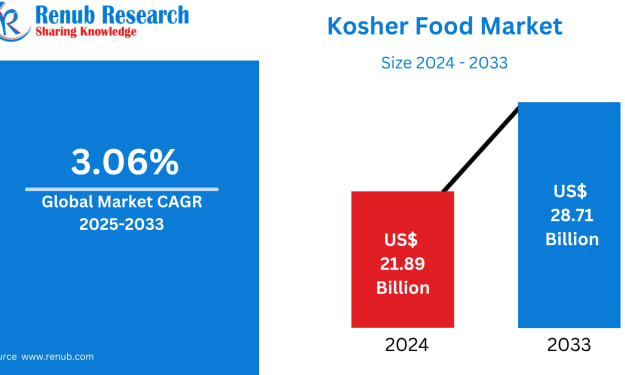
The Kosher Food Market is entering a transformative decade, supported by evolving consumer preferences, increasing emphasis on food safety, and rising ethical awareness. According to Renub Research, the global market is projected to grow from US$ 21.89 Billion in 2024 to US$ 28.71 Billion by 2033, expanding at a CAGR of 3.06% from 2025 to 2033.
By Renub Research2 months ago in Feast
My Tous les Jours Trip
As someone who lives in a rural area, I don't get the chance to visit fancy restaurants or bakeries that often. So, when a friend told me about a French-Asian bakery that's less than an hour away, I knew I had to check it out and grab some pictures for social media. Tous les Jours ended up providing an immersive experience that went above and beyond my expectations--although I did leave with a few reservations.
By Kaitlin Shanks16 days ago in Feast



Comments
There are no comments for this story
Be the first to respond and start the conversation.