
Non-GMO Food Market Size and Forecast: A Global Shift Toward Clean, Transparent Nutrition (2025–2033)
Rising health awareness, clean-label demand, and sustainable agriculture fuel steady global market growth

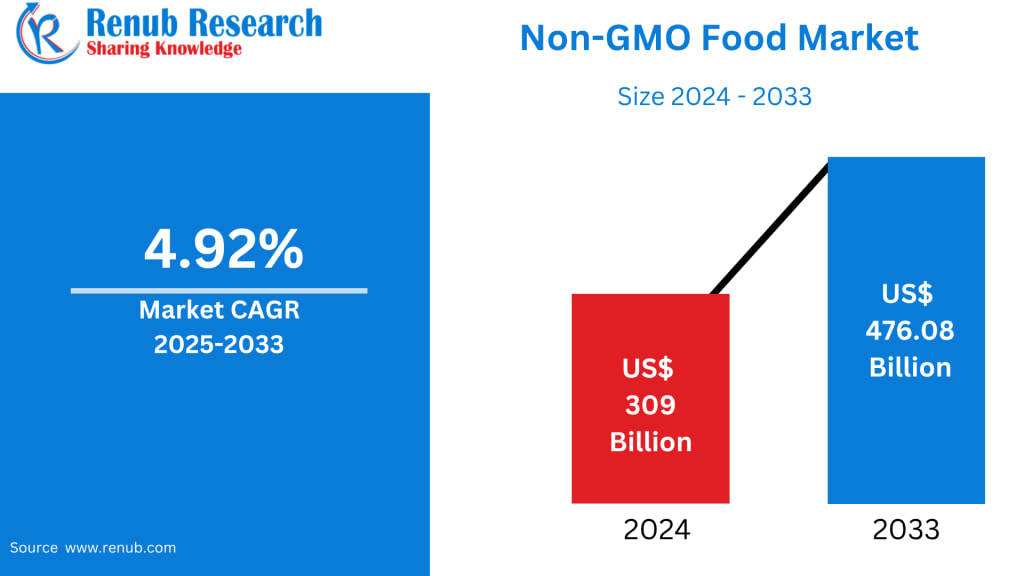
Global Non-GMO Food Market at a Glance
The global Non-GMO Food Market is entering a period of sustained expansion as consumers increasingly prioritize transparency, sustainability, and health in their food choices. According to Renub Research, the market was valued at US$ 309 billion in 2024 and is expected to reach US$ 476.08 billion by 2033, growing at a CAGR of 4.92% from 2025 to 2033.
This steady growth reflects a broader transformation in global food systems. Consumers are no longer satisfied with affordable food alone; they want to know what is in their food, where it comes from, and how it is produced. Non-GMO foods, which exclude genetically modified organisms at every stage of production, are increasingly perceived as safer, more ethical, and environmentally responsible.
North America remains a major growth engine, driven by strong consumer awareness and regulatory transparency. Meanwhile, Asia-Pacific, the Middle East, and Latin America are emerging as high-potential markets as urbanization, disposable income, and health awareness rise.
Global Non-GMO Food Industry Overview
Today’s consumers are more informed than ever before, and this awareness is reshaping purchasing behavior across food categories. Concerns over genetically modified organisms (GMOs), long-term health impacts, environmental sustainability, and biodiversity loss have pushed many buyers toward natural and minimally processed foods. As a result, non-GMO food products are becoming a preferred choice for families, health-conscious individuals, and environmentally aware consumers.
Non-GMO food is closely associated with clean-label trends, which emphasize simple ingredients, ethical sourcing, and transparent labeling. The availability of information through online platforms has further empowered consumers to make informed purchasing decisions. This shift has encouraged manufacturers to expand non-GMO product lines across fresh foods, processed foods, beverages, and infant nutrition.
Another major driver is the rise of plant-based and allergen-free diets. Consumers with food sensitivities, dietary restrictions, or ethical concerns are actively choosing non-GMO options that align with vegan, vegetarian, and flexitarian lifestyles. In response, food manufacturers are investing heavily in R&D to create innovative non-GMO alternatives that deliver both taste and nutrition.
A notable example is Danone SA, which launched a dairy and plant-blend baby food product made with non-GMO soy and plant ingredients in July 2022, highlighting how even infant nutrition is shifting toward non-GMO formulations.
Key Factors Driving Non-GMO Food Market Growth
Growing Interest in Natural and Organic Products
The demand for natural and organic food products has surged globally, and non-GMO foods are benefiting directly from this trend. Many consumers associate non-GMO labeling with chemical-free farming, fewer additives, and ethical production methods. This perception makes non-GMO products especially attractive to families, millennials, and wellness-focused consumers.
Health advocates, nutrition influencers, and clean-eating movements are reinforcing this trend, pushing brands to invest in organic farming, transparent supply chains, and certification programs. As awareness continues to grow, the overlap between the organic and non-GMO segments will remain a key growth driver.
Expanding Retail Channels and Product Availability
The expansion of supermarkets, specialty health stores, and online platforms has significantly improved access to non-GMO products. Large retailers are dedicating entire sections to non-GMO and organic foods, while e-commerce platforms allow brands to reach customers beyond major cities.
Online stores, in particular, are playing a critical role by offering subscription models, home delivery, and direct-to-consumer sales. This increased availability reduces barriers to adoption and encourages trial purchases, accelerating overall market penetration.
Rising Demand for Transparency and Clean Labels
Modern consumers demand openness. They want detailed information about ingredients, sourcing, and production methods. Non-GMO certification has become a trust signal, helping brands stand out in a crowded marketplace.
Clean-label packaging, traceability systems, and third-party certifications are no longer optional—they are essential. Companies that invest in transparency not only gain consumer trust but also build long-term brand loyalty, which is crucial for sustained growth in the non-GMO food sector.
Challenges Facing the Non-GMO Food Market
False Claims and Misleading Labels
One of the biggest challenges facing the industry is mislabeling and unverified claims. Some companies exploit the popularity of non-GMO foods by using vague language or unsupported labels, which can confuse consumers and undermine trust in legitimate brands.
Stronger regulations, consistent certification standards, and stricter enforcement are required to protect consumers and maintain market integrity. Without these safeguards, misleading claims could slow market momentum.
Competition from GMO-Based Alternatives
GMO crops offer higher yields, better pest resistance, and lower production costs, giving them a strong competitive advantage in large-scale agriculture. Non-GMO producers often face higher costs, lower yields, and supply limitations, making price competition difficult.
To remain competitive, non-GMO brands must focus on quality, sustainability, nutrition, and ethical positioning, rather than price alone. Premium branding and value-based marketing will be essential strategies moving forward.
Non-GMO Food Market Regional Overview
North America: Market Leader in Transparency and Demand
North America leads the global non-GMO food market due to high consumer awareness and strong regulatory frameworks. Consumers actively seek non-GMO, organic, and clean-label products, pushing retailers and manufacturers to expand their offerings.
United States Non-GMO Food Market
The United States is one of the most advanced non-GMO markets in the world. Growing concerns over environmental impact and health have led to increased demand for non-GMO cereals, dairy products, plant-based foods, and beverages.
Strict labeling regulations and widespread availability of certified products have strengthened consumer confidence. The country also benefits from strong advocacy for sustainable farming and a thriving plant-based food industry, making the U.S. a trendsetter for global markets.
Europe: Sustainability and Regulation Drive Growth
Europe’s non-GMO food market is driven by strict regulations and a strong consumer preference for ethical and sustainable food production.
Germany Non-GMO Food Market
Germany is a standout performer in Europe. Consumer spending on “Ohne Gentechnik” (without genetic engineering) products reached €16 billion in 2022, reflecting a 21% year-on-year increase. Dairy, poultry, and eggs dominate sales, highlighting strong consumer trust in non-GMO labeling.
Asia-Pacific: Rapid Growth Potential
Asia-Pacific is emerging as a fast-growing region, fueled by rising health awareness, urbanization, and changing dietary habits.
China Non-GMO Food Market
China is witnessing a gradual shift toward non-GMO foods as concerns about food safety and environmental sustainability grow. Although GM crops remain important for food security, demand for natural and clean-label products is rising, especially among urban consumers. Government support for organic farming is expected to further support market expansion.
Middle East & Africa: Early-Stage but Promising
United Arab Emirates Non-GMO Food Market
In the UAE, demand for non-GMO foods is rising alongside growing health awareness and government support for sustainable agriculture. While challenges remain, including supply limitations and higher production costs, consumer interest in premium, clean-label foods continues to increase, positioning the UAE as a key emerging market.
Market Segmentation Overview
By Product Type
Cereals and Grains
Liquor
Meat and Poultry
Edible Oils
Others
By Distribution Channel
Supermarkets and Hypermarkets
Food Service
Convenience Stores
Online Stores
Others
By Region
North America: United States, Canada
Europe: France, Germany, Italy, Spain, United Kingdom, Belgium, Netherlands, Turkey
Asia Pacific: China, Japan, India, Australia, South Korea, Thailand, Malaysia, Indonesia, New Zealand
Latin America: Brazil, Mexico, Argentina
Middle East & Africa: South Africa, Saudi Arabia, United Arab Emirates
Competitive Landscape and Company Analysis
The global non-GMO food market is moderately competitive, with both multinational corporations and specialized organic brands actively expanding their portfolios. Companies are investing in R&D, certifications, and sustainable sourcing to strengthen their market positions.
Key Players Covered
Amy’s Kitchen, Inc.
Blue Diamond Growers
Organic Valley
The Hain Celestial Group, Inc.
Nestlé S.A.
The Kellogg’s Company
PepsiCo Inc.
Pernod Ricard
Clif Bar & Company
Danone SA
Each company has been analyzed based on company overview, key personnel, recent developments, SWOT analysis, and revenue performance, providing a comprehensive view of the competitive environment.
Final Thoughts
The global non-GMO food market is no longer a niche segment—it is becoming a core pillar of the modern food industry. As consumers demand healthier, cleaner, and more transparent food choices, non-GMO products are gaining mainstream acceptance across regions and demographics.
With the market expected to grow from US$ 309 billion in 2024 to US$ 476.08 billion by 2033, the next decade will be shaped by innovation, certification, and sustainability. Companies that invest in trust, transparency, and quality will be best positioned to capture long-term growth.
About the Creator
jaiklin Fanandish
Jaiklin Fanandish, a passionate storyteller with 10 years of experience, crafts engaging narratives that blend creativity, emotion, and imagination to inspire and connect with readers worldwide.
Keep reading
More stories from jaiklin Fanandish and writers in Feast and other communities.
France Foodservice Market Size and Forecast 2025–2033: Tradition Meets Transformation
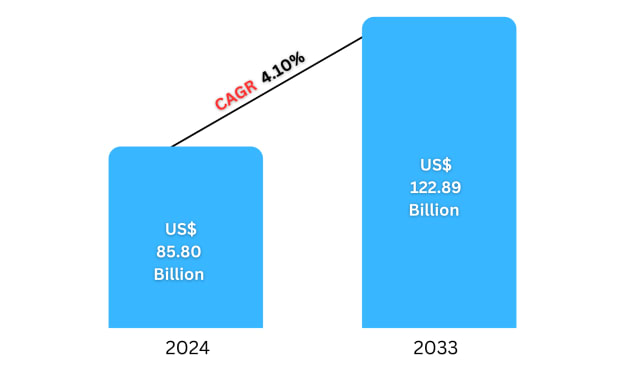
France Foodservice Market Overview The France foodservice market is poised for steady and resilient growth, reflecting the country’s deep-rooted culinary heritage and its ability to adapt to modern consumer trends. According to Renub Research, the France foodservice market is expected to grow from US$ 85.80 billion in 2024 to US$ 122.89 billion by 2033, expanding at a compound annual growth rate (CAGR) of 4.10% between 2025 and 2033.
By jaiklin Fanandish3 days ago in Feast
My Tous les Jours Trip
As someone who lives in a rural area, I don't get the chance to visit fancy restaurants or bakeries that often. So, when a friend told me about a French-Asian bakery that's less than an hour away, I knew I had to check it out and grab some pictures for social media. Tous les Jours ended up providing an immersive experience that went above and beyond my expectations--although I did leave with a few reservations.
By Kaitlin Shanks28 days ago in Feast
Global Honey Market Size and Forecast 2025–2033: Sweet Growth Driven by Health, Sustainability, and Innovation
Global Honey Market Overview The global honey market is experiencing strong and sustained growth, reflecting changing consumer preferences toward healthier, natural, and clean-label food products. According to Renub Research, the honey market is expected to reach US$ 17.17 billion by 2033, up from US$ 10.55 billion in 2024, growing at a CAGR of 5.56% from 2025 to 2033.
By Aaina Oberoiabout 16 hours ago in Feast



Comments
There are no comments for this story
Be the first to respond and start the conversation.