
France Foodservice Market Size and Forecast 2025–2033: Tradition Meets Transformation
From Michelin-starred restaurants to digital-first kitchens, France’s foodservice industry is entering a new era of growth, innovation, and sustainability


France Foodservice Market Overview
The France foodservice market is poised for steady and resilient growth, reflecting the country’s deep-rooted culinary heritage and its ability to adapt to modern consumer trends. According to Renub Research, the France foodservice market is expected to grow from US$ 85.80 billion in 2024 to US$ 122.89 billion by 2033, expanding at a compound annual growth rate (CAGR) of 4.10% between 2025 and 2033.
Foodservice includes all establishments involved in preparing, serving, and selling food to consumers—ranging from restaurants, cafés, bakeries, and bars to catering services and institutional food providers in schools, hospitals, and workplaces. In France, foodservice is more than an economic activity; it is a cultural expression deeply tied to identity, lifestyle, and tourism.
French gastronomy, recognized by UNESCO as part of the world’s intangible cultural heritage, continues to shape both local consumption and international perception. While traditional brasseries and boulangeries remain iconic, the industry is also evolving rapidly, embracing digital ordering, sustainable sourcing, experiential dining, and global cuisines. This balance between heritage and innovation is the foundation of France’s expanding foodservice economy.
Market Growth Drivers Shaping the French Foodservice Industry
Revival of Tourism and Culinary Culture Post-Pandemic
France remains the most visited country in the world, welcoming more than 100 million tourists in 2023, and this momentum is expected to continue through 2025 and beyond. Tourism recovery has become one of the strongest drivers of foodservice demand, as visitors actively seek authentic French dining experiences.
Cities such as Paris, Lyon, Marseille, Nice, and Bordeaux have seen a surge in restaurant traffic, café culture, and premium dining. From Michelin-starred establishments to street food markets, the entire spectrum of foodservice formats benefits from renewed global mobility. Outdoor dining, wine tourism, and heritage cuisine experiences have gained popularity, reinforcing foodservice as a central pillar of France’s tourism economy.
This tourism-led rebound has also supported regional markets, spreading foodservice growth beyond Paris into coastal and wine-producing regions.
Shift Toward Healthier, Sustainable, and Local Dining
Consumer behavior in France is undergoing a clear transformation. The growing locavore movement encourages consumers to choose locally sourced, organic, and seasonal ingredients. Restaurants, cafés, and bakeries are increasingly adopting farm-to-table models, plant-based menus, and food waste reduction practices.
Eco-labels, sustainability certifications, and transparent sourcing have become powerful differentiators for foodservice brands. Vegan and vegetarian dining concepts are expanding rapidly in urban centers, responding to health-conscious and environmentally aware consumers.
In September 2024, the Consumer Goods Forum’s Collaboration of Healthier Lives Coalition of Action, supported by METRO France and leading manufacturers such as Danone, Bonduelle, and Barilla, launched 16 sustainable and affordable recipes aimed at promoting healthier eating while minimizing waste—demonstrating how industry-wide initiatives are shaping dining habits across France.
Digital Transformation and Delivery Platform Expansion
Technology has become a critical growth engine for the French foodservice sector. Platforms such as Uber Eats, Deliveroo, and Just Eat have redefined how consumers access meals, especially in urban environments. What started as fast-food delivery has now expanded to include gourmet meals, artisanal bakeries, and even fine dining options.
Restaurants are investing in digital menus, mobile apps, contactless payments, loyalty programs, and data-driven pricing strategies. Cloud kitchens and virtual restaurant brands are also emerging as cost-efficient models to serve digital-first consumers.
In March 2022, U.S.-based quick-commerce company Gopuff entered France, launching operations in Paris, Marseille, Lille, and Toulouse. With more than $1 billion raised in funding, the company’s entry highlights the growing intersection of foodservice, logistics, and technology in the French market.
Key Challenges Facing the France Foodservice Market
Labor Shortages and Rising Operational Costs
One of the most pressing challenges for the industry is the shortage of skilled labor. The pandemic accelerated workforce exits from hospitality, and many restaurants now struggle to recruit chefs, servers, and kitchen staff. Higher wages, staff training costs, and reduced operating hours have become common responses, but these measures also pressure profit margins.
At the same time, inflation and rising energy prices have increased costs related to cooking, refrigeration, and transportation. Many operators are experimenting with automation, simplified menus, and dynamic pricing, but balancing cost control with service quality remains a challenge for long-term sustainability.
Inflation and Supply Chain Disruptions
France’s foodservice market is also affected by global supply chain volatility. Price fluctuations in imported commodities such as coffee, seafood, and specialty produce have disrupted menu planning and pricing strategies. Energy and packaging costs continue to rise, putting pressure on smaller operators.
While local sourcing and seasonal menus offer some protection, inflation may reduce dining frequency among middle-income consumers, slowing market momentum in certain segments.
Segment Analysis: Diverse Growth Across Foodservice Categories
France Bars & Pubs Foodservice Market
The bars and pubs segment is experiencing renewed growth, fueled by the revival of nightlife and social experiences. Cities like Paris and Toulouse are witnessing the rise of craft beer pubs, cocktail lounges, and themed bars. Premiumization, live music, and mixology-driven concepts are attracting young professionals and tourists alike, reinforcing France’s strong café-bar tradition.
France Asian & European Foodservice Market
Asian cuisines—especially Japanese, Korean, and Thai—are gaining strong traction, offering bold flavors and perceived health benefits. European cuisines such as Italian, Spanish, and Mediterranean remain staples, particularly in casual dining. Fusion concepts are increasingly popular, blending global ingredients with French techniques, especially in cosmopolitan hubs like Paris and Marseille.
France Middle Eastern Foodservice Market
Middle Eastern cuisine continues to grow in popularity, driven by affordability, health appeal, and cultural diversity. Falafel, shawarma, hummus, and grilled meats are now mainstream, with many operators upgrading from quick-service formats to modern casual and fine dining. This segment reflects France’s multicultural culinary landscape and evolving taste preferences.
France Burger Foodservice Market
The burger category has evolved into a gourmet and premium offering. While global chains maintain strong presence, artisanal burger brands emphasize local sourcing, organic meats, and plant-based alternatives. Burgers are also among the most ordered items on delivery platforms, ensuring consistent demand across dine-in and online channels.
France Chained Outlets Foodservice Market
Chained outlets dominate the organized foodservice segment, benefiting from scale, brand trust, and digital integration. Franchise models are expanding rapidly in malls, airports, and transit hubs. Loyalty programs, mobile ordering, and standardized quality make chains highly competitive against independent restaurants.
France Leisure Foodservice Market
Leisure foodservice—located in tourist attractions, museums, cinemas, and entertainment zones—focuses on experience-based dining. Seasonal festivals, pop-up restaurants, and outdoor dining concepts are driving growth. As tourism and domestic travel rebound, leisure dining continues to benefit from innovation and storytelling-driven hospitality.
Regional Spotlight: Paris and Nouvelle-Aquitaine
Paris Foodservice Market
Paris remains the heart of French gastronomy, with unmatched diversity in dining formats. From Michelin-starred restaurants to eco-friendly cafés and street food markets, the city leads innovation and global culinary trends. Sustainability, experiential dining, and design-led concepts define the Parisian foodservice landscape, reinforcing its global culinary leadership.
Nouvelle-Aquitaine Foodservice Market
Known for Bordeaux wines, seafood, and regional specialties, Nouvelle-Aquitaine blends tradition with modern dining trends. Tourism in coastal cities and wine regions drives steady demand, while chefs emphasize terroir, authenticity, and sustainability. The region’s strong gastronomic identity continues to attract both domestic and international visitors.
Final Thoughts: A Market Built on Heritage and Innovation
The France foodservice market is entering a period of sustainable, long-term growth driven by tourism recovery, evolving consumer lifestyles, and digital transformation. While labor shortages and inflation remain challenges, innovation, sustainability, and cultural relevance continue to strengthen the industry.
With the market projected to reach US$ 122.89 billion by 2033, France’s foodservice sector stands as a global benchmark—successfully combining culinary tradition with modern dining experiences. As operators adapt to health-conscious, digital-first, and experience-driven consumers, France’s foodservice industry is set to remain one of the most influential and dynamic in the world.
About the Creator
jaiklin Fanandish
Jaiklin Fanandish, a passionate storyteller with 10 years of experience, crafts engaging narratives that blend creativity, emotion, and imagination to inspire and connect with readers worldwide.
Keep reading
More stories from jaiklin Fanandish and writers in Feast and other communities.
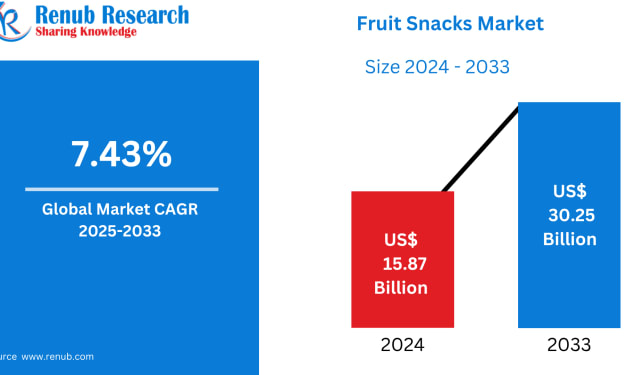
Global Fruit Snacks Market Set to Double by 2033 as Healthier Snacking Takes Center Stage
Global Fruit Snacks Market Size & Forecast 2025–2033 The Global Fruit Snacks Market was valued at US$ 15.87 billion in 2024 and is expected to grow to US$ 30.25 billion by 2033, registering a strong CAGR of 7.43% during 2025–2033, according to Renub Research. This robust expansion is being driven by a powerful combination of changing consumer lifestyles, increasing health awareness, and the global shift toward convenient, naturally derived snack foods.
By jaiklin Fanandish3 days ago in Feast
My Tous les Jours Trip
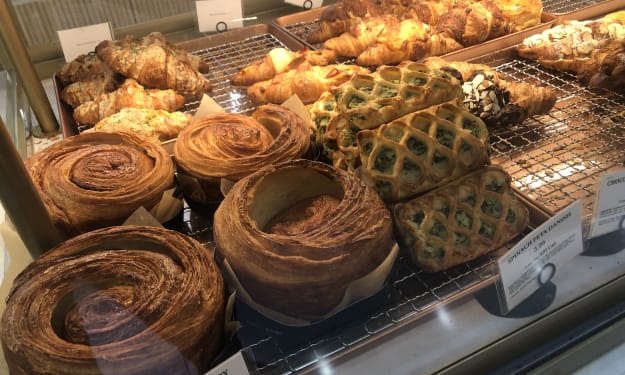
As someone who lives in a rural area, I don't get the chance to visit fancy restaurants or bakeries that often. So, when a friend told me about a French-Asian bakery that's less than an hour away, I knew I had to check it out and grab some pictures for social media. Tous les Jours ended up providing an immersive experience that went above and beyond my expectations--although I did leave with a few reservations.
By Kaitlin Shanks26 days ago in Feast
Australia Rice Market Size & Forecast 2025–2033
Australia Rice Market Outlook The Australia Rice Market is projected to grow from US$ 5.74 billion in 2024 to US$ 7.1 billion by 2033, expanding at a CAGR of 2.4% during 2025–2033, according to Renub Research. This steady growth reflects a fundamental shift in Australian food consumption patterns, driven by rising demand for premium, organic, and specialty rice varieties, alongside strong multicultural influences and health-conscious eating habits.
By Aaina Oberoi3 days ago in Feast


Comments
There are no comments for this story
Be the first to respond and start the conversation.