
Nature's Final Spring Offering: Mastering Wild Greens Without Bitterness — Grandmother's Wisdom Revived at the Hearth
Nature's Final Spring Offering

Beneath the cherry blossoms' fleeting beauty lies spring's true culinary treasure—wild greens that have sustained generations. I still see my grandmother's calloused hands sorting through foraged bundles, her voice chiding, "Child, these weeds outshine any pharmacy." Decades later, as concrete jungles replaced our foraging grounds, I've resurrected her anti-bitterness alchemy to honor these vanishing flavors.
The Bittersweet Legacy of Wild Edibles
Once famine's reluctant saviors, wild greens now grace Michelin-starred menus as "hyperlocal delicacies." My urban farmer friend quips, "We've come full circle—from peasant food to $25 salads." Beyond trends, these plants carry ancestral wisdom:
• Nutritional density 10x cultivated greens (per Tokyo University study)
• Bioactive compounds like sesquiterpene lactones (natural detoxifiers)
• Carbon footprint near zero—nature's original farm-to-table
Yet modern palates recoil at their signature bitterness—an evolutionary warning system we must outsmart. My first nettle soup disaster tasted like "liquid punishment," until grandmother's techniques transformed agony into epiphany.
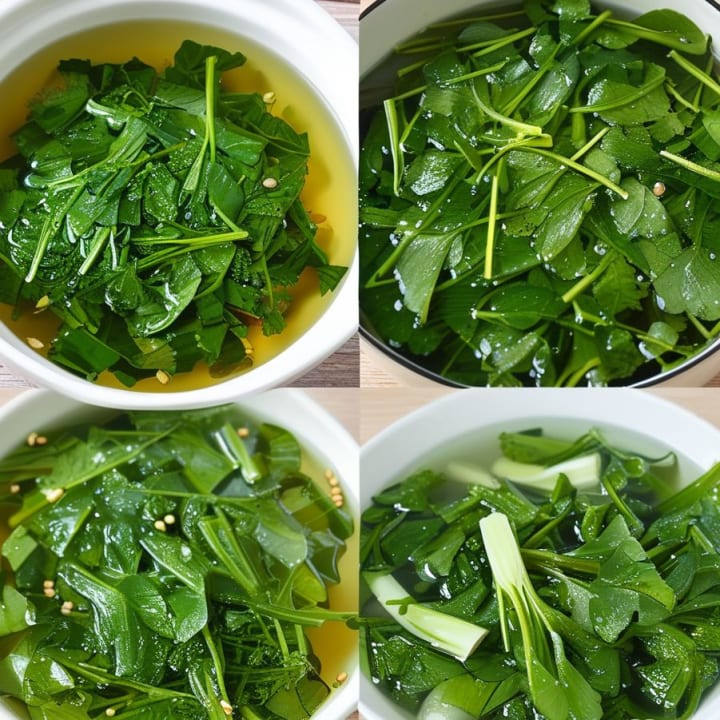
The Bitterness Breakdown: 3-Step Green Alchemy
**1. Shepherd's Purse (Capsella bursa-pastoris)
Nature's Detoxifier
This lacy-leaved wonder contains acetylcholine-like compounds that traditional Chinese medicine values for vascular health.
De-Bitter Protocol:
• Cold soak (4°C/39°F) 15 minutes—shocks plant cells
• Blanch in alkaline bath (1L water + 5g baking soda + 3g sea salt)
• Ice plunge with weighted press (extracts residual bitterness)
Culinary Magic:
Blend with walnut miso for dumpling filling—the umami-fat matrix neutralizes remaining tannins.
2. Dandelion (Taraxacum officinale)
Sunshine in Leaf Form
Every part usable: flowers for wine, roots for coffee substitute, leaves for salads.
Taming Tactics:
• Warm saltwater massage (40°C/104°F dissolves oxalic acid)
• Sugar-shock blanch (1 tsp brown sugar per liter water)
• Ferment with koji rice (48hrs, 30°C/86°F)
Reinvention:
Fermented leaves become pancetta-like umami bombs—crumble over risotto.
3. Sow Thistle (Sonchus oleraceus)
The Bitter King
Contains cancer-preventive luteolin, per Journal of Agricultural and Food Chemistry.
Double-Blanch Method:
• First blanch: 30 seconds (discard water)
• Second blanch: 45 seconds with ginger & kombu
• Marinate in sweet vinegar (3:1:1 ratio of rice vinegar, honey, sesame oil)
Pro Tip:
Save blanching liquid as detox tea—bitterness indicates bioactive concentration.
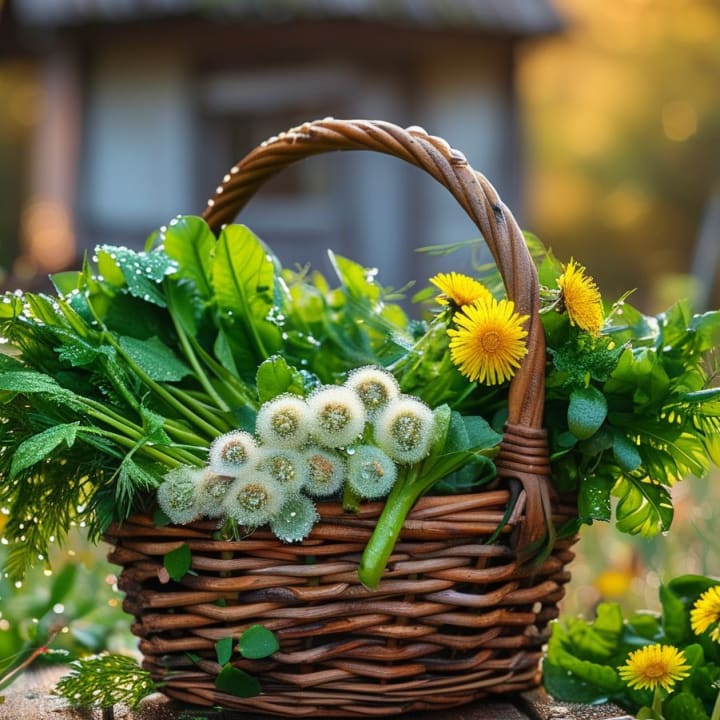
Three-Generation Feast: Wild Greens Reimagined
**1. Generational Porridge
Base: Heirloom black rice + forbidden rice + pearl barley
Greens: Blanched chicory, amaranth, garlic mustard
Magic Touch:
• Grandmother's way: Pork bone broth base
• My twist: Mushroom dashi + truffle oil
• Gen Z version: Oat milk base + spirulina boost
**2. Dumpling Evolution
Filling Formula:
• 50% wild greens (water squeezed to 30% moisture)
• 30% pressed tofu (freeze-thawed for meaty texture)
• 20% aromatic fats (toasted pine nuts + perilla oil)
Cooking Hack:
Steam on magnolia leaves—imparts floral notes that counter earthiness.
**3. Global Fusion Pancakes
Batter Matrix:
• 100g chickpea flour
• 50g tempura flour
• 1 egg (or flaxseed gel)
• 200ml sparkling water
Crisp Technique:
Cook in clarified butter (ghee) using cast iron skillet—achieves lace-like edges.
Topping Bar:
• Traditional: Fermented bean paste
• Modern: Yuzu kosho mayo
• Fusion: Gochujang-maple glaze
The Hearth's Hidden Science
Grandmother's methods now have biochemical explanations:
• Blanching denatures myrosinase enzymes causing bitterness
• Cold shocking preserves chlorophyll's vibrant green
• Alkaline baths hydrolyze phenolic compounds
A 2023 Kyoto University study confirmed traditional double-blanching reduces bitter glucosinolates by 92%—validating ancestral wisdom with HPLC analysis.
Foraging Ethics in Modern Times
As wildcrafting gains popularity, remember:
• 1/3 Rule: Take only one-third of a patch
• Urban Hazards: Avoid roadsides (heavy metals) and dog parks
• ID Apps: Use PlantNet + local expert verification
My community runs "weed walks" with elders teaching sustainable harvesting—passing knowledge like relay batons.
Epilogue: The Circle Unbroken
Last spring, I took my city-born niece foraging. As she recognized chickweed by its "starry flowers," grandmother's voice seemed to whisper through the breeze. These greens bind us to countless springs past and future—each bitter note a love letter from the earth.
When steam rises from my porridge pot, I see generations of women tending fires, transforming harshness into nourishment. In their honor, I've created a Wild Greens Manifesto:
1. Celebrate bitterness as nature's signature
2. Adapt traditions but respect roots
3. Share knowledge as widely as dandelion seeds
May your kitchen become a bridge between ancestral wisdom and modern curiosity. What wild flavors will you resurrect this spring?
About the Creator
Cricket powder cinnamon banana bread
I lived in Mexico for some years, many Moons ago, twice. It was there when I saw for the first time fried crispy crickets (known as chapulines in Mexico) tacos seasoned with lime, garlic, salt, and chile. Cricket tacos are a traditional delicacy which is especially popular in the Oaxaca region of Mexico. You can find them as a street food optionat outdoor markets in Mexico (look for chapulines) or at speciality restauants in the U.S. (just make sure the crickets are for human consumption).
By Susan Fourtané about a month ago in Feast
North America Pasta Market Size & Forecast 2025–2033
Introduction Pasta has quietly transformed from a traditional Italian staple into a universal comfort food across North America. Once associated mainly with classic recipes and home cooking, it now appears in gourmet menus, meal kits, microwaveable bowls, and plant-based diets. According to Renub Research, the North America pasta market was valued at US$ 6.23 billion in 2024 and is projected to reach US$ 8.91 billion by 2033, expanding at a CAGR of 4.05% from 2025 to 2033.
By Janine Root 6 days ago in Feast



Comments
There are no comments for this story
Be the first to respond and start the conversation.