
Middle East Halal Food Market Trends & Growth Outlook (2025–2033)
Rising Demand, Digital Access, and Health Awareness Drive a Trillion-Dollar Industry

Middle East Halal Food Market at a Glance
The Middle East Halal Food Market is undergoing a remarkable transformation, emerging as one of the fastest-growing segments within the global food industry. According to Renub Research, the market is expected to grow from US$ 838.18 billion in 2024 to an impressive US$ 1,877.77 billion by 2033, registering a robust CAGR of 9.38% from 2025 to 2033.
This growth trajectory is supported by multiple converging factors, including the rapid adoption of ready-to-eat halal foods, increasing awareness among non-Muslim consumers, expanding e-commerce distribution, and strong government-backed halal certification frameworks across the region.
As halal food continues to evolve beyond religious compliance into a symbol of quality, safety, and ethical consumption, the Middle East stands firmly at the center of the global halal economy.
Understanding Halal Food: Beyond Religious Compliance
The term “halal”, meaning permissible in Arabic, refers to food and beverages prepared according to Islamic dietary laws. These guidelines regulate ingredient sourcing, animal slaughter methods, hygiene practices, processing, storage, and transportation.
Halal certification plays a critical role in ensuring compliance, providing consumers with confidence that food products meet strict religious, ethical, and quality standards. Importantly, halal food is not limited to meat-based products—it encompasses dairy, cereals, oils, fruits, vegetables, confectionery, and processed foods, making it a comprehensive food ecosystem.
In recent years, halal food has increasingly been associated with clean-label ingredients, transparency, food safety, and humane practices, which has broadened its appeal beyond Muslim populations.
Middle East Halal Food Industry Overview
The Middle East represents one of the most fertile grounds for halal food consumption due to its large Muslim population, cultural alignment with halal practices, and rising disposable incomes. Countries across the Gulf Cooperation Council (GCC) have witnessed lifestyle changes driven by urbanization, globalization, and increasing female workforce participation, leading to higher demand for convenient, packaged, and ready-to-eat halal food products.
At the same time, governments are investing heavily in halal ecosystems—covering food, finance, logistics, and tourism—to position their economies as global halal hubs. This institutional support has accelerated product innovation, strengthened certification standards, and enhanced consumer trust.
Key Growth Drivers in the Middle East Halal Food Market
Rapid Expansion of Halal E-Commerce
The digital transformation of retail has significantly reshaped halal food accessibility. Online platforms and specialized halal e-commerce stores allow consumers to browse, verify certifications, and purchase halal products with ease.
Urban consumers, particularly younger demographics with busy lifestyles, increasingly rely on online grocery platforms for packaged foods, frozen meats, dairy products, and ready meals. Partnerships between e-commerce platforms and certified suppliers ensure product authenticity, while improved logistics infrastructure supports timely delivery.
As digital adoption continues to rise, halal e-commerce is expected to remain one of the strongest growth enablers in the region.
Expanding Middle-Class Population
Economic diversification and steady GDP growth across the Middle East—especially in GCC countries—have given rise to a rapidly expanding middle class. With higher disposable incomes, consumers are prioritizing quality, brand credibility, ethical sourcing, and food safety.
Halal-certified food aligns perfectly with these expectations, offering assurance not only of religious compliance but also of superior hygiene and ingredient transparency. This shift has increased demand for premium, value-added halal products, including organic foods, fortified dairy, plant-based alternatives, and functional snacks.
Rising Health and Wellness Awareness
Health-conscious consumers are increasingly viewing halal food as a cleaner and safer dietary option. The absence of alcohol, harmful additives, and unethical processing practices makes halal food appealing to individuals focused on wellness and preventive health.
Additionally, halal principles emphasize animal welfare and cleanliness throughout the supply chain, reinforcing the perception of halal food as a healthy and ethically responsible choice. This perception has significantly expanded the halal consumer base to include non-Muslim populations seeking trustworthy food options.
Challenges Facing the Middle East Halal Food Market
Limited Consumer Education
Despite growing awareness, many consumers—particularly non-Muslims—still associate halal food exclusively with religious observance. This limited understanding can restrict broader adoption, especially in multicultural urban markets.
Educating consumers about the quality, safety, traceability, and ethical advantages of halal food is essential. Clear labeling, transparency in certification processes, and targeted awareness campaigns can help overcome misconceptions and unlock new growth opportunities.
Technological and Infrastructure Gaps
In some Middle Eastern countries, insufficient cold-chain infrastructure, limited traceability systems, and inconsistent food safety technologies hinder market scalability. These gaps can lead to inefficiencies, higher operational costs, and uneven product quality.
Addressing these challenges requires investment in advanced food processing technologies, digital traceability tools, and standardized halal compliance systems. Collaboration between governments, private enterprises, and technology providers will be critical to strengthening supply chain integrity.
Country-Level Insights
Saudi Arabia Halal Food Market
Saudi Arabia represents one of the largest halal food markets globally, driven by its cultural and religious foundations. Halal food is deeply embedded in daily consumption, while rising health awareness and a growing middle class are increasing demand for premium products.
Religious tourism, particularly Hajj and Umrah, significantly boosts foodservice demand. Furthermore, Vision 2030 initiatives encourage investment, innovation, and local food production, strengthening Saudi Arabia’s role in the global halal ecosystem.
United Arab Emirates Halal Food Market
The UAE’s halal food market is dynamic and highly diversified, supported by a multicultural population and strong tourism sector. The country offers a wide range of halal-certified products across meat, dairy, cereals, beverages, and packaged foods.
Government-led halal certification frameworks and the UAE’s position as a global trade hub have enhanced international confidence in its halal industry. The rapid growth of online retail and food delivery platforms further supports market expansion.
Qatar Halal Food Market
Qatar’s halal food market is expanding steadily, backed by strong regulatory oversight and government commitment to Islamic principles. With Muslims comprising over 80% of the population, halal-certified food is a necessity rather than a preference.
National initiatives, including halal accreditation systems and import regulations, ensure product authenticity and consumer trust. Qatar’s strategic logistics infrastructure and focus on halal tourism and lifestyle services position it as a growing contributor to the regional halal economy.
Recent Market Developments
In January 2025, AIBarakah hosted an Arabian Nights–themed product showcase at Crowne Plaza in Ortigas Center, highlighting its halal-certified processed food range. The event featured protein snacks, corned beef variants, minced hash products, and 3-in-1 coffee alternatives, reflecting rising innovation in halal convenience foods and beverages.
Such product launches underscore the industry’s shift toward value-added, lifestyle-oriented halal offerings.
Market Segmentation Overview
By Product
Meat, Poultry & Seafood
Fruits & Vegetables
Dairy Products
Cereals & Grains
Oil, Fats & Waxes
Confectionery
Others
By Distribution Channel
Hypermarkets & Supermarkets
Online Stores
Convenience Stores
Specialty Stores
Others
By Country
Saudi Arabia
United Arab Emirates
Qatar
Iraq
Iran
Egypt
Algeria
Morocco
Nigeria
Competitive Landscape
The Middle East halal food market is highly competitive, featuring both multinational corporations and regional specialists. Key players covered across four strategic viewpoints—overview, leadership, recent developments, and revenue—include:
Nestlé SA
JBS SA
BRF SA
Kawan Food Berhad
Cargill Inc.
Carrefour SA
Crescent Foods Inc.
VegaVites
American Halal Company Inc.
American Foods Group LLC
Al Islami Foods
These companies are focusing on product innovation, certification transparency, supply chain integrity, and digital expansion to strengthen their market positions.
Final Thoughts
The Middle East Halal Food Market is transitioning into a trillion-dollar powerhouse, driven by demographic growth, digital accessibility, health consciousness, and strong institutional support. What was once a niche religious segment has now evolved into a globally relevant food category defined by quality, ethics, and trust.
With continued investment in technology, education, and infrastructure, the halal food industry in the Middle East is well-positioned for sustained growth through 2033 and beyond—serving not only Muslim consumers but a diverse global audience seeking safe, ethical, and high-quality food choices.
About the Creator
Renub Research
Renub Research is a Market Research and Consulting Company. We have more than 15 years of experience especially in international Business-to-Business Researches, Surveys and Consulting. Call Us : +1-478-202-3244
Keep reading
More stories from Renub Research and writers in Feast and other communities.
Vietnam Organic Food Market Size and Forecast 2025–2033
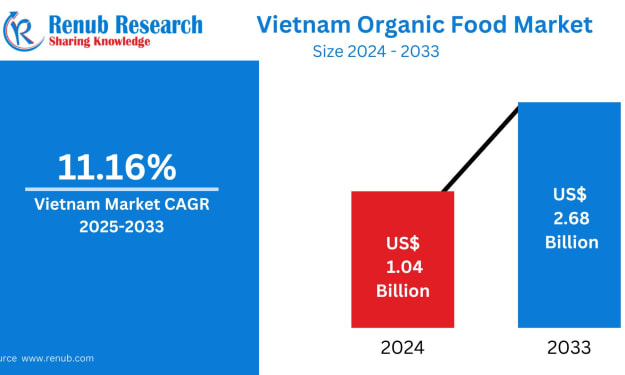
Vietnam Organic Food Market Outlook The Vietnam Organic Food Market is experiencing robust growth as consumers increasingly prioritize health, sustainability, and food safety. According to Renub Research, the market is projected to reach US$ 2.68 billion by 2033, up from US$ 1.04 billion in 2024, registering a strong CAGR of 11.16% from 2025 to 2033.
By Renub Research26 days ago in Feast
Cricket powder cinnamon banana bread
I lived in Mexico for some years, many Moons ago, twice. It was there when I saw for the first time fried crispy crickets (known as chapulines in Mexico) tacos seasoned with lime, garlic, salt, and chile. Cricket tacos are a traditional delicacy which is especially popular in the Oaxaca region of Mexico. You can find them as a street food optionat outdoor markets in Mexico (look for chapulines) or at speciality restauants in the U.S. (just make sure the crickets are for human consumption).
By Susan Fourtané 25 days ago in Feast
Food Processing Automation Market Size and Forecast, 2025–2033
Introduction The global food industry is undergoing a historic transformation as automation reshapes how food is processed, packaged, and distributed. Rising consumer demand for processed and ready-to-eat products, strict food safety regulations, labor shortages, and the push for operational efficiency are accelerating the adoption of automated technologies across the value chain.
By Marthan Sir5 days ago in Feast
'20/20'
"Do It Again" the track that would ultimately open the Beach Boys final album on Capitol Records which was released on February 10th 1969 had originally been released as a single in August of 1968. The track was the first of many post-Pet Sounds era throwbacks to the early Beach Boys sound which would become continually more cliched and eventually lead the Beach Boys to the level of self-parody they would eventually succumb to in the 1980s while their closest contemporaries The Beatles nearing the end of their run in 1969 would go on to be viewed as the most influential band of all time. However, the song itself is not bad on its surface, and it opens with a futuristic sounding (for 1969) drumbeat captured by then-Beach Boys engineer Stephen Desper using tape delays on the drums performed by Dennis Wilson and John Guerin. The song has been re-recorded numerous times over the years on various Beach Boys-related projects most notably the 2011 re-recording at Capitol studios featuring the five surviving Beach Boys at the time backed instrumentally by various members of both the Brian Wilson Band and Mike Loves touring "Beach Boys" to promote the then upcoming Beach Boys 50th Anniversary reunion tour in 2012. The hammering and power drill sound at the end of the song was an excerpt from a track called "Workshop" that was to be a part of the uncompleted "SMiLE" album.
By Sean Callaghan6 days ago in Beat


Comments
There are no comments for this story
Be the first to respond and start the conversation.