
Meat Snacks Market Analysis: Global Demand Accelerates as High-Protein Snacking Goes Mainstream
How Convenience, Clean Labels, and Protein Innovation Are Fueling a Multi-Billion-Dollar Market Boom

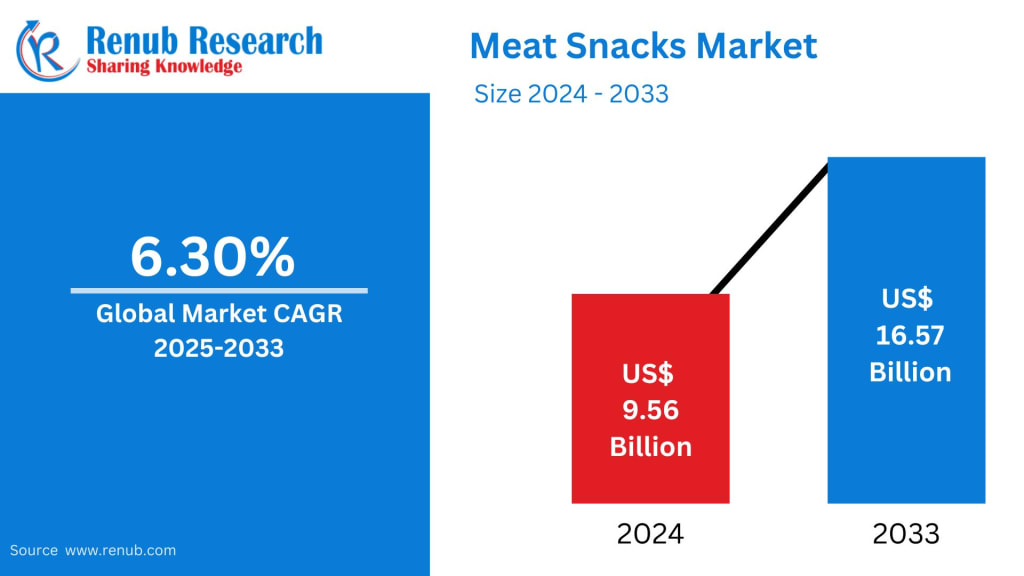
The global meat snacks market is undergoing one of the most dynamic expansions in the packaged food industry. According to Renub Research, the market is projected to grow from USD 9.56 billion in 2024 to USD 16.57 billion by 2033, registering a healthy CAGR of 6.30% from 2025 to 2033. This robust trajectory underscores a major shift in consumer behavior: the demand for high-protein, portable, and flavorful snacks is no longer a passing trend—it has become a global lifestyle preference.
From traditional beef jerky and salami sticks to premium turkey bites and exotic-flavored meat strips, meat snacks have transformed from niche convenience-store buys into mainstream supermarket staples. This metamorphosis is propelled by clean-label innovation, high protein demand, and the rapid expansion of premium artisanal offerings across emerging and developed markets alike.
Why Meat Snacks Are Experiencing a Modern Revival
Meat snacks are essentially ready-to-eat, protein-rich products, such as jerky, dried meat, salami sticks, meat bites, and spiced or smoked strips. While the concept has existed for centuries, the modern meat snack market is being reshaped by a few powerful forces:
1. Busy Consumer Lifestyles
As more households demand convenient, on-the-go options, meat snacks serve as a satisfying alternative to sugary or carb-heavy snacks.
2. High-Protein and Low-Carb Preferences
Fitness enthusiasts, dieters, and health-conscious shoppers increasingly seek protein-packed foods, making meat snacks an ideal fit.
3. Flavor and Texture Diversity
From Korean BBQ to chipotle, teriyaki, smoked pepper, and maple-bourbon, brands are experimenting widely with culinary inspirations to entice new customer segments.
4. Clean-Label Transparency
Products free from nitrates, preservatives, artificial colors, and fillers are gaining market traction. Premium brands using grass-fed, organic, or hormone-free meat are seeing strong adoption.
5. Rising Middle-Class Demand in Emerging Markets
Higher disposable incomes in countries across Asia-Pacific, Latin America, and the Middle East are fueling demand for premium protein snacks.
The global appeal of meat snacks is not only rooted in convenience and taste—it’s driven by a sustained shift toward nutrient-dense snacking, a trend unlikely to slow anytime soon.
Leading Players in the Global Meat Snacks Market
To understand the competitive landscape, here is a snapshot of some of the top companies shaping the industry:
Nestlé S.A.
Founded: 1866
Headquarters: Switzerland
Revenue: $103.8B (2023)
Website: www.nestle.com
Nestlé is one of the largest food manufacturers globally, with a colossal product portfolio including coffee, dairy products, confectionery, nutrition items, beverages, and frozen foods. Though not traditionally dominant in meat snacks, Nestlé’s massive distribution network across 189+ countries and its strong R&D foundation give it tremendous leverage for category expansion.
Hormel Foods
Founded: 1891
Headquarters: United States
Revenue: $11.9B (2023)
Website: www.hormelfoods.com
Hormel Foods is deeply entrenched in meat processing and manufacturing, producing fresh and packaged meats, shelf-stable items, stews, nut butters, and ready-to-eat meals. Its well-known brands such as Applegate, Hormel, Black Label, and Always Tender are already popular globally, and its strong distribution channels across 12+ countries give it a competitive advantage.
Conagra Brands
Founded: 1919
Headquarters: USA
Revenue: $12.1B (2023)
Website: www.conagrabrands.com
Conagra’s broad portfolio of branded consumer foods—including frozen meals, sauces, shelf-stable foods, and restaurant supplies—places it as a key competitor in the convenience snacking category. Its manufacturing presence across the U.S., Mexico, India, and Asia contributes to consistent growth momentum.
Bridgford Foods
Founded: 1932
Headquarters: Dallas, Texas
Website: www.bridgford.com
A major player in frozen foods and snack meats, Bridgford Foods is recognized for ready-to-eat sandwiches, meat snacks, biscuits, and frozen rolls. With heavy penetration across supermarkets, convenience stores, and mass retail outlets, it continues to dominate the affordable snacking segment.
The Hershey Company
Founded: 1894
Headquarters: Pennsylvania, USA
Revenue: $11.2B (2023)
Website: www.thehersheycompany.com
Best known for confectionery brands like Hershey’s, Reese’s, and Kit Kat, Hershey has been expanding aggressively into the snacking category. Through acquisitions and innovations in protein bars, popcorn mixes, pretzel snacks, and chocolate-covered meat snacks, Hershey is evolving into a broader snacking powerhouse.
Key Industry Developments
Tyson Foods, Inc.
September 2025: Tyson launched Chicken Cups, a protein-rich, convenient snack line featuring grilled and breaded chicken bites. Each 5.3-oz pack contains 30g of protein, designed for microwave-ready consumption in under two minutes—perfect for on-the-go consumers.
Danish Crown
August 2025: Danish Crown introduced “50/50”, a hybrid product blending 50% meat with 50% vegetables. This aligns with flexitarian trends as consumers seek to reduce pure meat consumption without sacrificing taste or protein.
General Mills
July 2025: Entered an exclusive partnership with PetSmart to launch Europe's fast-growing pet food brand Edgard & Cooper in the U.S. Although not directly tied to human meat snacks, this move demonstrates General Mills’ increasing focus on premium, protein-forward categories.
Kerry Group plc.
February 2023: Strengthened its European distribution by partnering with Azelis and Caldic to boost the reach of its food technology portfolio across the continent.
Premium Brands Holdings
2023: Achieved a 19% reduction in GHG intensity, though still reassessing its 2030 sustainability goals due to evolving electricity emission factors and rapid business expansion.
ITC Limited
2023–2024: Announced an ambitious target to achieve Net Zero Operations by 2050. It has remained plastic-neutral for four consecutive years, recovering more plastic than it uses in packaging.
SWOT Analysis Highlights
Associated British Foods plc. (ABF)
Strength:
ABF’s broad ingredient capabilities—enzymes, flavors, lipids, yeast—position it well for vertical integration in meat snacks. Its advanced R&D programs help produce cleaner, healthier meat snack formulations, allowing it to compete on quality rather than cost.
Jack Link’s
Strength:
Jack Link’s is synonymous with beef jerky worldwide. Its market power comes from high brand recognition, premium protein positioning, and rich flavor diversity across beef, pork, and chicken. Its strong presence in convenience stores and grocery retail gives it unmatched reach.
Market Forecast and Analytical Framework
Historical Trends
Past demand was driven largely by North America, where jerky has deep cultural roots. Over the last decade, rising incomes, fitness trends, and protein-focused diets have globalized the market.
Forecast Analysis
Renub Research forecasts the market to reach USD 16.57 billion by 2033, with premium jerky and clean-label snacks contributing the lion’s share of revenue growth.
Market Share Breakdown
North America: Largest market with mature jerky consumption
Europe: Rising interest driven by healthier snacking
Asia-Pacific: Fastest-growing region due to emerging middle class
Latin America & Middle East: Growing flavor innovation and urbanization
Company Analysis Framework (Available for All Listed Companies)
For each company—Nestlé, Hormel Foods, Conagra, Bridgford Foods, Hershey, ABF, Tyson, Danish Crown, Kerry, General Mills, Jack Link’s, Old Trapper, Amylu Foods, Premium Brands Holdings, ITC Limited—the following detailed analysis is available:
1. Overview
A complete profile of operations, key products, and strategic focus.
2. Company History & Mission
Exploring long-term commitments, consumer focus, and industry positioning.
3. Business Model & Operations
Whether vertically integrated, multi-segment, or innovation-led.
4. Workforce & Leadership
Including executive management and division heads.
5. Recent Developments
Product launches, supply chain updates, expansions, or digital investments.
6. Mergers & Acquisitions
Key deals shaping their meat snack strategies.
7. Partnerships & Investments
Collaborations for R&D, sustainability, and distribution.
8. Sustainability Strategy
Renewable energy adoption
Water conservation
Waste management
Sustainable packaging
Circular economy initiatives
9. Product Analysis
Product quality standards
Innovation pipeline
Benchmarking against competitors
10. SWOT Analysis
Strengths, weaknesses, opportunities, and threats for each company.
11. Revenue Analysis
Market position, growth trajectory, and regional revenue share.
Final Thoughts
The meat snacks market is no longer an old-school jerky industry—it is a dynamic, innovation-driven global sector shaped by shifting consumer lifestyles, sustainability expectations, and nutritional preferences. With a projected value of USD 16.57 billion by 2033, the industry is buzzing with opportunities for food giants and emerging brands alike.
Premium flavors, flexitarian options, protein-rich innovations, and cleaner label ingredients will define the next era of growth. As companies intensify their investments in R&D, sustainability, and global distribution, the meat snacks industry is perfectly positioned to remain a major player in the future of healthy snacking.
About the Creator
Marthan Sir
Educator with 30+ years of teaching experience | Passionate about sharing knowledge, life lessons & insights | Writing to inspire, inform, and empower readers.
Keep reading
More stories from Marthan Sir and writers in Feast and other communities.
Halal Food Market Companies Analysis — Global Growth, Key Players & Industry Outlook 2025–2033
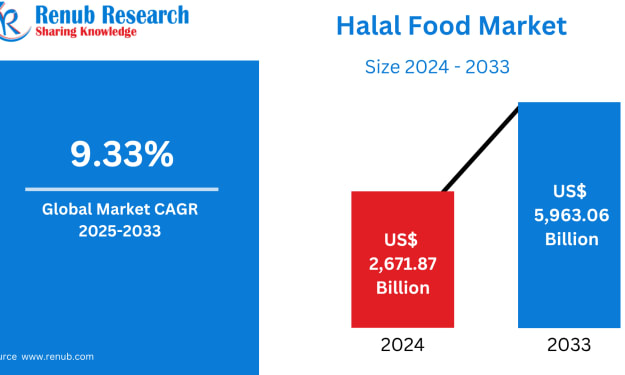
Introduction: The Rapid Rise of the Global Halal Food Market The global halal food industry has transformed from a religiously guided consumption category into one of the world’s fastest-growing mainstream food segments. According to Renub Research, the halal food market was valued at US$ 2,671.87 billion in 2024 and is projected to surge to US$ 5,963.06 billion by 2033, expanding at a CAGR of 9.33% from 2025 to 2033.
By Marthan Sirabout a month ago in Feast
Cricket powder cinnamon banana bread
I lived in Mexico for some years, many Moons ago, twice. It was there when I saw for the first time fried crispy crickets (known as chapulines in Mexico) tacos seasoned with lime, garlic, salt, and chile. Cricket tacos are a traditional delicacy which is especially popular in the Oaxaca region of Mexico. You can find them as a street food optionat outdoor markets in Mexico (look for chapulines) or at speciality restauants in the U.S. (just make sure the crickets are for human consumption).
By Susan Fourtané 25 days ago in Feast
Global Butter Market Size & Forecast 2025–2033
Global Butter Market Overview The Global Butter Market is witnessing steady and sustained growth, supported by shifting consumer preferences toward natural dairy products and the continued expansion of bakery and foodservice industries worldwide. According to Renub Research, the global butter market is anticipated to grow from US$ 27.84 Billion in 2024 to US$ 40.81 Billion by 2033, registering a Compound Annual Growth Rate (CAGR) of 4.34% during 2025–2033.
By jaiklin Fanandish5 days ago in Feast
A Failed Artist, A Disillusioned Poet, An Underpaid Game Show Host
I took my son and niece to Gori, a small town in Georgia where Joseph Stalin was born. They talked me into visiting the Stalin's Museum, the largest in the post-Soviet space. I had resisted going there because I just can't stand the monster and know enough about him, or so I thought.
By Lana V Lynx6 days ago in FYI


Comments
There are no comments for this story
Be the first to respond and start the conversation.