
Halal Food Market Companies Analysis — Global Growth, Key Players & Industry Outlook 2025–2033
A deep look at the booming US$ 2.67 trillion halal food market, its leading companies, sustainability efforts, and growth opportunities as the industry marches toward a US$ 5.96 trillion valuation by 2033.


Introduction: The Rapid Rise of the Global Halal Food Market
The global halal food industry has transformed from a religiously guided consumption category into one of the world’s fastest-growing mainstream food segments. According to Renub Research, the halal food market was valued at US$ 2,671.87 billion in 2024 and is projected to surge to US$ 5,963.06 billion by 2033, expanding at a CAGR of 9.33% from 2025 to 2033.
This meteoric rise reflects shifting consumer values. Halal is no longer only about religious compliance—it embodies clean-label ingredients, ethical sourcing, strict hygiene, humane animal treatment, and transparent certification. These qualities resonate strongly with both Muslim and non-Muslim consumers seeking trustworthy, safe, and ethically aligned food choices.
Halal food follows the dietary guidelines prescribed in the Quran:
No pork or alcohol
No ingredients sourced from haram (forbidden) materials
Meat must be slaughtered humanely and blessed
Entire supply chain must stay contamination-free
Strict hygiene, safety, and traceability protocols
As global Muslim populations grow—alongside rising disposable incomes and urban lifestyles—demand for halal-certified products continues to climb. Governments in Southeast Asia, the Middle East, and Europe have also strengthened halal certification frameworks, elevating consumer trust.
Global Market Drivers & Trends
1. Muslim Population Expansion
The global Muslim population is projected to reach 2.2 billion by 2030, creating a massive and steady demand pool for halal food.
2. Growing Awareness of Halal Certification
Consumers increasingly associate halal labels with safety, hygiene, and ethical sourcing.
3. Rise of Halal Processed Foods
Busy lifestyles are accelerating demand for halal ready-to-eat meals, frozen foods, snacks, and beverages.
4. Expansion Into Non-Muslim Markets
Regions like Europe, the U.S., and East Asia are witnessing surging halal consumption driven by health-focused and quality-conscious consumers.
5. Digitalization & E-Commerce
From halal meat delivery apps to cross-border online grocery stores, digital platforms are widening access to certified products.
6. Government Support & Certification Programs
Malaysia, UAE, Indonesia, and India are enhancing global halal regulatory alignment, supporting exports and industry standardization.
Top 15 Companies Shaping the Halal Food Market
Below are concise, high-impact summaries of the top global players influencing the halal food ecosystem.
1. JBS SA (Brazil)
One of the world’s largest meat processors, JBS offers extensive halal-certified beef, poultry, and lamb products under brands like Friboi, Seara, and Swift. With operations across six continents, JBS plays a dominant export role in supplying halal meat to the Middle East and Asia.
2. Kawan Food Berhad (Malaysia)
Malaysia’s leading frozen Asian food manufacturer, known for its parathas, buns, and ready-to-eat meals. Its strong export capability and robust halal compliance make it a key supplier across Asia, the Middle East, and Western markets.
3. Cargill Inc. (USA)
A global agribusiness giant offering halal-certified meat, oils, sweeteners, and food ingredients. Cargill’s supply-chain strength, risk management systems, and diversified portfolio give it major leverage in the global halal ecosystem.
4. Carrefour SA (France)
As one of the world’s largest retailers, Carrefour offers extensive halal private-label products in Europe, the Middle East, and Asia. Its Carrefour Bio and Carrefour Market formats support localized halal product assortment strategies.
5. Crescent Foods Inc. (USA)
A U.S.-based pioneer in halal-certified chicken and beef, Crescent Foods leads in clean-label, no-antibiotics-ever, and humanely raised halal meat products. It supplies retail, foodservice, and institutional channels nationwide.
6. VegaVites (USA)
A fast-growing company offering halal-certified gummies, supplements, and snacks. VegaVites capitalizes on the booming halal nutraceutical trend with allergen-free, gelatin-free, and plant-based formulations.
7. American Halal Company Inc. (USA)
Owner of the popular Saffron Road brand, known for its globally inspired halal frozen meals and snacks. Recent launches include Korean Fire-Roasted Chicken, Bibimbap, and other international cuisines.
8. American Foods Group LLC (USA)
AFG supplies halal beef to domestic and international markets. Its strong operational footprint—processing over 5 million pounds of beef daily—positions it as an important halal meat exporter.
Opportunity: Expansion into plant-based halal protein alternatives.
9. BRF SA (Brazil)
One of the world’s top poultry exporters, BRF owns Sadia and Perdix—major halal brands in the Middle East. The company is heavily investing in sustainability, aiming for net-zero emissions by 2040 and deforestation-free supply chains.
10. Nestlé SA (Switzerland)
Nestlé offers thousands of halal-certified products globally—from dairy to beverages to infant nutrition. Its deep sustainability commitments include:
13.5% GHG reduction since 2018
91.9% renewable electricity usage
Massive investment in recyclable packaging
11. Al Islami Foods (UAE)
A major halal frozen food brand in the GCC, offering meats, snacks, seafood, and ready meals. The brand is well-known for strict compliance and high-quality sourcing.
12. QL Foods (Malaysia)
Part of QL Resources Berhad, QL Foods specializes in surimi-based halal products and poultry. Strong regional distribution across ASEAN makes it a competitive supplier.
13. DagangHalal Group (Malaysia)
A digital-first halal ecosystem company offering one of the world’s largest halal product directories. DagangHalal connects certified manufacturers with global buyers, supporting B2B market expansion.
14. Tahira Foods Ltd. (UK)
A leading halal food brand in Europe specializing in sausages, burgers, cold cuts, and ready meals. Tahira has strong market penetration in the UK and EU retail segments.
15. Unilever (UK/Netherlands)
A major FMCG leader with extensive halal-certified product lines in Indonesia, Malaysia, and MENA.
Recent Development (2025): Launched a Halal Research Center in Indonesia to drive innovation and global product standardization.
SWOT Snapshot: Halal Food Market
Strengths
✔ Strong global demand
✔ Ethical, clean-label perception
✔ Rising Muslim population
✔ Expanding international certification systems
Weaknesses
• Lack of universal certification standards
• Supply chain inconsistencies in emerging markets
• Higher production costs for halal-compliant meat and processing
Opportunities
🚀 Plant-based halal products
🚀 Halal nutraceuticals & supplements
🚀 Halal logistics and cold chain services
🚀 Digital halal marketplaces
🚀 Expansion into non-Muslim markets
Threats
⚠ Mislabeling risks
⚠ Complex cross-border certification
⚠ Competition from non-certified “clean label” alternatives
Sustainability Highlights
Nestlé SA:
13.5% emissions reduction since 2018
91.9% renewable electricity use
Massive focus on recyclable packaging
BRF SA:
Net-zero emissions target by 2040
Renewable energy investments with Banco do Brasil
Carbon-neutral product lines
These initiatives signal a sector-wide shift toward eco-conscious halal production, aligning ethical consumption with environmental responsibility.
Recent Industry Developments (2024–2025)
Unilever (2025):
Opened a Halal Research Center in Indonesia, positioning the country as a global halal innovation hub.
American Halal Company – Saffron Road (2024):
Launched new halal frozen meals like:
Korean Fire-Roasted Chicken
Fire-Roasted Adobo Chicken
Vegetable Bibimbap
Drunken Noodles
All products are certified halal and gluten-free.
Final Thoughts
The halal food industry has evolved from a niche segment to a global powerhouse shaped by ethics, transparency, and cultural relevance. As the market races toward US$ 6 trillion by 2033, innovation will come not only from traditional meat suppliers but also from plant-based brands, digital platforms, nutraceutical makers, and sustainable food leaders.
With strong growth drivers, expanding consumer acceptance, and rising certification standardization, the global halal food market is poised to remain one of the most influential categories within the food and beverage industry for years to come.
About the Creator
Marthan Sir
Educator with 30+ years of teaching experience | Passionate about sharing knowledge, life lessons & insights | Writing to inspire, inform, and empower readers.
Keep reading
More stories from Marthan Sir and writers in Feast and other communities.
Bakery Products Market Trends & Summary
The global bakery products market continues to evolve as consumers shift toward convenient, ready-to-eat foods while demanding healthier, cleaner, and more premium options. According to Renub Research, the Global Bakery Products Market is poised to reach US$ 839.53 billion by 2033, growing from US$ 558.64 billion in 2024 at a CAGR of 4.63% between 2025 and 2033. This growth reflects continuous innovation, an expanding retail ecosystem, and a rising preference for on-the-go meal solutions.
By Marthan Sir2 months ago in Feast
My Tous les Jours Trip
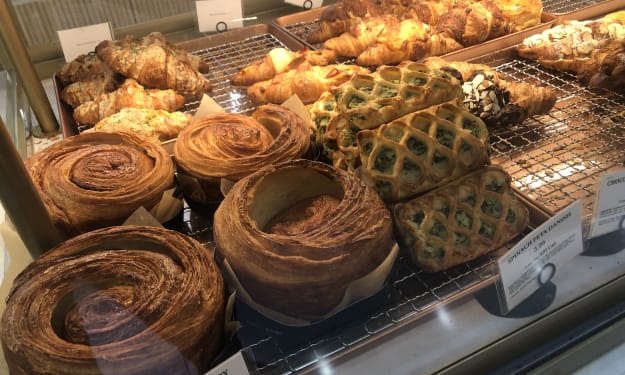
As someone who lives in a rural area, I don't get the chance to visit fancy restaurants or bakeries that often. So, when a friend told me about a French-Asian bakery that's less than an hour away, I knew I had to check it out and grab some pictures for social media. Tous les Jours ended up providing an immersive experience that went above and beyond my expectations--although I did leave with a few reservations.
By Kaitlin Shanks25 days ago in Feast
Wild Card Weekend Recap: What Happens Now?
I think I figured out why I love Wild Card Weekend so much. It's because it's the first playoff anything of the calendar year. The NFL season starts in the fall, and once upon a time, the champion was crowned either on or slightly before New Year's. The evolution of the NFL schedule has resulted in the playoffs starting just into the New Year, and currently, the final week of the season falls on the first weekend of the New Year, with Wild Card Weekend coming a week after that. So yes, chronologically, the NFL's Wild Card Weekend serves as the first playoff anything of the calendar year.
By Clyde E. Dawkins7 days ago in Unbalanced



Comments
There are no comments for this story
Be the first to respond and start the conversation.