

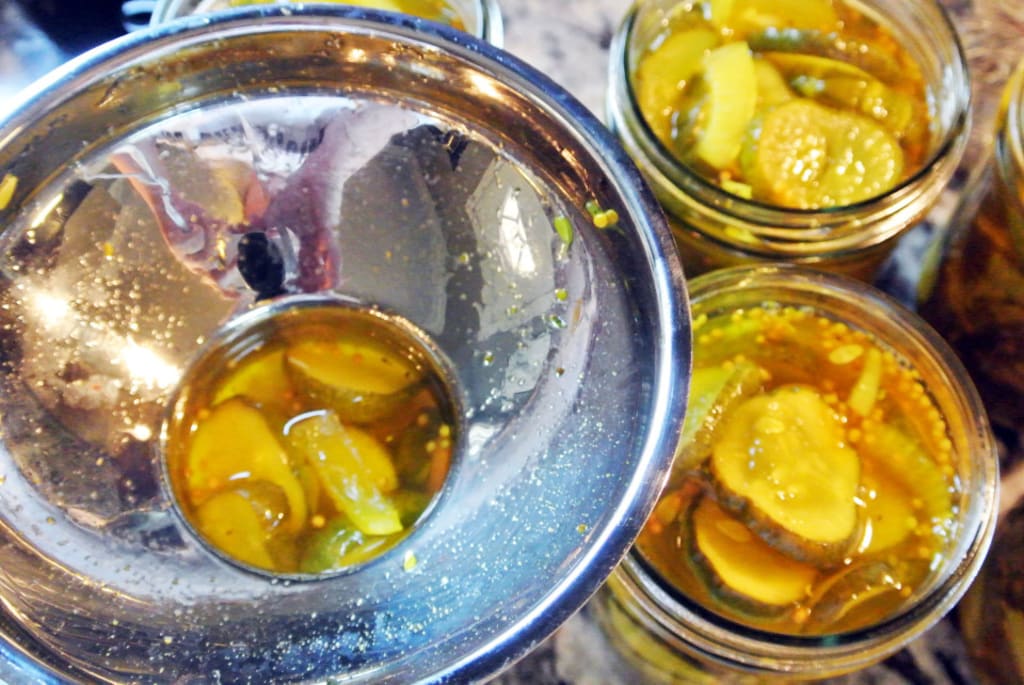
Pickling is when foods have been fermented in brine, vinegar, or another salty solution. It is a food preservation method that dates back to Ancient Mesopotamia and India. Many foods can be pickled, like cucumbers, eggs, peaches, and beets, just to name a few. They are an integral part of many types of cuisines, adding zest to a lot of dishes. Today, pickles are considered a widely popular snack food with Americans eating 20 billion of them a year. The Department Of Agriculture estimates the average person eats 8.5 lb of pickles a year. Today, for National Pickle Day, you should make your own pickles to enjoy. Here’s how to do it.
Picking Cucumbers

Cucumbers are the most pickled vegetable in the world. They are a great low-calorie vegetable packed with fiber, potassium, and Vitamin K. Depending on what type you are making greatly affects the size of the cucumber. For sweet you’ll want them to be 1 ½ to 2 ½ inches long. Dill works best with those that are 3-4 inches long. For slicers or pickle chips, you’ll need ones 6-9 inches long. The type that works best is Kirby cucumbers because of their firm, bright green skin. If you can’t find them, your next best choice is Boston Pickling Cucumbers. The cucumbers you pick should be straight or with a slight bend in them. If they’re too misshapen, then they will taste bitter.
Making A Brine

This is what’s going to turn those cucumbers into pickles. A brine is easy to make and requires four ingredients: vinegar, water, sugar, and salt. You’ll want to start with equal parts vinegar and water. Any basic vinegar will work like white vinegar. Don’t use aged or concentrated vinegar, as they don’t work well. Add a Tablespoon or two of white sugar, no substitutes. Sugar can be left out completely if you want, as it only gives your pickles a subtle sweetness. For the salt, choose kosher, sea, or pickling salt. Do not use table salt, as this can affect the quality of your pickles. Three Tablespoons of that are plenty. Mix everything together and bring to a boil until all the salt (and sugar) has dissolved. Let it cool for ten minutes.
Getting Started

While that is cooling, you’ll want to wash your wide-mouth pint jars, lids, and rings in warm soapy water. Then, rinse them well. Make sure everything is dried completely before beginning to prevent mold growth. Next, you’ll want to prepare your cucumbers for the desired shape and size you want. Don’t forget to wash (water only) and dry them completely too. Add your flavoring choices evenly among the jars. Pack your cucumbers in tightly as you can into the jars without smashing them. Leave a half inch of space at the top of the jars between the rim and the top of the cucumber. If you want them extra crunchy, soak them in ice water for 30 minutes prior to putting them into the jars.
A Variety Of Flavors

You can add just about anything to your jars to flavor your pickles. Here is how to make the top three pickle flavors.
Dill
Instead of white vinegar, use apple cider vinegar. Then add four cloves of garlic along with fresh dill springs. Do not use the dried stuff found in the shakers in the baking aisle because it’s not potent enough.
Sweet
Add four cups of sugar instead of a tablespoon to your brine. Put cloves and ginger into the jars. While packing in the cucumbers, add a couple of sticks of cinnamon among them.
Bread and Butter
You’ll want to add a pinch of turmeric and cloves to the jars. Then add a Tablespoon each of mustard seed, celery seed, and peppercorns. Some people like to add thinly sliced yellow onion with their cucumbers, but that’s your call to make.
Finishing Them
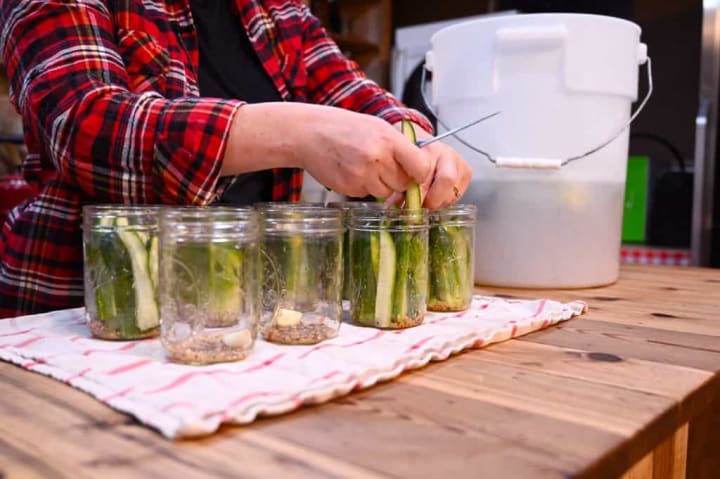
Once the brine has cooled down, slowly pour it into each jar, leaving a half inch from the top. Tap the jars gently on a hard surface to remove trapped air bubbles, adding more brine if needed. It’s okay to have leftover brine. Seal the jars tightly. Let them sit at room temperature for 24 hours. After that, store it in a cool, dry place with your other canned goods. Wait at least 24 hours prior to consuming them since pickles age like wine. Once open, immediately refrigerate them. They can be stored for two months, if you wish to store them longer than that they’ll need to be properly canned. For more information on canning, visit https://shopping-feedback.today/feast/it-s-canning-season%3C/a%3E.%3C/p%3E%3Cstyle data-emotion-css="14azzlx-P">.css-14azzlx-P{font-family:Droid Serif,Georgia,Times New Roman,Times,serif;font-size:1.1875rem;-webkit-letter-spacing:0.01em;-moz-letter-spacing:0.01em;-ms-letter-spacing:0.01em;letter-spacing:0.01em;line-height:1.6;color:#1A1A1A;margin-top:32px;}

About the Creator
M.L. Lewis
Welcome to my little slice of pie. This blog will primarily focus on prepping and homesteading skills with a sprinkle of fiction every now and then.
Keep reading
More stories from M.L. Lewis and writers in Feast and other communities.
How To Make Jerky
Jerky is one of the oldest snacks in the world. It comes in many flavors, with beef being the most popular choice. Jerky, by definition, is any meat that has been dried, salted, and seasoned. The word jerky dates back to the ancient Incan language, Quechua. It was originally called Ch’arki, meaning “dried meat.” When the Spanish Invaders returned to Europe with the treat, it slowly gained popularity, and it eventually became jerky. Jerky is a lightweight, nutritionally dense food, making it the perfect doomsday treat. Because of how easy it is to carry, jerky has been to space a couple of times. Making jerky is a simple process that requires a few basic ingredients. It requires only one tool to make it, a dehydrator.
By M.L. Lewis3 years ago in Feast
Frozen Blueberries Recalled: What Families Need to Know
You open your freezer to grab a handful of blueberries for a smoothie. It is part of your routine. Maybe you add them to oatmeal for your child before school. Maybe you bake them into weekend muffins. Frozen fruit feels safe. It feels simple. But then you see the headline: frozen blueberries recalled. Suddenly, that bag in your freezer does not feel harmless anymore. Questions rush in. Are they safe to eat? What brands are involved? What should you do next? Food recalls can be unsettling, especially when they involve everyday items. This article explains why frozen blueberries recalled announcements happen, what risks are involved, and how to protect yourself and your family without panic.
By Muqadas khan2 days ago in Feast
Rich People's Palates: Burgers That Cost More Than Rent
Who doesn’t love a good hamburger? It’s one of my favorite foods, whether I prepare one at home or hit up the nearest drive-thru. Now and again, I splurge and treat myself to one of the fancy $20 burgers from Five Guys, like I have Lil’ Wayne money and am not checking my balance before merging into the line.
By Criminal Matters2 days ago in Feast



Comments (1)
Well Done. I like and linked to this story with my article about Pickle Juice!