
Healthy Foods Market Size & Forecast 2025–2033
Rising Wellness Consciousness and Clean Eating Trends Propel a US$ 1.43 Trillion Global Opportunity


Global Healthy Foods Market Overview
The global healthy foods market is undergoing a profound transformation as consumers worldwide reassuffle their dietary priorities toward wellness, prevention, and balanced nutrition. According to Renub Research, the Healthy Foods Market is anticipated to expand from US$ 655.33 billion in 2024 to an impressive US$ 1,436.29 billion by 2033, registering a strong CAGR of 9.11% during 2025–2033.
This growth reflects a decisive shift away from calorie-dense, heavily processed foods toward nutrient-rich, clean-label, organic, plant-based, and functional food products. Rising urbanization, increasing disposable incomes, and mounting awareness of lifestyle-related diseases such as obesity, diabetes, and cardiovascular disorders are reinforcing this global dietary shift.
Healthy foods—ranging from fruits, vegetables, whole grains, legumes, nuts, seeds, lean proteins, fortified cereals, and probiotic-rich products—are increasingly viewed not just as dietary choices, but as long-term investments in health and longevity.
Healthy Foods Market Outlook
The concept of “healthy food” has evolved beyond basic nutrition. Today’s consumers expect foods that support immunity, digestive health, mental wellness, weight management, and disease prevention. This evolving perception has reshaped product development, retail strategies, and branding across the global food industry.
Governments, healthcare bodies, and global organizations continue to promote dietary awareness through public health campaigns and nutritional labeling regulations. Meanwhile, social media, fitness influencers, and celebrity endorsements have amplified awareness, particularly among millennials and Gen Z, who prioritize transparency, sustainability, and ethical sourcing.
As a result, healthy foods are now readily available not only in supermarkets and specialty health stores but also across online platforms, convenience outlets, and food delivery ecosystems, reinforcing sustained market momentum.
Key Growth Drivers in the Healthy Foods Market
1. Increasing Health Awareness
Globally, consumers are becoming more conscious of the direct relationship between diet and overall well-being. Rising incidences of lifestyle-related diseases have pushed individuals to adopt preventive healthcare approaches, where nutrition plays a central role.
Whole foods, plant-based diets, low-sugar products, and minimally processed options are replacing traditional high-fat and high-sodium diets. This trend is particularly strong among urban populations and younger consumers who emphasize fitness, mental health, and longevity.
2. Expansion of Retail and Online Distribution Channels
The rapid expansion of modern retail formats and e-commerce platforms has dramatically improved access to healthy food products. Supermarkets and hypermarkets now dedicate extensive shelf space to organic, functional, and BFY (Better-For-You) food categories.
Online platforms further enhance convenience by offering home delivery of fresh produce, gluten-free foods, meal kits, and specialty nutrition products, supported by subscription models and personalized recommendations.
In February 2025, Mars announced plans to acquire Kellanova to strengthen its footprint in healthier snacking categories, highlighting how major food conglomerates are strategically repositioning toward wellness-driven growth.
3. Product Innovation and Functional Nutrition
Food manufacturers are aggressively innovating to align with evolving dietary patterns such as vegan, keto, high-protein, gluten-free, and low-carb diets. Functional beverages, protein-enriched snacks, probiotic foods, and fortified staples are witnessing surging demand.
In July 2025, Swiggy launched a dedicated “High Protein” category across 30 Indian cities, enabling consumers to easily access meals with defined nutritional benchmarks. Such innovations blur the line between food and nutrition therapy, accelerating market expansion.
Challenges in the Healthy Foods Market
High Product Costs
Healthy foods often command premium pricing due to higher-quality ingredients, organic certifications, and complex supply chains. This cost barrier limits adoption among price-sensitive consumers, especially in developing economies, where affordability remains a key concern.
Limited Awareness in Rural Regions
While urban markets are rapidly embracing healthy diets, rural areas often lag due to limited awareness, cultural food preferences, and restricted access. Bridging this gap through education, affordable product lines, and improved distribution remains critical for inclusive growth.
Segment Analysis
Functional Healthy Foods Market
Functional foods enriched with probiotics, omega-3s, vitamins, and minerals are gaining prominence for their role in immunity enhancement, digestive health, and heart wellness. Fortified cereals, probiotic yogurts, and functional beverages are particularly popular in North America, Europe, and Asia-Pacific.
BFY (Better-For-You) Healthy Foods Market
BFY foods offer reduced sugar, fat, or sodium content without compromising taste. Low-fat snacks, sugar-free beverages, and baked alternatives dominate this segment, driven by label-conscious consumers in developed economies.
Organic Healthy Foods Market
Organic foods—produced without synthetic pesticides, GMOs, or artificial additives—continue to gain traction amid growing environmental and health concerns. Strong regulatory frameworks and certification trust fuel adoption in North America and Europe, while Asia-Pacific and Latin America show accelerating growth.
Distribution Channel Insights
Convenience Stores
Urban lifestyles are driving demand for ready-to-eat healthy foods and nutrition drinks in convenience stores. Their proximity and impulse-buy potential make them an increasingly important channel.
Online Healthy Foods Market
E-commerce has emerged as a powerful growth engine, offering access to niche brands, personalized nutrition plans, and subscription-based healthy food solutions. Pandemic-driven digital adoption has permanently reshaped consumer buying behavior.
Regional Market Insights
United States Healthy Foods Market
The U.S. remains a mature yet innovation-driven market, supported by strong demand for plant-based, organic, and functional foods. Chronic health issues fuel sustained consumption, while regulatory oversight ensures transparency.
In February 2025, Quaker Oats issued a recall of pancake mix due to undeclared milk allergens, underscoring the importance of labeling compliance in the health-focused food ecosystem.
Germany Healthy Foods Market
Germany leads Europe’s healthy foods landscape, driven by sustainability culture, plant-based diets, and consumer trust in certifications.
In February 2025, HelloFresh SE launched Factor, its direct-to-consumer ready-to-eat meal brand, strengthening Germany’s RTE healthy food segment.
India Healthy Foods Market
India’s healthy food market is expanding rapidly, fueled by rising incomes, urbanization, and renewed interest in traditional superfoods such as millets, turmeric, and lentils.
In May 2025, UNICEF India launched the “Meri Thali Sehatwali” digital campaign, promoting balanced nutrition nationwide.
Brazil Healthy Foods Market
Brazil is witnessing strong growth in organic and functional foods, supported by health awareness and government labeling initiatives.
In July 2025, Nestlé introduced its first organic product line in Brazil, reflecting rising demand for sustainable nutrition in Latin America.
Saudi Arabia Healthy Foods Market
Saudi Arabia’s market is driven by government-led health initiatives under Vision 2030, targeting obesity and diabetes reduction.
In February 2025, the Saudi Food and Drug Authority approved new nutrition-focused regulations to promote healthier eating habits nationwide.
Market Segmentation
By Product
Functional Foods
Organic Foods
BFY Foods
Others
By Distribution Channel
Supermarkets & Hypermarkets
Convenience Stores
Specialty Stores
Online
By Region
North America
Europe
Asia Pacific
Latin America
Middle East & Africa
Competitive Landscape and Key Players
The global healthy foods market is highly competitive, with multinational corporations and regional innovators focusing on product differentiation, clean labels, and functional nutrition.
Key players include:
Nestlé S.A.
Danone S.A.
Herbalife Nutrition Ltd.
Archer Daniels Midland Company
PepsiCo Inc.
General Mills Inc.
Kraft Heinz Company
Mondelez International Inc.
GlaxoSmithKline PLC
Abbott Laboratories
Each company is evaluated across five viewpoints: overview, key leadership, recent developments, SWOT analysis, and revenue performance.
Final Thoughts
The global healthy foods market stands at the intersection of nutrition, healthcare, sustainability, and consumer lifestyle evolution. As food increasingly becomes a form of preventive medicine, demand for healthier, cleaner, and functional products will continue to accelerate.
With strong growth projections, continuous innovation, supportive regulations, and expanding digital access, the healthy foods industry is well-positioned to surpass US$ 1.4 trillion by 2033, redefining how the world eats, lives, and invests in long-term well-being.
About the Creator
Renub Research
Renub Research is a Market Research and Consulting Company. We have more than 15 years of experience especially in international Business-to-Business Researches, Surveys and Consulting. Call Us : +1-478-202-3244
Keep reading
More stories from Renub Research and writers in Feast and other communities.
Mexico Organic Dairy Market Size & Forecast 2025–2033
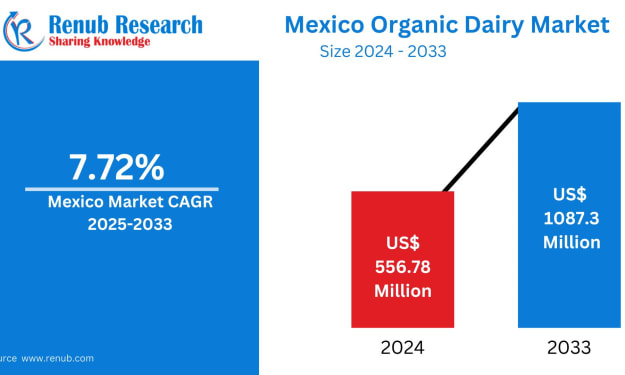
Mexico Organic Dairy Market Outlook The Mexico Organic Dairy Market is witnessing a strong transformation as consumers increasingly prioritize health, food safety, and sustainability. According to Renub Research, the market is expected to expand from US$ 556.78 million in 2024 to US$ 1,087.3 million by 2033, registering a CAGR of 7.72% during 2025–2033.
By Renub Research18 days ago in Feast
My Tous les Jours Trip
As someone who lives in a rural area, I don't get the chance to visit fancy restaurants or bakeries that often. So, when a friend told me about a French-Asian bakery that's less than an hour away, I knew I had to check it out and grab some pictures for social media. Tous les Jours ended up providing an immersive experience that went above and beyond my expectations--although I did leave with a few reservations.
By Kaitlin Shanks15 days ago in Feast
Germany Smokeless Tobacco Market Size & Forecast 2025–2033
Introduction Germany’s tobacco industry is undergoing a notable transformation as consumer preferences gradually shift away from traditional cigarettes toward alternative nicotine delivery formats. Among these alternatives, smokeless tobacco is carving out a distinct and steadily expanding niche. Driven by heightened health awareness, tighter smoking regulations, and evolving social attitudes toward tobacco consumption, the German smokeless tobacco market is gaining renewed attention from manufacturers, retailers, and policymakers alike.
By Aaina Oberoi3 days ago in Feast
Getting Serious About Comedy (Part I)
If I were asked to remark on my life and the childhood that paved some road leading me to this point, I would have to say something about all the funny people who surrounded me for the last 26,872 days (and counting). Somewhere along that road, I became a big fan of laughter and the comedy that spawns it – and, I mean not only my own laughter, but the laughter of others, some of which I have actually been responsible for inducing.
By John Oliver Smitha day ago in Humor



Comments
There are no comments for this story
Be the first to respond and start the conversation.