
Green Bean and Beef Dumplings: Crisp, Juicy, and Utterly Delicious!
Green Bean and Beef Dumplings: Crisp, Juicy, and Utterly Delicious!
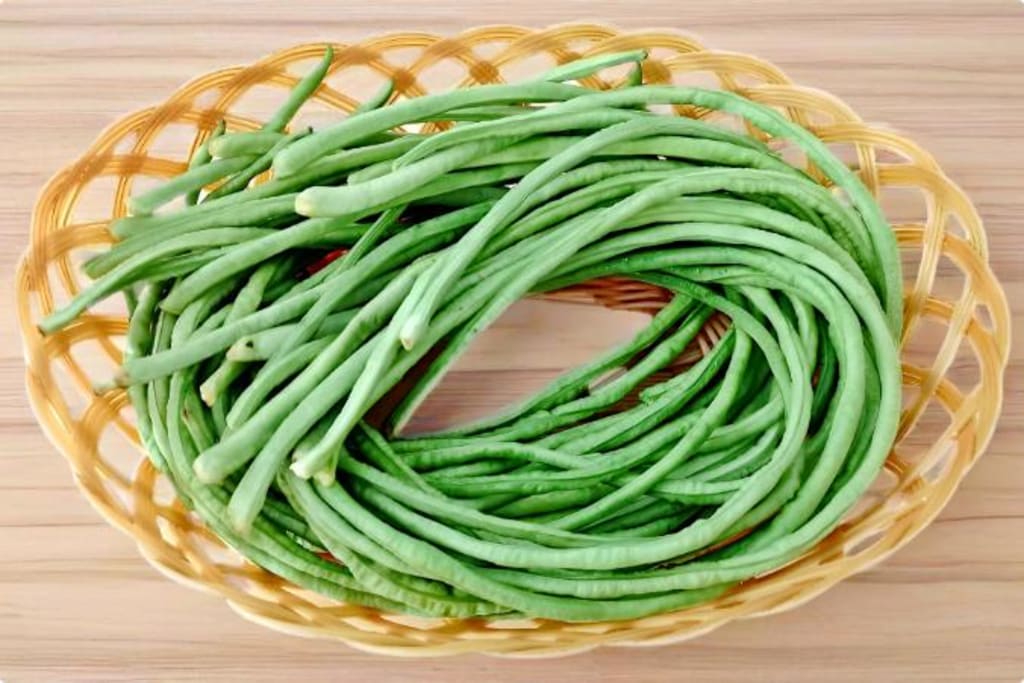
Summer farmers’ markets are bursting with emerald-green beans, piled high like tiny mountains, glistening with dew and priced for abundance. While these crisp pods shine in stir-fries and stews, my family eagerly awaits turning them into dumplings each year. One bite unleashes a garden-fresh aroma that bursts forth, soothing away summer’s heat with its bright, clean flavor—never heavy or greasy. The secret lies entirely in the filling. Mishandled beans become tough, stringy, and unpleasantly earthy. But fear not! My method is simple and foolproof:
Preparing the Beans—Crispness is Key
1. Destring with Care: Wash fresh beans and snap off the ends. Then, gently tear along the seam to remove the fibrous string running down each pod. Do not skip this! Removing the string guarantees that signature tender-crisp texture.
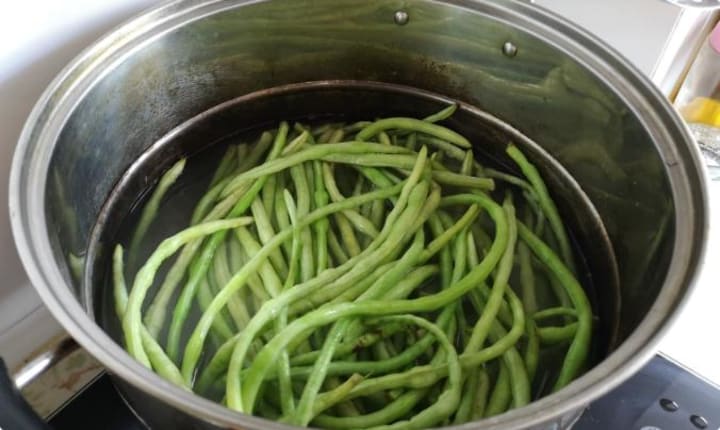
2. Blanch Brilliantly: Bring a large pot of water to a rolling boil. Add a pinch of salt (to preserve color) and a drizzle of oil (for shine). Submerge the beans for exactly 2 minutes—then immediately lift them out. Overcooking turns them limp and lifeless.
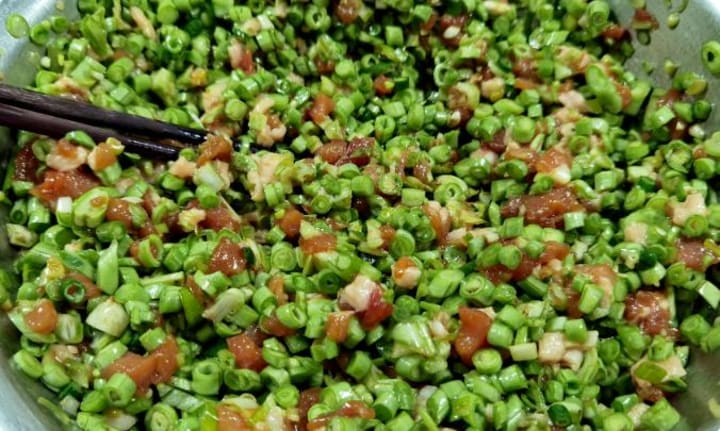
3. Shock & Squeeze: Plunge the hot beans into ice water. This thermal shock locks in their crispness. Once chilled, drain thoroughly, chop finely, and wrap in cheesecloth. Squeeze firmly to remove excess water. This step is non-negotiable for a filling that’s juicy, not soggy.
The Beef—Richness with Balance
Choose wisely: Opt for beef shank or chuck—70% lean, 30% fat—coarsely ground for satisfying texture. Do not mix with beans yet. First, build flavor in the meat:
1. Create “Magic Water”: Steep sliced ginger, scallion whites, and 1 tbsp Sichuan peppercorns in ½ cup hot water. Cool completely. This fragrant infusion banishes gaminess and adds depth.
2. Season & Hydrate: In a bowl, combine beef with salt, light soy sauce, oyster sauce, and a dash of white pepper. Gradually add the cooled magic water, 2 tbsp at a time. Stir vigorously in one direction until the meat absorbs all liquid, becoming glossy, sticky, and springy. This “water-whipping” (打水 dǎ shuǐ) is the secret to explosively juicy dumplings!
3. Lock in Flavor: Stir in 1–2 tbsp sesame oil or infused chili oil. This coating seals in moisture and prevents the filling from weeping when mixed. Fold in finely chopped scallion greens.
Marry the Elements—Gently!
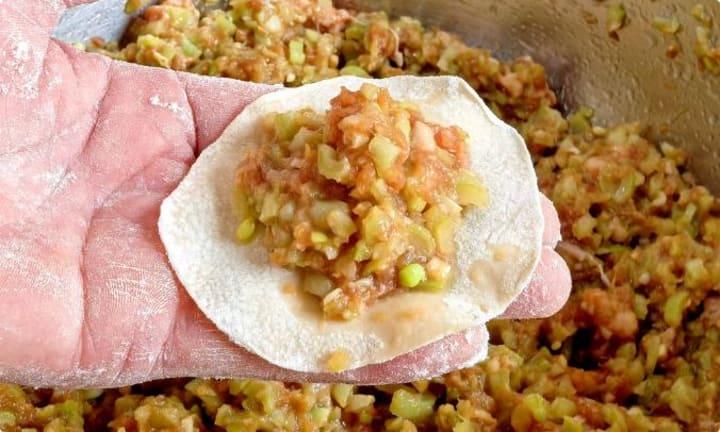
Combine the squeezed beans with the seasoned beef. Taste and adjust salt if needed. Mix lightly with a folding motion—overmushing bruises the beans. Cover and refrigerate for 30+ minutes. This chill time lets the bean’s grassy sweetness and the beef’s savory richness harmonize beautifully.
Wrap & Cook—Tradition in Action
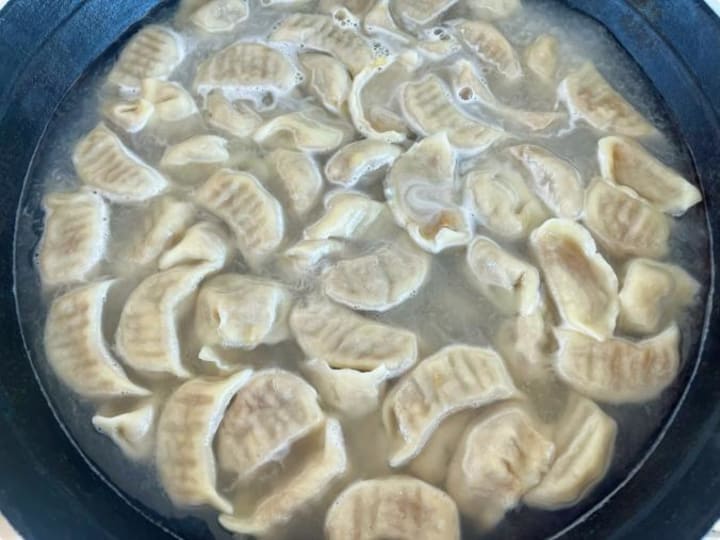
Roll dough into discs—slightly thicker in the center, thinner at the edges. Fill generously, then pleat into crescent moons or your favorite shape. Boil dumplings in rolling water, gently nudging with a spoon to prevent sticking. After the pot boils, add ½ cup cold water twice (“点水” diǎn shuǐ). When dumplings float plumply, their skins glowing and taut, they’re ready.
The First Bite—Summer on a Plate
Blow on a steaming dumpling, then bite through the thin wrapper. Hot, savory broth rushes out! The beans deliver a crisp, sun-ripened sweetness—like biting into captured summer light. The beef is springy and rich, its deep umami twined with the bright notes of ginger-scallion and the subtle tingle of Sichuan pepper. Luscious yet never cloying, this filling is a masterclass in balance: the vegetal freshness plays against the meat’s succulence, creating layers of flavor that dance across the palate. You’ll crave a second plate—guilt-free!
A Taste of Season’s Bounty
When summer beans are at their peak, grab a bundle and craft these dumplings. Within each tender wrapper lies not just homely comfort, but a heartfelt celebration of nature’s generosity—a delicious tribute to the fleeting, glorious abundance of the season.
Why This Recipe Works for Global Palates
Beyond translating steps, this version adapts techniques for clarity:
• “Magic Water” Explanation: Western readers may not know shui da (水打), so “hydrating the meat” clarifies the purpose.
• Texture Cues: “Tender-crisp,” “springy,” and “burst of broth” evoke sensory experiences universally desired in dumplings.
• Cultural Nuances: Briefly explaining “点水” (diǎn shuǐ) demystifies the cooking process without overloading.
• Sensory Storytelling: Phrases like “captured summer light” and “layers of flavor that dance” mirror the original’s vividness while feeling natural in English food writing.
Seasonal, satisfying, and engineered for perfection—this is dumpling alchemy at its finest.
About the Creator
If meals are planned well, Ramadan is actually a great time to lose weight in a healthy way.
If meals are planned well, Ramadan is actually a great time to lose weight in a healthy way. The key is choosing the right foods for Sehri (Suhoor) and Iftar and avoiding overeating, as fasting already limits eating hours. Here is a straightforward guide to losing weight during Ramadan.
By Farida Kabir7 days ago in Feast
Crispy, Buttery Tarts with the Aromatic Sweetness of Fresh Fruits
Tarts are a type of baked good with European origins that have gained worldwide popularity. Their unique characteristic is a crisp, buttery pastry shell filled with a variety of flavors, whether it's smooth custard, luscious fresh cream, or sweet and tangy fresh fruits. Taking a bite of a tart offers a combination of crunch, creamy richness, and the refreshing taste of the filling all at once. For those who enjoy baking, making tarts at home is not as difficult as it might seem. Simply understanding the basic components and steps allows you to create these delightful little bites of deliciousness.
By Kenneth Ethan Carl7 days ago in Feast


Comments
There are no comments for this story
Be the first to respond and start the conversation.