
Germany Coffee Market Size and Forecast 2025–2033
A Deep Dive into Europe’s Most Vibrant and Evolving Coffee Landscape

Introduction
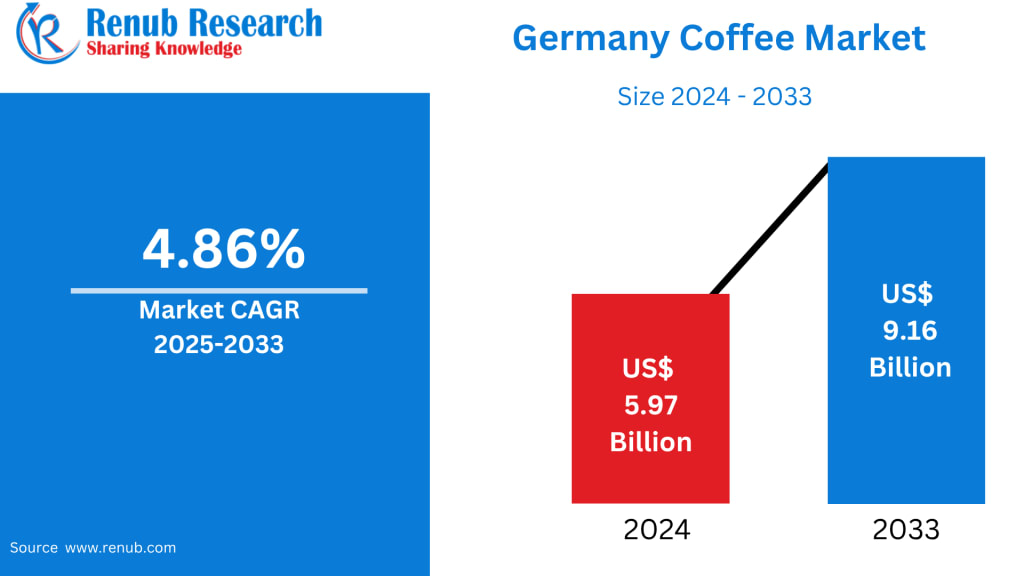
Germany stands as one of the world’s most influential and dynamic coffee markets, driven by a deep cultural attachment to the beverage and continuous innovation across retail, specialty, and premium segments. According to Renub Research, the Germany Coffee Market is anticipated to grow to US$ 9.16 billion by 2033, rising from US$ 5.97 billion in 2024. This represents a steady CAGR of 4.86% during 2025–2033, a strong indication of the nation’s resilient demand and evolving consumer preferences.
Germany’s market strength comes from a mature coffee culture, a booming café ecosystem, rapidly expanding e-commerce channels, and the rising popularity of specialty and sustainable coffee. Combined with strong demand for Arabica beans, innovative coffee pods and capsule systems, and new consumer behaviors such as home brewing, the country remains a European coffee powerhouse.
This in-depth analysis uncovers the driving factors, challenges, market dynamics, segment insights, and leading industry players shaping Germany’s coffee industry through 2033.
Germany Coffee Market Overview
Coffee, a beverage made from roasted beans of the Coffea plant, has long been an essential part of German daily life. Germans consume more than 160 liters of coffee per person per year, surpassing even beer consumption. From homes to offices to bustling cafés, coffee fuels everyday routines and social gatherings.
Germany’s strong café culture—combined with rising preferences for organic, sustainable, single-origin, and premium coffees—has pushed the market to new heights. Consumers are exploring diverse brewing styles, including cold brew, French press, pour-over, and espresso-based drinks. The rise of at-home brewing equipment has further strengthened coffee’s presence in households.
Germany is not just a high-volume consumer; it is also a major coffee trade and innovation hub in Europe, with Hamburg serving as one of the largest coffee trading ports globally. This interplay of culture, commerce, and innovation sets the stage for long-term market growth.
Key Growth Drivers of the Germany Coffee Market
1. Demand for Premium and Specialty Coffee Continues to Surge
Across Germany, consumers increasingly gravitate toward premium, specialty, and artisanal coffee varieties. These include:
Single-origin beans
Organic and fair-trade coffee
Micro-roasted and freshly ground blends
Sustainably sourced beans
The trend reflects a shift from mass consumption to quality-focused coffee culture. Specialty cafés, baristas, and small-batch roasters are shaping consumer awareness and pushing the boundaries of flavor and craftsmanship.
A notable example occurred in March 2024, when Paso Paso, a new German coffee roasting company, launched a farmer-owned business model, giving producers from Costa Rica, El Salvador, Ethiopia, and Nicaragua direct ownership and control. This innovative approach reflects Germany’s growing demand for transparency and ethical sourcing.
2. Expanding Café Culture and Rapid Urbanization
Urban centers like Berlin, Munich, Frankfurt, and Hamburg have become coffee hotspots. Millennials and Gen Z consumers, who view cafés as lifestyle spaces for work, socializing, and creativity, are driving consumption.
Café culture now includes:
Cold brew and nitro coffee
Plant-based milk lattes
Artisan brewing methods
High-end espresso bars
Restaurants, bakeries, bookstores, and co-working spaces increasingly incorporate premium coffee offerings to attract customers.
By late 2023, Pret A Manger expanded into the German market, establishing five new stores in Berlin, signaling international brands’ confidence in German coffee consumption.
3. E-Commerce Boom and Rise of Home Brewing
Online coffee sales have accelerated dramatically since the pandemic. German consumers now prefer buying coffee beans, pods, machines, and accessories via e-commerce platforms.
Key factors include:
Subscription-based coffee delivery
Direct-to-consumer (D2C) models
Access to global specialty roasters
Growth in high-end espresso machine ownership
In September 2022, the online marketplace 60beans launched in Germany, connecting coffee lovers directly to specialty roasters around the world with efficient direct shipping.
As home brewing becomes a hobby and personal ritual, it boosts demand for whole beans, grinders, premium roasts, and customized blends.
Challenges Facing the Germany Coffee Market
1. Volatile Coffee Bean Prices and Supply Chain Disruptions
Coffee production is highly sensitive to:
Climate change
Labor shortages
Political instability in producing regions
Transportation delays
These factors cause fluctuating bean prices, impacting the cost structures of German roasters, manufacturers, and retailers. Supply chain disruptions also create unpredictability in inventory and import expenses.
2. Sustainability Concerns and Environmental Pressure
Germany’s environmentally conscious consumers expect brands to adopt:
Transparent supply chains
Sustainable farming practices
Ethical labor standards
Eco-friendly packaging solutions
However, certification systems such as Rainforest Alliance and Fairtrade add cost burdens and compliance complexities, particularly for smaller roasters. Striking a balance between sustainability and affordability is one of the market’s ongoing challenges.
Germany Coffee Market by Product Type
1. Instant Coffee
Instant coffee remains a staple, especially among older consumers and office environments. Despite competition from specialty and premium segments, instant coffee is evolving with:
Higher-quality freeze-dried varieties
Flavored instant blends
Single-serve sachets
These innovations help maintain steady demand within this value-driven segment.
2. Ground Coffee
Ground coffee is the most consumed format in Germany, especially for traditional drip or filter coffee. It appeals to households due to its convenience and balanced flavor.
Ground coffee maintains strong supermarket visibility and remains central to Germany's daily coffee rituals, despite competition from pods and whole beans.
3. Coffee Pods and Capsules
Coffee pods and capsules have become extremely popular thanks to their convenience, consistent quality, and compatibility with machines like Nespresso or Dolce Gusto.
Growth is driven by:
Premium flavored capsules
Compostable and biodegradable pod innovations
Increased machine penetration in homes
This segment is expected to expand significantly during the forecast period.
4. Whole Bean Coffee
The whole bean segment is booming, particularly among home baristas and coffee enthusiasts who prefer grinding beans fresh.
Consumers choose whole beans for:
Better aroma
Customizable grind sizes
Higher-quality blends
Organic and specialty options
This segment aligns strongly with Germany’s shift toward premiumization.
Germany Coffee Market by Source
Arabica Coffee
Arabica dominates Germany’s coffee market. Its smoother flavor, lower caffeine content, and premium quality make it the preferred bean across retail, specialty cafés, and household consumption.
Arabica’s rise is also linked to the growing emphasis on traceability, terroir, and ethical sourcing.
Robusta Coffee
Robusta plays a key role in:
Espresso blends
Instant coffee
Value-driven segments
With higher caffeine levels and a stronger crema, Robusta remains popular among espresso drinkers and café operators. Its resilience to climate fluctuations makes it a reliable option for manufacturers.
Germany Coffee Market by Distribution Channel
1. B2C Channel
The B2C segment—driven by:
Supermarkets
E-commerce
Cafés
Direct-to-consumer brands
—remains the largest channel.
Consumers increasingly seek personalized blends, loyalty programs, and subscriptions. Specialty roasters leverage online platforms to build direct relationships with customers.
2. B2B Channel
The B2B coffee market thrives on demand from:
Offices
Hotels
Restaurants
Bakery chains
Bars and lounges
Foodservice expansion, urban growth, and rising hospitality standards are fueling B2B coffee consumption. High-quality coffee has become a competitive advantage in customer experience.
Market Segmentation Snapshot
Product Type
Instant Coffee
Ground Coffee
Coffee Pods & Capsules
Whole Bean Coffee
Source
Arabica
Robusta
Distribution Channel
B2C
B2B
Key Companies Covered (With 5 Viewpoints Each)
(Overview, Key Person, Recent Developments, SWOT, Revenue Analysis)
JAB Holding Company
Tchibo
Nestlé SA
The Kraft Heinz Company
JJ Darboven GmbH & Co. KG
Alois Dallmayr KG
Melitta Group
Luigi Lavazza SpA
Krüger GmbH & Co. KG
Starbucks Corporation
Peet’s Coffee
Jacobs Douwe Egberts Gb Ltd
These companies collectively shape Germany’s competitive landscape through innovation, sustainability initiatives, and expansion into premium and specialty segments.
Final Thoughts
Germany’s coffee market remains one of the most influential in Europe—highly dynamic, culturally integrated, and driven by evolving consumer expectations. The shift toward premium, ethical, and specialty coffee is reshaping product offerings, retail strategies, and business models.
As the market heads toward US$ 9.16 billion by 2033, Germany will continue to serve as both a trendsetter and a major consumer hub, backed by strong café culture, e-commerce momentum, and demand for sustainable quality coffee.
Whether it's a classic filter brew, an artisanal espresso shot, or a cold brew grabbed from a trendy café in Berlin, coffee will remain an inseparable part of German life—fueling growth, creativity, and innovation well into the next decade.
About the Creator
Janine Root
Janine Root is a skilled content writer with a passion for creating engaging, informative, and SEO-optimized content. She excels in crafting compelling narratives that resonate with audiences and drive results.
Keep reading
More stories from Janine Root and writers in Feast and other communities.
India Ice Cream Market Size & Forecast 2025–2033
India Ice Cream Market Outlook The India Ice Cream Market is projected to reach US$ 11.07 billion by 2033, rising from US$ 3.65 billion in 2024, according to Renub Research. This reflects an impressive CAGR of 13.11% from 2025 to 2033, driven by soaring demand for frozen desserts, rapid urbanization, expanding cold-chain networks, and the shift toward premium, artisanal, and convenience-based frozen offerings.
By Janine Root about a month ago in Feast
My Tous les Jours Trip
As someone who lives in a rural area, I don't get the chance to visit fancy restaurants or bakeries that often. So, when a friend told me about a French-Asian bakery that's less than an hour away, I knew I had to check it out and grab some pictures for social media. Tous les Jours ended up providing an immersive experience that went above and beyond my expectations--although I did leave with a few reservations.
By Kaitlin Shanks17 days ago in Feast
Food Processing Automation Market Size and Forecast, 2025–2033
Introduction The global food industry is undergoing a historic transformation as automation reshapes how food is processed, packaged, and distributed. Rising consumer demand for processed and ready-to-eat products, strict food safety regulations, labor shortages, and the push for operational efficiency are accelerating the adoption of automated technologies across the value chain.
By Marthan Sir6 days ago in Feast




Comments
There are no comments for this story
Be the first to respond and start the conversation.