
Europe Snack Bar Market Size and Forecast 2025–2033
Rising Health Awareness and On-the-Go Lifestyles Reshape Europe’s Snack Bar Industry


Europe Snack Bar Market Overview
The Europe Snack Bar Market has emerged as one of the most dynamic segments within the region’s packaged food industry, reflecting shifting consumer habits and lifestyle transformations. According to Renub Research, the Europe Snack Bar Market was valued at USD 3.46 billion in 2024 and is projected to reach USD 6.42 billion by 2033, growing at a compound annual growth rate (CAGR) of 7.11% from 2025 to 2033.
This growth is primarily driven by increasing health consciousness, busy urban lifestyles, and the rising demand for convenient, nutritious, and functional foods. Snack bars—once considered niche health products—have evolved into mainstream daily food items consumed across age groups and income levels. Protein bars, cereal bars, fruit & nut bars, and plant-based variants are gaining strong traction throughout Europe.
With expanding retail networks and fast-growing e-commerce platforms, snack bars have become widely accessible across supermarkets, specialty stores, gyms, vending machines, and online channels, further strengthening market penetration across the continent.
Europe Snack Bar Market Outlook
Snack bars in Europe serve as quick, portable food solutions that cater to consumers seeking convenience without compromising on nutrition. Traditionally associated with cafés, kiosks, and recreational venues, snack bars are now embedded into modern daily routines—whether as breakfast replacements, post-workout fuel, or mid-day snacks.
In major European cities such as London, Paris, Berlin, Barcelona, and Amsterdam, snack bars are widely consumed by working professionals, students, commuters, and fitness enthusiasts. Their appeal lies in their compact format, extended shelf life, and versatility, making them ideal for hectic schedules.
European snack bar manufacturers have also localized flavors and ingredients to reflect regional preferences, offering everything from chocolate-oat blends to fruit-based and nut-rich combinations. Vegetarian, vegan, gluten-free, and low-sugar options are increasingly common, reflecting Europe’s diverse dietary preferences.
Key Growth Drivers in the Europe Snack Bar Market
Rising Health and Fitness Awareness
One of the strongest growth drivers for the Europe snack bar market is the increasing focus on health, wellness, and active living. Consumers are becoming more mindful of their dietary choices, favoring snacks that provide energy, protein, fiber, and essential nutrients.
Snack bars are increasingly perceived as healthier alternatives to traditional confectionery, especially among gym-goers, office workers, and students. The rising popularity of fitness centers, yoga studios, and outdoor sports has accelerated demand for protein-rich and energy-boosting bars.
In response, manufacturers are launching clean-label products made with natural, organic, and plant-based ingredients, aligning with Europe’s growing preference for transparency and nutritional authenticity.
Convenience and On-the-Go Consumption Trends
Urbanization and time-constrained lifestyles across Europe have significantly boosted demand for ready-to-eat snack solutions. Snack bars fit seamlessly into modern routines, offering quick nourishment during commutes, work breaks, and travel.
Innovations in packaging—such as resealable wraps and multipacks—have further enhanced convenience. Retailers strategically place snack bars near checkout counters, vending machines, and convenience aisles, encouraging impulse purchases.
The diversity of flavors and textures also supports repeat buying. In May 2023, Nature Valley expanded its portfolio by launching its first savory nut crunch bars, signaling continued innovation in response to changing consumer preferences.
Product Innovation and Diversification
Innovation remains at the heart of Europe’s snack bar market growth. Manufacturers are continuously introducing bars enriched with superfoods, probiotics, seeds, nuts, and alternative plant proteins to cater to evolving dietary needs.
Vegan, gluten-free, high-fiber, and functional snack bars are gaining popularity due to food allergies, ethical considerations, and health-focused lifestyles. Flavor experimentation—from indulgent chocolate blends to tropical fruit combinations—broadens consumer appeal.
Sustainability is also influencing innovation. In November 2022, Mars Incorporated introduced fully recyclable mono-material wrappers made through a closed-loop recycling partnership, reinforcing environmental responsibility across the snack bar industry.
Challenges Facing the Europe Snack Bar Market
Intense Competition and Market Saturation
The European snack bar market is highly competitive, with numerous international brands, private labels, and regional players competing for shelf space. Market saturation has intensified price competition and reduced differentiation.
The rise of niche categories—such as keto, vegan, or ultra-high-protein bars—has fragmented consumer attention. Brands must invest heavily in branding, innovation, and targeted marketing to maintain loyalty and visibility.
Balancing Health Claims with Taste and Texture
While consumers increasingly prioritize nutrition, taste and texture remain decisive purchase factors. Many low-sugar or high-protein bars struggle to deliver enjoyable sensory experiences.
Achieving the right balance between health benefits and flavor often increases production costs. Additionally, strict European regulations on nutritional claims require accurate labeling, limiting marketing flexibility. Brands that successfully combine taste, health, and authenticity gain a strong competitive advantage.
Europe Snack Bar Market by Segment
Protein Snack Bar Market
Protein snack bars represent one of the fastest-growing segments in Europe. Demand is fueled by interest in sports nutrition, muscle recovery, weight management, and sustained energy.
Manufacturers are expanding offerings using pea, rice, soy, and whey proteins, appealing to both athletes and mainstream consumers. Improved textures and flavors have broadened acceptance beyond traditional fitness audiences. Distribution through gyms, health stores, and online platforms continues to rise.
Cereal Snack Bar Market
Cereal bars remain a dominant segment due to their affordability, familiarity, and family-friendly appeal. Made primarily from oats, rice, and grains, these bars are often consumed as breakfast substitutes or mid-day snacks.
Parents favor cereal bars for children, while working professionals value their portability. Manufacturers are reformulating products with lower sugar content, higher fiber, and natural ingredients to align with health trends.
Distribution Channel Insights
Online Stores
E-commerce has become a key growth channel for snack bars in Europe. Online platforms offer convenience, wider product variety, and easy comparison of nutritional information.
Subscription services and customized nutrition boxes are gaining popularity, particularly among fitness-focused consumers. Digital marketing and influencer campaigns further boost brand visibility and consumer engagement.
Specialty Stores
Health and nutrition specialty stores play a crucial role in premiumization. These outlets cater to consumers seeking expert advice, functional benefits, and high-quality ingredients.
Protein, organic, and vegan snack bars perform particularly well in specialty retail environments. Partnerships with gyms, wellness clinics, and nutritionists enhance credibility and trust.
Country-Level Market Insights
Belgium Snack Bar Market
Belgium’s snack bar market reflects strong demand for clean-label, organic, and artisanal products. Consumers prefer bars made with oats, nuts, and dried fruits, while sustainability and recyclable packaging are increasingly important. Online sales are expanding rapidly alongside traditional retail.
Switzerland Snack Bar Market
Switzerland emphasizes premium quality, transparency, and functional nutrition. Organic and protein-fortified bars dominate, supported by high disposable incomes and strong outdoor fitness culture. In September 2023, Valora introduced Oro de Cacao’s FrEAK chocolate bar across its retail outlets, responding to demand for fair-trade, low-sugar products.
United Kingdom Snack Bar Market
The UK is one of Europe’s largest snack bar markets, characterized by innovation and high consumption frequency. Well-established brands coexist with startups offering vegan, high-protein, and low-sugar options.
Retail penetration is extensive across supermarkets, convenience stores, vending machines, and online platforms. In August 2025, Kellogg’s announced six new snack products, including High Protein Bars and Oaties Bars, strengthening its UK snacking portfolio.
Germany Snack Bar Market
Germany’s market prioritizes nutritional transparency, protein content, and sustainability. Vegan and clean-label bars are gaining popularity, supported by strong distribution through supermarkets, drugstores, and sports outlets.
In March 2023, Nestlé acquired a stake in German meal-replacement company YFood, highlighting strategic interest in functional nutrition and snack bar innovation.
Europe Snack Bar Market Segmentation
By Product Type
Confectionery Variant
Cereal Bar
Fruit & Nut Bar
Protein Bar
By Distribution Channel
Supermarkets & Hypermarkets
Convenience Stores
Specialty Stores
Online Stores
Others
By Country
Belgium
France
Germany
Italy
Netherlands
Russia
Spain
Switzerland
Turkey
United Kingdom
Rest of Europe
Key Players Covered
All major players are analyzed across four viewpoints—Overview, Key Persons, Recent Developments, and Revenue:
Abbott Laboratories
Ferrero International SA
General Mills Inc.
Halo Foods Ltd
Kellogg Company
Mars Incorporated
Mondelēz International Inc.
Nestlé SA
PepsiCo Inc.
The Hershey Company
Final Thoughts
The Europe Snack Bar Market is undergoing a transformative phase, driven by health-focused lifestyles, innovation, and convenience-led consumption. With strong growth projected through 2033, snack bars are evolving from niche products into everyday essentials.
Manufacturers that successfully combine nutrition, taste, sustainability, and transparency are best positioned to thrive in this competitive landscape. As consumer expectations continue to evolve, innovation and adaptability will remain central to long-term success in Europe’s fast-growing snack bar industry.
About the Creator
Marthan Sir
Educator with 30+ years of teaching experience | Passionate about sharing knowledge, life lessons & insights | Writing to inspire, inform, and empower readers.
Keep reading
More stories from Marthan Sir and writers in Feast and other communities.
Europe Confectionery Market Size and Forecast 2025–2033
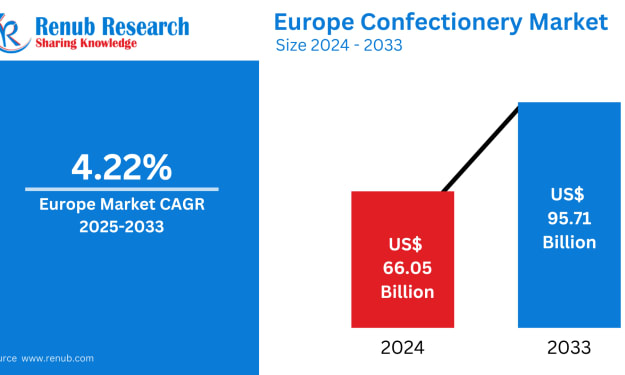
Europe Confectionery Market Overview The European confectionery market stands as one of the most mature, culturally embedded, and innovation-driven food sectors globally. Valued at approximately US$ 66.05 billion in 2024, the market is forecasted to expand significantly, reaching nearly US$ 95.71 billion by 2033, growing at a compound annual growth rate (CAGR) of 4.22% from 2025 to 2033, according to Renub Research.
By Marthan Sir28 days ago in Feast
My Tous les Jours Trip
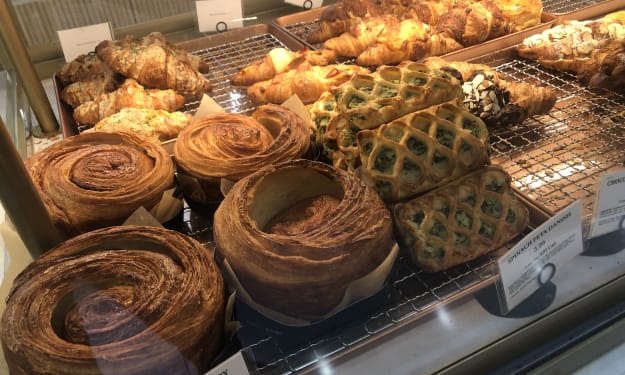
As someone who lives in a rural area, I don't get the chance to visit fancy restaurants or bakeries that often. So, when a friend told me about a French-Asian bakery that's less than an hour away, I knew I had to check it out and grab some pictures for social media. Tous les Jours ended up providing an immersive experience that went above and beyond my expectations--although I did leave with a few reservations.
By Kaitlin Shanks17 days ago in Feast


Comments
There are no comments for this story
Be the first to respond and start the conversation.