
Europe Halal Food Market Trends & Summary (2025–2033)
Ethical Consumption, Demographic Shifts, and Retail Expansion Drive a Trillion-Dollar Industry


Europe Halal Food Market Outlook
The Europe Halal Food Market is undergoing a powerful transformation, fueled by demographic change, evolving consumer preferences, and the growing demand for ethical, transparent, and high-quality food products. According to Renub Research, the market is expected to expand from US$ 490.99 billion in 2024 to US$ 1,096.61 billion by 2033, registering an impressive CAGR of 9.34% from 2025 to 2033.
Once considered a niche sector serving primarily Muslim communities, halal food in Europe has evolved into a mainstream industry. Today, halal-certified products are increasingly consumed by non-Muslim consumers who associate halal standards with cleanliness, animal welfare, traceability, and ethical sourcing. This broader acceptance, combined with strong population growth among Muslim communities, has positioned halal food as one of the fastest-growing segments of the European food industry.
Europe Halal Food Industry Overview
The expansion of the halal food market in Europe reflects a convergence of demographic growth, cultural integration, and changing consumption habits. Countries such as France, Germany, and the United Kingdom are home to some of the largest Muslim populations in the region, and this base continues to grow through migration and higher birth rates.
However, the market’s appeal now goes well beyond religious requirements. Many European consumers view halal food as a symbol of quality, hygiene, and ethical production, particularly in meat and poultry categories. As a result, halal products are no longer limited to ethnic stores but are now widely available in supermarkets, hypermarkets, convenience stores, and online platforms.
Manufacturers and retailers are responding by expanding their halal portfolios to include ready-to-eat meals, frozen foods, snacks, dairy products, beverages, and plant-based halal-certified items. Innovation is a defining trend, with brands combining halal certification with organic, vegan, and sustainable sourcing to appeal to modern consumers.
The growth of e-commerce and digital grocery platforms has also accelerated market accessibility. Younger consumers, especially second- and third-generation Muslims, are increasingly tech-savvy and value convenience alongside compliance with ethical and religious standards.
Despite this progress, the industry faces challenges such as fragmented certification systems and regulatory complexities, which continue to shape the competitive landscape.
Key Growth Drivers of the Europe Halal Food Market
1. Government Support and Certification Frameworks
Several European governments and regulatory bodies have recognized the economic importance of halal food and have invested in certification infrastructure to protect consumer trust.
France, home to the largest Muslim population in Western Europe, leads the region in halal certification. With approximately 5.5 million Muslims—over 8% of the total population—the French halal market is estimated at €5.5 billion, with food accounting for the majority of demand. Multiple agencies oversee halal compliance, helping to ensure product authenticity and traceability.
Similarly, the UK’s Halal Monitoring Committee (HMC) and other organizations provide structured oversight, strengthening confidence among consumers and retailers. These regulatory frameworks are critical for enabling halal products to enter mainstream retail channels and expand exports to global halal markets.
2. Rising Demand in Germany and Central Europe
Germany represents one of the fastest-growing halal food markets in Europe, driven by cultural diversity, economic integration, and rising awareness of halal standards. Studies conducted in collaboration with the Halal Council and Lufthansa Cargo reveal that:
88% of Muslims in Germany consider halal food very or fairly important
59% are willing to pay a premium for halal-compliant products
94% prefer certified halal products over non-certified alternatives
These insights highlight a strong willingness to spend, encouraging German food manufacturers and retailers to expand halal-certified product lines. As certification processes become more streamlined, consumer trust continues to improve, supporting long-term growth.
3. Expanding Muslim Population Across Europe
According to the Pew Research Center, Muslims made up 6% of Europe’s population in 2010, and this figure is projected to reach 8% by 2030, representing nearly 58.2 million people, up from 44.1 million in 2010. Over the next two decades, the Muslim population is expected to grow by almost one-third.
This demographic shift directly translates into rising demand for halal products across food service, retail, and manufacturing sectors. As a result, supermarkets, restaurants, and brands are integrating halal offerings into their core product portfolios, making halal food more accessible and culturally accepted across Europe.
Challenges in the Europe Halal Food Market
Fragmented Certification Standards
One of the most significant obstacles facing the European halal food industry is the lack of unified certification standards. Different countries and certification bodies apply varying interpretations of halal requirements, creating confusion for consumers and operational complexity for manufacturers.
For companies operating across borders, this fragmentation increases compliance costs and complicates product labeling. The absence of a harmonized European halal standard also undermines consumer trust, as shoppers may question the authenticity of halal labels from unfamiliar certifiers.
Regulatory and Legal Restrictions
Animal welfare regulations remain a sensitive issue, particularly concerning stunning-before-slaughter laws. In several European countries, these laws conflict with traditional halal slaughter practices, leading to ongoing legal and ethical debates.
While intended to protect animal welfare, such regulations can restrict production capacity for halal-certified meat and discourage investment. Without consistent regulatory alignment across Europe, companies face barriers to expansion and cross-border trade, limiting market potential.
Country-Level Market Insights
United Kingdom Halal Food Market
The UK halal food market is one of the most mature and diversified in Europe. Halal products are now widely available in major supermarket chains, online grocery platforms, and convenience stores. Both Muslim and non-Muslim consumers are driving demand, attracted by ethical sourcing, hygiene, and quality assurance.
While certification inconsistency and slaughter method debates remain challenges, the market continues to expand due to innovation, awareness campaigns, and inclusive retail strategies.
France Halal Food Market
France’s halal food market benefits from a large Muslim population and strong consumer awareness of ethical food consumption. Halal products span fresh meat, poultry, dairy, snacks, and ready meals, with growing penetration in mainstream retail.
However, the lack of a unified certification system remains a hurdle. Regulatory debates surrounding halal slaughter and animal welfare also influence market dynamics. Despite these challenges, France remains one of the most lucrative halal food markets in Europe due to its scale and innovation capacity.
Germany Halal Food Market
Germany’s halal food market is steadily expanding as awareness of ethical food practices grows. Mainstream retailers are increasingly stocking halal-certified products, including snacks, frozen meals, and meat.
Although certification fragmentation and regulatory debates persist, strong consumer demand and rising acceptance of halal standards among non-Muslims continue to support market growth.
Recent Market Developments
June 2022: The Halal Food Company launched five new ready meals in Sainsbury’s (UK), including shepherd’s pie, beef lasagna, peri-peri chicken, and chicken curry with basmati rice.
February 2022: GetHalal Group, based in Berlin, expanded nationwide halal food delivery services in Germany, targeting Muslim families and convenience-driven consumers.
These developments highlight the industry’s focus on ready-to-eat meals, retail expansion, and digital delivery platforms.
Europe Halal Food Market Segmentation
By Product
Meat, Poultry & Seafood
Fruits & Vegetables
Dairy Products
Cereals & Grains
Oil, Fats & Waxes
Confectionery
Others
By Distribution Channel
Hypermarkets & Supermarkets
Online Stores
Convenience Stores
Specialty Stores
Others
By Country
Russia
France
Germany
Italy
United Kingdom
Turkey
Key Companies Covered
The competitive landscape includes global food giants, regional manufacturers, and specialized halal brands. Major players include:
Nestlé SA
JBS SA
BRF SA
Kawan Food Berhad
Cargill Inc.
Carrefour SA
Crescent Foods Inc.
VegaVites
American Halal Company Inc.
American Foods Group LLC
Al Islami Foods
Each company is analyzed based on company overview, key executives, recent developments, and revenue performance, reflecting the growing strategic importance of halal food portfolios.
Final Thoughts
The Europe Halal Food Market is no longer a niche segment—it is a trillion-dollar opportunity shaped by demographic shifts, ethical consumption trends, and expanding retail access. With a projected CAGR of 9.34% through 2033, the market’s future looks robust and resilient.
While challenges remain in certification harmonization and regulatory alignment, ongoing innovation, rising awareness, and strong consumer demand will continue to drive growth. As halal food becomes synonymous with quality, transparency, and sustainability, its appeal will extend far beyond religious boundaries—cementing its place as a core pillar of Europe’s evolving food economy.
About the Creator
Renub Research
Renub Research is a Market Research and Consulting Company. We have more than 15 years of experience especially in international Business-to-Business Researches, Surveys and Consulting. Call Us : +1-478-202-3244
Keep reading
More stories from Renub Research and writers in Feast and other communities.
Asia Pacific Soup Market Size and Forecast 2025–2033
Asia Pacific Soup Market Outlook The Asia Pacific soup market is undergoing a quiet yet consistent transformation, driven by changing consumer lifestyles, rapid urbanization, and increasing health awareness. Valued at USD 6.67 billion in 2024, the market is forecast to reach USD 9.66 billion by 2033, growing at a CAGR of 4.2% from 2025 to 2033. This steady growth reflects a growing appetite for convenient, nutritious, and culturally familiar meal options across the region’s diverse economies.
By Renub Researchabout 17 hours ago in Feast
My Tous les Jours Trip
As someone who lives in a rural area, I don't get the chance to visit fancy restaurants or bakeries that often. So, when a friend told me about a French-Asian bakery that's less than an hour away, I knew I had to check it out and grab some pictures for social media. Tous les Jours ended up providing an immersive experience that went above and beyond my expectations--although I did leave with a few reservations.
By Kaitlin Shanksabout a month ago in Feast
India Organic Food Market Size and Forecast 2025–2033: A Healthy Shift Toward Sustainable Consumption
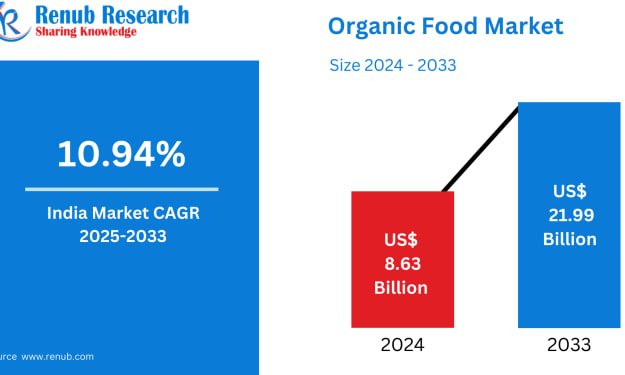
India Organic Food Market Overview The India Organic Food Market is undergoing a major transformation, fueled by rising health consciousness, environmental awareness, and government-backed initiatives promoting sustainable agriculture. According to Renub Research, the market was valued at US$ 8.63 billion in 2024 and is projected to reach US$ 21.99 billion by 2033, growing at a robust CAGR of 10.94% from 2025 to 2033.
By Aaina Oberoi3 days ago in Feast



Comments
There are no comments for this story
Be the first to respond and start the conversation.