
Eating in Egypt: Past vs Present
Eating in our world isn't what it used to be and Egypt is no exception.

In this day and age, food consumption is no longer the same in Egypt. How has food consumption in Egypt transformed? What were meals like? What about now? How did this happen? Are things now better or worse? And what can we do? Well, let's find out together.
1 Meals then
Balanced diets have persisted in Egypt for 5 millennia. Fertile land made Egypt abundant with cereals, legumes, and vegetables. Low in saturated fats, the diet satisfied people's physiological needs. A classic example is ful (fava beans), bread, and leafy vegetables. Leafy vegetables provide the essential nutrients that beans and bread lack.
Traditional meals consisted of home-baked bread dipped in ghomous (literally, a dip), which could be salt, cumin, or cooked vegetables/legumes. Breakfast was small; it could be a drink with bread, a dry biscuit, stewed whole wheat, or broken dry bread soaked in milk. Unlike now, lunch was not the main meal for fellaheen (farmers), manual laborers, and artisans. It actually came during their working hours, so they only ate a small uncooked meal. The main cooked meal was dinner; made of bread, cooked vegetables/legumes, finely chopped mixed salad, and meat (if affordable).
2 Meals now
The good old balanced days didn't last forever. Just like the rest of the world, Egypt has been invaded with junk food. Candy, soft drinks, pizza, hamburgers, and European sandwiches. Especially among youths and children, they became phenomenally popular. With the growing number of working women, children now eat their lunch alone. Under nobody's supervision, children curb their hunger with junk food. Consequently, they are also poor eaters at the main meal. Parents aren't bothered by the idea either. This is likely the same for parents since they have to eat lunch during working hours but, unlike adults, children lack self-control.
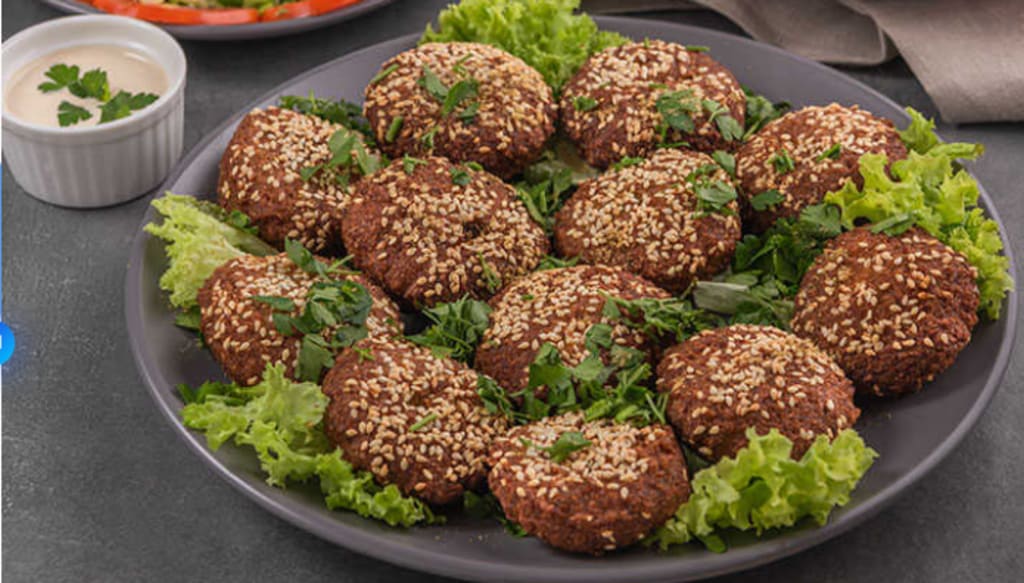
The last 2 decades of the 20th century witnessed the replacement of the 6-day workweek in the public sector with a 5-day one. Now, instead of working to 2 PM, work could extend to 5 PM. The main cooked meal is, hence, shifted from 3 PM to 6 PM, close to what it used to be in the past. Mechanized bakeries also replaced home-baked bread with considerably cheaper high-extraction local bread. Also, deep-frying became more prevalent. It is now used for the very popular ta'ameyya or falafel (fried fava bean patties), eaten for breakfast or as snacks.
3 Forces of change
Modernization was mainly backed by the liberalization of the market and aggressive marketing. This too happened in the last 2 decades of the 20th century with the open-door economic policy. The government also spared no effort in broadcasting (radio and television), allowing marketing campaigns to run amok in all homes, targeting youth and children. Consumers became hungrier than ever for imported commodities and western lifestyles, regardless of socioeconomic or geographic backgrounds. People now have the purchasing power to back their strong desire for modernization. Worst of all, no nutrition guidance was provided, forcing people to adopt nutritionally inefficient solutions to cope with the changes.
4 Better or worse?
We might have no decisive answer to the question at hand. After all, there's higher purchasing power and more options than in the past. Nonetheless, one demerit that cannot be overlooked is the impact on children. They are the precious future generations. Children are suffering from iron deficiency anemia and obesity. To protect these precious ones, this problem must be tackled. But how?
5 What to do?
First, we need a healthy food system able to cope with changes, so that children don't curb their hunger with junk food anymore. They should be informed of foods suitable for modern life and ways to reduce food preparation time. Second is providing guidance to the families to make nutritionally correct choices, to bring the significance of the situation to parents' attention. This way, they wouldn't overlook their children's consumption of junk food for the main meal. Third is to help families regain confidence in the value of traditional foods so that they re-incorporate them into their meals.
About the Creator
Ahmed Mousa
A biomedical science graduate passionate about sharing stories about biology and science in general. Also, from time to time, I'd like to share my personal contemplations about other topics I'm interested in. Hope you like it.
Keep reading
More stories from Ahmed Mousa and writers in Feast and other communities.
Still face experiment: Avoiding a bleak future
Childhood damage lasts for life. And as much as nobody wants to hurt their children, they might simply unknowingly do so. Good intention is not enough, after all. Knowledge is necessary. Knowledge is a powerful weapon to protect your children's future.
By Ahmed Mousa3 years ago in Families
My Tous les Jours Trip
As someone who lives in a rural area, I don't get the chance to visit fancy restaurants or bakeries that often. So, when a friend told me about a French-Asian bakery that's less than an hour away, I knew I had to check it out and grab some pictures for social media. Tous les Jours ended up providing an immersive experience that went above and beyond my expectations--although I did leave with a few reservations.
By Kaitlin Shanks27 days ago in Feast
Autonomy Is The Real Privilege
Good morning, freedom-seekers! Today we’re gonna be looking at autonomy. A strange word, I know; one many would probably look at blankly and run away from on sight. We’re gonna figure out what it actually means, consider how it’s achieved, and decipher just how deeply most of us are tangled up in dependence without realising it.
By That ‘Freedom’ Guy2 days ago in Humans




Comments
There are no comments for this story
Be the first to respond and start the conversation.