
Still face experiment: Avoiding a bleak future
Only by confronting the truth head-on can we create a better reality.

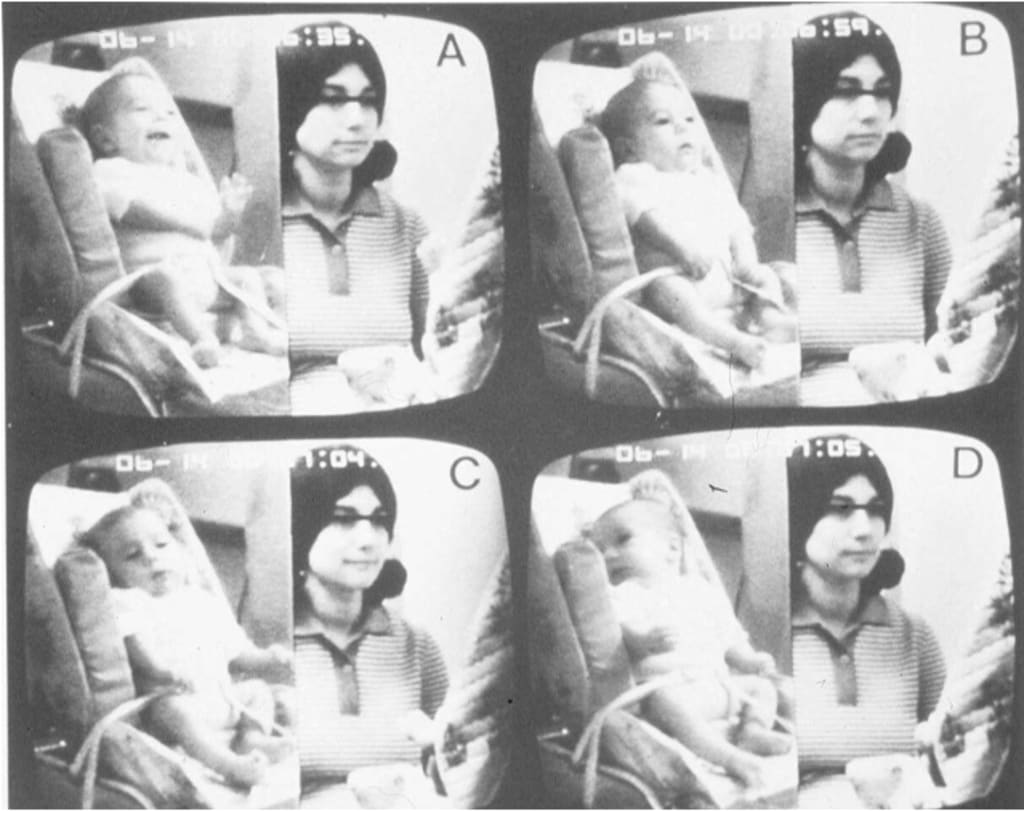
Childhood damage lasts for life. And as much as nobody wants to hurt their children, they might simply unknowingly do so. Good intention is not enough, after all. Knowledge is necessary. Knowledge is a powerful weapon to protect your children's future.
So, when do you think children learn emotions? A year, half a year? It's actually much earlier. It's suggested that reciprocation and social interactions start at 2 to 3 weeks of age. Basically their entire life.
Then, what's the magnitude of our mental impact on our children? Well, before I tell you that, how about a small experiment first?
The Still-face effect (SF) was introduced by Edward Tronick through an experiment that basically goes like this: the infant merrily plays with his mother, with a vivid, dynamic flow of face-to-face interactions. Then, the mother comes back with an SF appearance completely unresponsive to her child. So, what does the child do? According to Tronick, "The infant first orients toward the mother and greets her expectantly."
The mother still doesn't respond,
"The infant rapidly sobers and grows wary. He makes repeated attempts to get the interaction into its usual reciprocal pattern."
And when that doesn't work?
"The infant withdraws and orients his face and body away from his mother with a withdrawn, hopeless facial expression."
Same for fathers:
Such a powerful and simple experiment, albeit emotionally taxing. So, shall we break it down?
"The infant first orients toward the mother and greets her expectantly."
Here's your answer. To hurt your child, you simply need to be unresponsive. You don't have to beat or yell. Merely being passive about giving them affection is more than enough. You have that much power over your child. It's also lovely how much the child still trusts his mother at the initial stage.
However, if this goes on…
"The infant rapidly sobers and grows wary. He makes repeated attempts to get the interaction into its usual reciprocal pattern."
The child's reaction here shows how much he desperately NEEDS an emotional connection. He does everything in his power to get it back. This is confirmed in other versions of the experiment where this desperation is mitigated by touching. The power of connection is fascinating.
However, if this still goes on…
"The infant withdraws and orients his face and body away from his mother with a withdrawn, hopeless facial expression."
Which means your child's trust and reciprocation wouldn't last forever. At some point, it'll become too late and they'll just stop trying because they feel helpless and know they can't get what they want from you anymore. Luckily, in the experiment, parents reconnect with their children right away, but what if it doesn't happen?
A glimpse of a bleak future
I'm sure you too thought, "What if children get the SF for their whole lives?" How about we get a glimpse?
Wary, anxious, anorexic, and with no interest in exploring the world. It's worth contemplating how much our actions could dictate our children's future.
In closing, I'd like to say it's understandable to be terrified by such a heavy truth. Thinking about the weight of every action we do is definitely overwhelming. I'm not asking for the impossible from parents; to stop being humans and never make mistakes. It's fine and inevitable that you make mistakes. However, with this in mind, you'll make haste to fix this mistake and reconnect with your child before it leaves any serious impact. Only by confronting the truth head-on can we create a better reality.
Emotional connection with your child is indispensable for the child's proper emotional development and well-being. So, be careful.
About the Creator
Ahmed Mousa
A biomedical science graduate passionate about sharing stories about biology and science in general. Also, from time to time, I'd like to share my personal contemplations about other topics I'm interested in. Hope you like it.
Keep reading
More stories from Ahmed Mousa and writers in Families and other communities.
Not fine and that’s fine
Physical vs mental Wounds need time to heal. When you have a wound, you tend to it and give it time to heal. However, wounds aren't only physical. Problems at home, school, university, or work. Life is an endless cycle of problems and inconveniences. Everyone has duties and is stressed by them. Every day, we're left with many invisible wounds. It's exactly because they're invisible that we tend to forget them, not giving them enough time to recover. Sometimes, we might even not give them any time at all. Sometimes, we even deepen them even more.
By Ahmed Mousa3 years ago in Motivation
Wise~Guys
— Look Behind what's in Front of You ~ Make Good Choices — Hey, So how you Doin'..! Made~Men — Mobster Movies romanticise a distinctive, elegant appearance, impeccable attire style, along with the 'Families' expressive lingo. Making their 'Bones' gave them Panache — with vintage fedoras, tailored pin-striped suits, mirror-polished wing-tip shoes adorned with tassels; with their 'Gun Moll' gorgeous dates on their arms.
By Jay Kantor22 days ago in Families




Comments
There are no comments for this story
Be the first to respond and start the conversation.