
Australia Online Grocery Market: Digital Retail, Home Delivery & the Future of Everyday Shopping
How convenience, rapid delivery and fresh-food logistics are transforming Australia’s grocery landscape

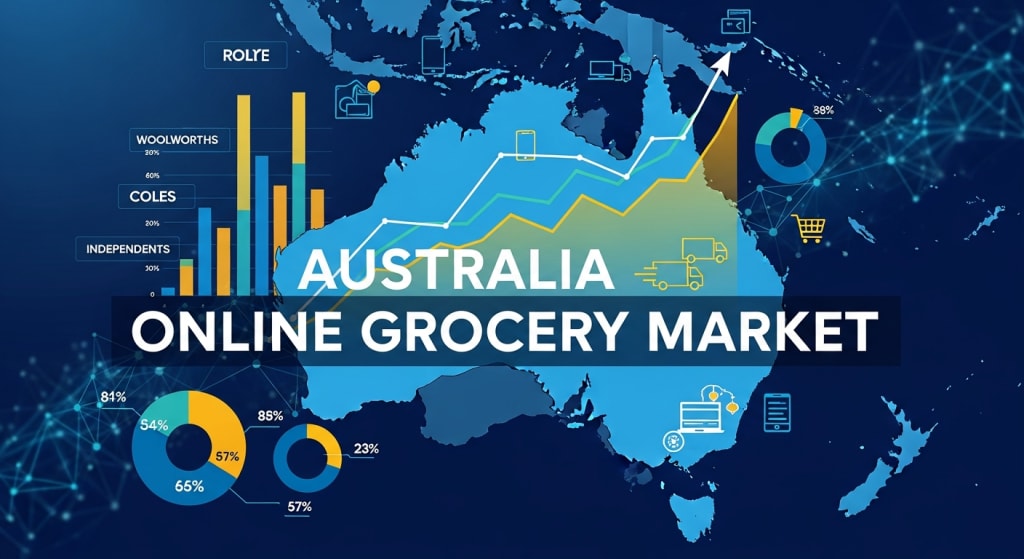
In 2024, the Australia online grocery market was valued at USD 14,202.0 Million — a strong baseline that underscores how deeply online shopping has embedded itself in everyday life. The same IMARC report forecasts a massive expansion: by 2033, the market is expected to reach USD 80,239.7 Million, growing at a CAGR of 21.22% during 2025–2033. This growth isn’t just from occasional orders — it reflects a structural shift in how Australians shop for groceries, the evolving convenience mindset, and serious investment in digital-first retail infrastructure.
Why is the Australia Online Grocery Market Growing?
Convenience & Changing Lifestyles
Online grocery shopping removes friction: users can shop anytime from their phone or laptop — no commuting, no parking, no time wasted. For busy urban professionals, families, elderly or anyone with busy schedules, this convenience has become a core reason to shift from traditional supermarkets to online ordering.
Rapid Delivery & Improved Logistics Infrastructure
Consumers increasingly expect fast delivery — often same-day or next-day. To meet that, retailers are building micro-fulfillment centers close to cities, expanding warehouse capacity, modernising supply-chains, and improving cold-chain management for perishables. Speed and reliability are now critical differentiators in the market.
Expanded Product Range & Personalisation
Online platforms allow stores to offer a wider range of products — from fresh produce and organic items to specialty, imported or niche goods — without the shelf-space constraints of physical stores. This variety, plus features like saved shopping lists, repeat ordering, personalized recommendations and subscription-style deliveries, makes online grocery appealing and user-friendly for diverse buyer needs.
Rising E-commerce Adoption & Digital Comfort
Australia’s broader move toward digital commerce supports this growth. As more people become accustomed to buying online for non-grocery goods, their comfort with digital payments, delivery services, and online ordering increases — making grocery online a natural extension.
Focus on Health, Wellness & Specialty Products (Organic, Fresh, Premium)
Consumer focus on health, organic produce, fresh food quality and specialized dietary needs is increasing. Online grocery platforms are especially well-suited to delivering fresh produce, organic items and specialty groceries — catering to modern health- and lifestyle-conscious shoppers seeking convenience without compromising on quality.
Market Structure & Segmentation:
Product Type — Vegetables and Fruits, Dairy Products, Staples and Cooking Essentials, Snacks, Meat and Seafood, Others.
Business Model Insights: Pure Marketplace, Hybrid Marketplace, Others
Platform Insights: Web-Based, App-Based
Purchase Type Insights: One-Time, Subscription
Regional Insights: Australia Capital Territory & New South Wales, Victoria & Tasmania, Queensland, Northern Territory & Southern Australia, Western Australia
This structure allows for flexibility and caters to different consumer segments — from busy urban consumers needing same-day delivery to suburban families looking for bulk or recurrent orders, to shoppers prioritising organic or specialty items.
Key Players & Competitive Dynamics
The online grocery market growth is being driven by a mix of major supermarket chains, dedicated e-commerce grocers, and technology-driven fulfillment-focused players. Large retailers such as Coles Group and Woolworths have aggressively expanded their online delivery services, leveraging their store networks and cold-chain logistics to support increased demand.
Meanwhile, newer & smaller players — quick-commerce startups or specialized online grocers — often differentiate on delivery speed, niche product range (organic, specialty, imported), or convenience features (subscription models, flexible delivery slots, personalized shopping). The competition among traditional supermarkets and online-only grocers helps accelerate innovation, service quality, and consumer choice.
Recent News & Developments in the Australia Online Grocery Market
August 2025: Major supermarkets in Australia reported a significant jump in online grocery orders — with Coles seeing over 25.7% growth in online grocery sales in the 12 months through March 2025. This shows that even traditional grocery players are rapidly shifting to digital-first strategies, indicating sustained demand growth for online purchases.
September 2025: A widely cited industry report noted that online grocery sales are becoming a core channel in Australia’s food-retail sector. Many retailers are investing in “dark supermarkets” — warehouse-style fulfilment centres — to streamline fulfillment, reduce delivery times, and optimise logistics. This infrastructure upgrade is a strong signal of long-term commitment to online grocery services.
October 2025: Consumer data from 2025 showed that roughly 17.08 million Australians (about 64% of the population) shopped online monthly — a marked increase from 2020. This broader shift toward e-commerce demonstrates growing comfort with online platforms, payment systems and delivery services — trends that directly support online grocery adoption and volume.
Why Should You Know About the Australia Online Grocery Market?
Because this market isn’t just growing — it’s transforming daily life, retail business models, and supply-chain economics in Australia. A surge from USD 14,202.0 Million in 2024 to a forecasted USD 80,239.7 Million by 2033 suggests that online grocery is becoming a dominant channel for food retail, not a niche alternative.
For grocery retailers and supermarkets — investing in online platforms, fulfillment centres, cold-chain logistics, and omnichannel integration could result in accelerated growth, higher order volumes, and stronger customer loyalty.
For startups, tech-driven grocery services, logistics firms, or delivery-service providers — there’s a vast opportunity to innovate: fast delivery, personalization, specialty/organic products, subscription models, and sustainable packaging.
For investors and stakeholders — this market offers one of the strongest growth stories in Australia’s retail sector over the next decade, driven by changing consumer habits, digital adoption, and evolving supply-chain practices.
About the Creator
Kevin Cooper
Hi, I'm Kavin Cooper — a tech enthusiast who loves exploring the latest innovations, gadgets, and trends. Passionate about technology and always curious to learn and share insights with the world!
Keep reading
More stories from Kevin Cooper and writers in Feast and other communities.
Australia Legal Services Market: Regulation, Digital Law Practices & the Future of Professional Legal Support
In 2025, the Australia legal services market was valued at USD 23.84 Billion. The market is forecast to grow to USD 34.52 Billion by 2034, with an expected CAGR of 4.20% between 2026–2034. This steady expansion reflects rising demand across litigation, corporate, regulatory compliance, environmental law, and a growing wave of digital-era legal needs — making the sector one of Australia’s most dynamic professional services markets.
By Kevin Cooper2 months ago in Criminal
My Tous les Jours Trip
As someone who lives in a rural area, I don't get the chance to visit fancy restaurants or bakeries that often. So, when a friend told me about a French-Asian bakery that's less than an hour away, I knew I had to check it out and grab some pictures for social media. Tous les Jours ended up providing an immersive experience that went above and beyond my expectations--although I did leave with a few reservations.
By Kaitlin Shanks24 days ago in Feast
Global Flour Market Size and Forecast 2025–2033
Introduction Flour, one of humanity’s oldest and most essential food ingredients, continues to power modern food systems in ways few other commodities can match. From bread and pastries to noodles, snacks, and ready-to-eat meals, flour remains a foundation of daily nutrition across cultures and economies. While deeply rooted in tradition, the flour industry today is undergoing a significant transformation driven by evolving consumer lifestyles, technological advancements in milling, and increasing emphasis on health and sustainability.
By Marthan Sir6 days ago in Feast
How to Succeed at the Benson Directory®
Congratulations and welcome to the Benson Directory® employee #22391! As our newest call handler, you will have the privilege of speaking with dozens of unique and interesting people on a daily basis as well as the opportunity to earn bonuses for high performance. Contained within this handbook you will find a set of ease to follow instructions designed to help you settle in to your new role and begin paving the way to success.
By S. A. Crawford3 days ago in Fiction




Comments
There are no comments for this story
Be the first to respond and start the conversation.