
Alcapurrias, My First Summer Hustle
The Year was 1969

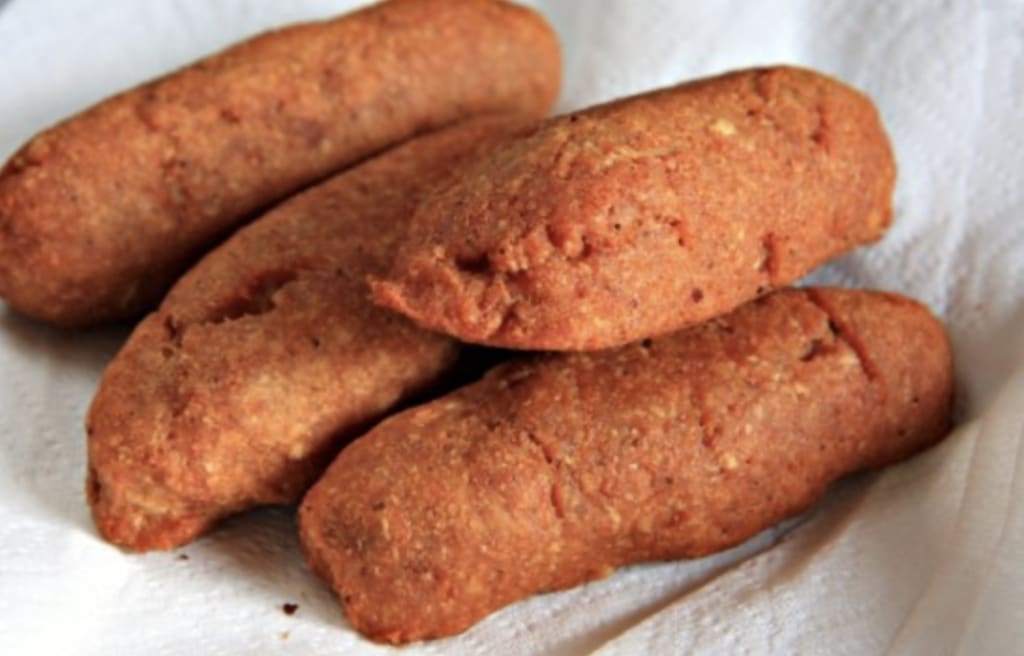
The aroma of achiote oil filled our tiny apartment kitchen in the projects, blending with the sharp tang of sofrito as my mother, Patricia, worked her magic on a fresh batch of alcapurrias. The sizzling of masa hitting hot oil was more than just the promise of a good meal—it was the soundtrack of our survival.
After my father passed away just four months before my tenth birthday, life changed dramatically. My mother, now a widow, had to figure out how to make ends meet with the limited Social Security widow and survivor benefits we received. It wasn’t much—just enough to keep the lights on and food on the table, but barely. My tuition to the local Catholic school, though only $45 a year, remained an expense that loomed over us like a dark cloud.
But my mother was resourceful and knew the power of a good meal. As a young girl in Puerto Rico, she learned to make alcapurrias by watching her mother prepare them during family gatherings. These golden, crispy fritters were more than just food; they symbolized our heritage, a piece of home brought to the streets of New York City.
It started one hot summer morning. I woke to her hands working the masa, a blend of green bananas and yautia, painstakingly grated by hand. She hummed a song I had heard a thousand times before but never knew the words to—one of those melodies passed down through generations.
"Anthony, ven acá," she called, motioning me to her side.
I shuffled into the kitchen, rubbing the sleep from my eyes. The counters were covered with bowls filled with masa and picadillo, the rich, seasoned ground beef mixture that would go inside each fritter.
"We're going to make some extra money," she said, her voice filled with firm determination.
She outlined her plan: She would cook the alcapurrias, and I would take them across the street to the baseball field, selling them to the fans and players during innings. This plan made perfect sense, as people always watched the games, and food vendors were few. It was an ideal opportunity.
I nodded eagerly, excited by the idea of contributing, of being part of something important.
We worked side by side on that first day, carefully shaping each alcapurria. My mother showed me how to spoon just the right amount of picadillo into the masa, folding it like a cocoon before gently dropping it into the hot oil. The kitchen grew hotter by the minute, but we didn’t stop.
The recipe was straightforward for my Mom.
For the Picadillo (filling):
• 1 lb ground beef
• 1/3 cup sofrito
• 1/2 cup tomato sauce
• 1/2 cup pimento-stuffed olives, sliced
• 2 tsp Sazon seasoning
• 2 tsp adobo seasoning
For the Masa (dough):
• 2 lbs (about 8) unripe green bananas, peeled and chopped into large pieces
• 2 lbs yucca, taro or yautia root, peeled and chopped into large pieces
• 2 tbsp achiote oil or olive oil
• 1 tsp Sazon seasoning (salt-free)
• 2 tsp salt
Other:
• Parchment paper
• 1/4 cup achiote oil
• 2 cups cooking oil
Other Prepartions:
1. Make the picadillo (ground beef):
• Heat a skillet over medium-high heat. Brown your ground beef and remove any excess fat from your skillet.
• Add sofrito, tomato sauce, onions, and peppers. Add seasonings and cook for a few minutes until the vegetables become tender.
• Add olives and raisins with some water if the picadillo dries up. Cover and allow the picadillo to continue cooking for about 15 minutes.
2. Make the masa (root vegetable puree):
• Peel and rough chop green bananas and yautía. Place in a large bowl filled with cold water.
• Place root vegetables in a food processor and blend until smooth. Add annatto oil as needed to help blend everything easily.
• Add masa to a large bowl. Add remaining annatto oil, chicken bouillon, sofrito, and seasonings. Stir until well combined.
• Taste the masa and adjust seasonings accordingly.
3. Assemble the alcapurrias:
• In a banana leaf, spoon a little bit of achiote oil (around ½ tsp), and then spoon around ⅓ to ½ cup of the masa and spread into a circle.
• Hold the banana leaf with the masa in your hand like it’s a hot dog bun and add around ¼ cup of picadillo. The key is not to overfill them because the alcapurria will break in the fryer. With a spoon, move the masa around the picadillo to cover the alcapurria.
• You may need to grab a little more masa to cover the meat. The key is not to leave any meat exposed to prevent it from falling apart.
• Add the alcapurria to the hot oil. Tip: make sure the oil is HOT. Cook for 3-4 minutes on both sides until crispy.
• Transfer to a plate with paper towels to absorb the oil.
• And presto, the dish is ready for consumption!
Our first batch was ready when the sun was high in the sky. My mother packed them into a large tin tray, covering them with a clean kitchen towel to keep them warm. She then handed me a small, folded paper bag filled with napkins and smiled reassuringly.
"Go on, mijo," she said. "And don’t let anyone talk you down on the price. They’re worth every penny."
With that, I stepped out into the summer heat, the tin tray balanced carefully in my hands. The baseball field was already alive with energy—boys in dusty uniforms throwing warm-up pitches, coaches barking instructions, and families sitting in the stands, fanning themselves against the sweltering New York humidity.
I took a deep breath and called out, "Alcapurrias! Get 'em while they’re hot!"
At first, people turned toward me with curiosity. A few of the older kids snickered, unfamiliar with what I was selling. But then, the smell reached them—that unmistakable blend of fried dough and savory meat.
"Hey, kid, what you got there?" a man in a Yankees cap called from outside the fence where they observed the games.
"Alcapurrias," I said proudly, stepping closer. "Puerto Rican fritters, stuffed with seasoned ground beef. Hot and fresh."
He leaned forward, sniffing the air. "Never heard of 'em. How much?"
"Twenty-five cents each," I said, just like my mother told me.
He hesitated momentarily before digging into his pocket and handing me a quarter. I fished out one of the warm fritters, wrapped it in a napkin, and gave it to him.
He took a bite. His eyes widened.
"Damn, kid," he said, shaking his head in approval. "This is good. Give me two more."
That was all it took. Word spread fast. By the end of the first game, I had sold nearly everything. I walked home with an empty tray and a pocket of coins, my heart pounding with pride.
My mother smiled when she saw me and asked, "¿Cómo te fue?"
I poured the money onto the table, the coins clinking against the wood. "We sold all of them!"
She exhaled, a look of relief washing over her face. "Dios mío," she whispered. "We might just make this work."
And so, it became our routine. Every weekend, we would wake up early to prepare the alcapurrias, and by the afternoon, I was at the baseball field, weaving through the crowd, calling out for customers.
Over time, I became known as "the alcapurria kid." Even the players started looking for me between innings, their mouths watering as I approached.
"Yo, Anthony, you got my usual?" one of them would call out, grinning.
"Only if you’ve got my quarter," I’d joke back.
The money we earned helped more than I could have imagined. It paid for my school tuition, books, and even new clothes for the start of the school year. It was never a lot, but it was enough. And in a world where every dollar counted, that was enough for me!
But beyond the money, selling alcapurrias gave me something more—pride. It connected me to my roots and my mother’s strength. It taught me the value of hard work, resilience, and transforming what we had into something valuable.
Even as I grew older, those summers stayed with me. The smell of achiote oil still brings me back to our tiny kitchen in the housing projects; I grew up where my mother and I worked side by side, shaping fritters and our future.
Whenever I eat alcapurrias, I think of those days—the heat of the baseball field, the clinking of quarters in my pocket, the look on my mother’s face when she realized we had made it through another summer.
Although my Mom is no longer around, I still smile, knowing that a simple dish—fried, greasy, and full of history—had done more for us than fill our stomachs. It created beautiful memories, cemented our determination to survive, fed our dreams, and gave us hope for our future!
About the Creator
Anthony Chan
Chan Economics LLC, Public Speaker
Chief Global Economist & Public Speaker JPM Chase ('94-'19).
Senior Economist Barclays ('91-'94)
Economist, NY Federal Reserve ('89-'91)
Econ. Prof. (Univ. of Dayton, '86-'89)
Ph.D. Economics
Keep reading
More stories from Anthony Chan and writers in Feast and other communities.
Fleeting Leaves
Autumn leaves drift down, Beauty fades as time rushes Life, too, feels so brief.
By Anthony ChanExclusive • 6 months ago


Comments (1)
Nice story, those look very similar to empanadas, one of my fav foods.