
Akara: Fritters, Flatulence, and the Deep-Fried Diaspora.
A beloved Nigerian street snack and the beans that bind us across oceans, parties, and hangovers.


The kind that sizzles in roadside oil at 6 a.m. The kind that puffs up golden and soft like it’s got dreams of being a pillow. The kind that dares you to wait till you get home but you know you’ll burn your fingers and tongue trying to eat it straight from the newspaper anyway. That’s the Akara I’m talking about.
Growing up in Nigeria, Akara wasn’t just a snack. It was a social situation. I remember classmates who would bring it to school, wrapped in soft serviettes or nylon bags, the oil already soaking through by third period. Meanwhile, my siblings and I were sipping Ribena and eating neat little sandwiches. But I wanted the Akara. I wanted the scent that made you turn your head before you even saw the food. I wanted the envy of those soft, peppered bean balls warming up someone else’s backpack.
Akara is made from black-eyed beans that have been peeled, soaked, and ground into a thick paste. The paste is whipped with onions and spices until it’s fluffy, then spooned into hot oil where it puffs up and crisps at the edges. You can eat it with pap, also known as akamu, which is the classic combo, or just slide it straight into Agege bread, which turns it into something close to spiritual.

When I think about Akara, I also think about university in Jos. Those Friday nights that blurred into Saturday mornings. My friends and I would stumble back from wherever we’d been dancing, and somehow, the one thing we could all agree on was Akara. Akara in Agege bread with a side of suya. Yes, suya. Don’t judge it till you’ve tried it. The grease of the beans, the spice of the meat, the sweetness of the bread. We’d sit by the roadside, not even caring about the flies, just chewing and laughing and passing around one big bottle of Coca-Cola — the Orobo size — like it held all the answers.
But Akara isn’t just for hangovers. It’s there at naming ceremonies, weddings, market stalls, funeral mornings, and break-of-fast evenings. It’s what you fry when you’ve run out of stew or patience or both. It’s street food and soul food. It’s what aunties sell at bus stops, what grannies make on smoky stoves, and what wakes you up when you weren’t even planning to eat. Sometimes it’s soft and round like a tennis ball, sometimes flat and a bit burnt at the edges, and everyone swears their mum or their village makes it best.
What’s beautiful is that Akara didn’t stop in Nigeria. When enslaved Yoruba people were taken to Brazil, they brought it with them. There, it became acarajé. Still made with beans, still fried, still sacred. In Salvador, you’ll see women in flowing white selling it on the streets, still serving tradition with every bite. It’s part of Afro-Brazilian religion and culture, eaten during rituals, sold during festivals, passed from hand to hand like memory wrapped in banana leaves.
Now, let’s be honest. There is a reason some people call it musical food. If you eat too much, the aftermath is not for the faint of heart. Akara has been known to stir stomachs in ways that will test your relationships. You might want to clear your calendar, or at least a room. But even with the risk, we keep coming back. Because some foods don’t just fill you, they follow you. In your memories. In your cravings. In the way your mouth waters when someone walks into the office with that faint, unmistakable smell.
Akara is more than a snack. It’s home. It’s Lagos traffic and Jos mornings and boarding school lunchtime and hangover recovery and Friday joy all rolled into one hot little ball. The beans are humble, but the feeling is mighty. And honestly, whether you eat two or ten, just don’t blame the Akara when your belly starts to play jazz. It warned you. We all know it did.
An acquaintance of mine writes about this beauty here. You see? Quite a few of us can testify to the awesomeness of Akara 😀
About the Creator
Cathy (Christine Acheini) Ben-Ameh.
https://linktr.ee/cathybenameh
Passionate blogger sharing insights on lifestyle, music and personal growth.
⭐Shortlisted on The Creative Future Writers Awards 2025.
Keep reading
More stories from Cathy (Christine Acheini) Ben-Ameh. and writers in Feast and other communities.
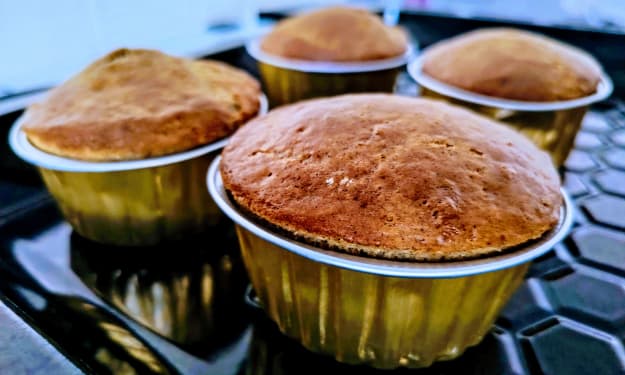
The Sweet Perks of Baking at Home: My Go-To Cinnamon and Vanilla Muffins.
There’s something truly special about baking your own cakes at home. It’s not just about the end result — it’s about the whole experience: the familiar smells filling the kitchen, the satisfaction of creating something from scratch, and the simple joy of knowing exactly what goes into your food.
By Cathy (Christine Acheini) Ben-Ameh.9 months ago in Feast
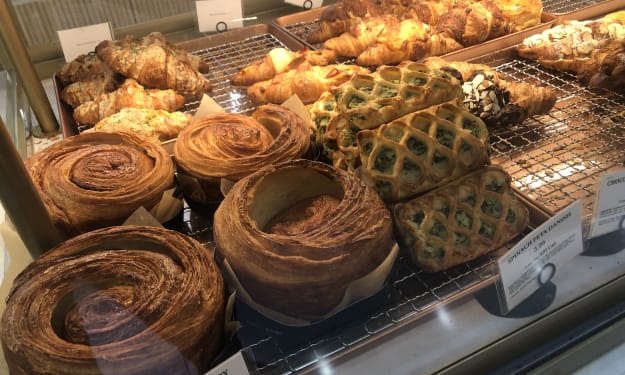
My Tous les Jours Trip
As someone who lives in a rural area, I don't get the chance to visit fancy restaurants or bakeries that often. So, when a friend told me about a French-Asian bakery that's less than an hour away, I knew I had to check it out and grab some pictures for social media. Tous les Jours ended up providing an immersive experience that went above and beyond my expectations--although I did leave with a few reservations.
By Kaitlin Shanks17 days ago in Feast
Australia Seeds Market to Grow to USD 1.5 Billion by 2033 on Adaptive Agriculture & Sustainable Practices
The Australia seeds market is progressing as agricultural systems evolve and adapt to both economic and environmental challenges. According to IMARC Group, the Australia seeds market reached USD 1.3 billion in 2024 and is expected to grow to USD 1.5 billion by 2033, with a compound annual growth rate (CAGR) of 1.20 % during 2025–2033. This steady expansion reflects rising demand for high-yield, resilient seed varieties, supportive agricultural policies, and broader trends toward sustainable farming practices within Australia’s dynamic agricultural sector.
By Rashi Sharma4 days ago in Feast
Where's the Glory?
In breaking news, rehabilitated Republican Senator Johnnie Johnson (Pronouns: HE, HIM, HIS) called a press conference from the Men’s room of the New Orleans Louis Armstrong International Airport, Concourse B, across from the Ignatius Reilly’s Lucky Dog stand. The Senator had just returned from a sexual reorientation rehabilitation program in Memphis, TN after being publically disgraced at a Buckee’s Truckstop restroom soliciting sex from an undercover cop three months ago. He is a founding member of the Reformed Christians for Christ, a conservative, pro-family and ex-gay advocacy group. In the spirit of being reborn, Senator Johnson invited reporters to marvel at his plans for a major remodeling of airport bathrooms.
By Cathy Schieffelin5 days ago in Humor


Comments (3)
Fascinating write up! I’ve never tried it but I’ve been meaning to! After reading your description it’s moving up on my list. There’s a local Nigerian restaurant and I’ve been meaning to get over there to try jollof and egusi (sp?) soup— I’ve never tried any Nigerian food and a friend of mine said that’s what I should start with. But I’m gonna bump Akara up on the list too :) I love that you added that context about the diaspora carrying this food tradition. Haitians have a variant of this called Akra. Normally I don’t link my own stories on someone else’s post because it feels distracting and insincere, but I wrote about Haitian Akra a while back and I think maybe you’d find the recipe interesting. They don’t use beans, they use a Caribbean root vegetable called malanga (aka yautia aka taro). I think it’s a testament of resilience to know that even when taken away from the plants they’d need to make their staple, displaced people who were victimized by slavery still found a way to make the food that was a point of comfort and pride. Anyway, if you’re interested in reading more about the Haitian version here’s what I wrote on it: https://shopping-feedback.today/feast/akra-a-haitian-recipe%3C/span%3E%3C/span%3E%3C/span%3E%3C/a%3E%3C/p%3E%3C/div%3E%3C/div%3E%3C/div%3E%3Cstyle data-emotion-css="w4qknv-Replies">.css-w4qknv-Replies{display:grid;gap:1.5rem;}
Omg! This sounds so yummy!
Oh wow, I've never heard of akara before. But it sounds soooo delicious!