
A Taste of Homemade Beef Rendang
A Recipe for the Taste of Home Challenge

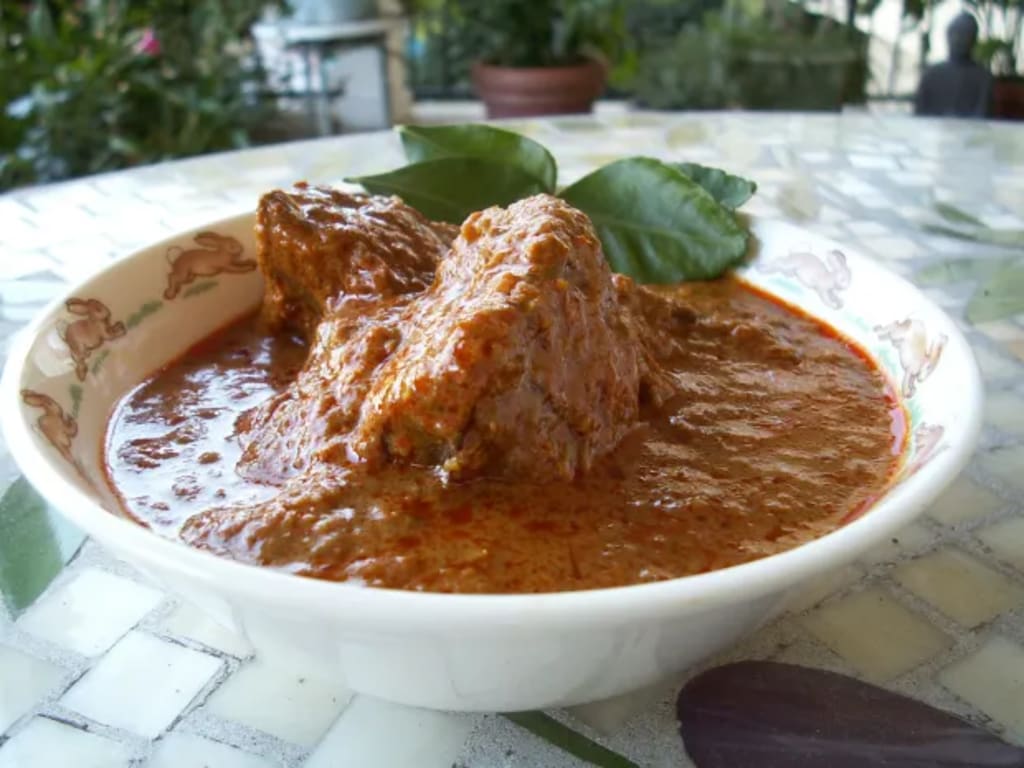
A dish should do more than sustain. Michelle Liew
****************************************************************
A dish can do more than sustain--it should carry the warmth of home and echoes of the past.
One of these delicacies is the Beef Rendang my grandmother prepared with unquestionable heart and soul. The dish, tender beef slices covered in beef gravy spiked with generous amounts of spice, is a must-have dish at any Malay or Peranakan dinner table.
A History of the Peranakans
The Peranakans, descended from Chinese immigrants born in and around the Straits of Malacca and Indonesia, are a stand-out cultural group that settled in the Malay Archipelago as early as the 15th Century.
Over decades and generations, they blended Chinese traditions with Malay, Indonesian and even European customs--and their efforts resulted in a distinct identity that shows in the Malay (Baba Malay) that they speak, their intricate customs and standout cuisine.
Peranakan food, like Beef Rendang, is rich in flavour and complexity, owing to its complex blend of spices. What sets it apart is its fusion of Malay ingredients and Chinese cooking techniques that give rise to cherished South-East Asian dishes like Ayam Buah Keluak, Sri Kaya, and of course, Beef Rendang. The Peranakan culture is a deeply cherished one, and is an enduring example of cultural fusion.
A History of Beef Rendang
This beef dish originated from the Minangkabau people who lived in West Sumatra, Indonesia. This savoury delight was a must have at ceremonies and special occasions, and became an integral part of Malay culture. The Peranakans, mostly ethnic Chinese traders who married Malay women and adopted Malay traditions in the 19th century, included it in their culinary repertoire.
Following the slow cooking tradition of the Sumatrans, Malays and Peranakans, including my grandmother, cooked the dish for hours until the beef absorbed the rich spices and coconut milk. What resulted was a savoury masterpiece that oozed a deep, caramalized flavour, allowing for preservation before refrigeration.
More than a dish, Beef Rendang represented virtues and values--the hours it took to prepare instilled patience. Meant for communal eating, it also symbolised unity. Minangkabau migration led to its being spread across South East Asia, and, as testament to its popularity, it was recognized by UNESCO as being an intangible cultural heritage.
The Story Behind the Dish
Every bite of Beef Rendang was a bridge to history, a loving connection to the generations that came before us. My grandmother's strict adherence to Peranakan traditions and my grandfather's Minangkabau heritage ensured that every batch of Beef Rendang she produced was just right.
My first attempt to prepare this savory legacy myself was a sad failure. Owing to my busy schedule, I hadn't spent enough time at the stove--so the beef slices were way too tough. Grandma, of course, shook my heartfelt endeavour off with a hearty laugh.
She used to prepare this dish for the family when their cravings called for it. The culinary stalker that I was would observe her as she seamlessly melded the ingredients into what was always delectable fare. My grandaunts and uncles would arrive, their cars practically screeching to a halt, so impatient they were to sample her efforts. They would round lunch off with a game of mahjong--a Chinese game akin to rummy, that involve 136 tiles with Chinese characters etched on them. It was a game that involved a marked degree of skill, calculation, and a dash of luck.
Flavours, Textures and Emotions: The Essence of Rendang
The first taste of this dish opens the eyes fully--velvety coconut, tender beef, and slow-building aroma that lingers.
Coconut milk blankets this dish in a warm, smooth embrace to long for. The smphony of spices comes together, a culinary orchestra that plays in perfect tune. Heat and time come together in a slow dance and meld into a rich, caramelized embrace of flavour. The robustness of the spices contrasts with its slow-cooked aroma, creating the perfect culinary balance that only my grandmother could achieve.
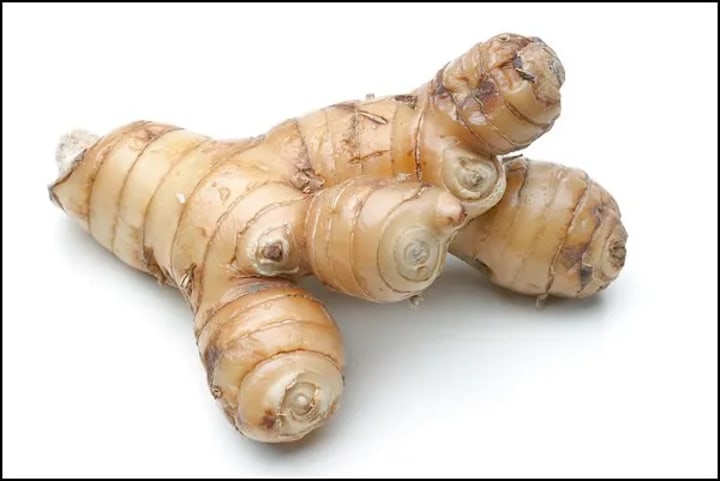
A must-have addition to Beef Rendang and many other South East Asian dishes is Galangal, otherwise known by its affectionate moniker, Blue Ginger. What sets this magic root apart from other ginger varieties is its stronger, more distinct taste. And no, it's not blue. The strong taste does make it an ideal culinary partner for rendang.
The scintillating aroma binds me to my Peranakan roots as if it were indestructible twine. It roots me in my Peranakan heritage--a blend of Chinese lineag and South-East Asian tradition. The enticing scent stirs an intense love of spice--those not so familiar with Beef Rendang paste find themselves harmonizing without difficulty with Beef Rendang. The dish conjurs a vivid picture of my grandmother's open backyard Peranakan kitchen, with her welcoming us home after the day is done.
Beef Rendang, My Grandmother's Recipe
Beef Rendang was a culinary legacy passed down from my great-grandmother to my grandmother, and I share it with you today. This recipe feeds 4-6 people.
A Packet of Beef Rendang Paste
A kg of beef (topside or shin)
A cinnamon stick
3 - 4 cloves of garlic, as preferred
3 red chillies, as preferred
A tablespoon ground cumin
A tablespoon ground fennel
4 slices of blue ginger ( galangal, no other ginger)
A stalk of lemon grass
6 lime leaves
A packet of coconut milk
4 little cubes of rock sugar
A level teaspoon of salt
Instructions
Fry the shallots until they are golden brown and set them aside.
Add the beef rendang paste and fry together for a few minutes until there is a lovely fragrance.
Add the galangal, lemon grass, cinammon stick, cloves, fennel, cumin, coriander and lime leaves.
Add the beef and fry for about 10 minutes
Pour in two rice bowls of water, and mix until the sauce thickens.
Add the salt and sugar. Adjust to taste.
Finally, add the lime leaves, sprinkle with fried onions and garnish with a stalk of lemon grass.
This Beef Rendang recipe, now prepared by my aunts, lives beyond my grandmother. The aroma still wafts through their kitchens and offers quiet moments of nostalgia. It reminds the family of the nurturing, yet comforting presence of my grandmother, another of her culinary legacies.
I now forward this recipe digitally on her behalf and invite you to try it yourselves and make it a taste of your homes.
Each bite is a reminder that home is not just a place--it is a flavour, a memory, and an unforgettable feeling.
*************************************************************
This work is NOT AI-generated or copied from any source. The presence of AI tags is coincidental.
About the Creator
Michelle Liew Tsui-Lin
Hi, i am an English Language teacher cum freelance writer with a taste for pets, prose and poetry. When I'm not writing my heart out, I'm playing with my three dogs, Zorra, Cloudy and Snowball.
Keep reading
More stories from Michelle Liew Tsui-Lin and writers in Feast and other communities.


Comments (5)
Yummy!!
How many portions is this? 🤔 It sounds divine!
Definitely bookmarking this
Omgggg, I loveeeeee rendang! Gosh, you really know how to make me hungry, lol
This was a warm, nostalgic feast—flavors, history, and family all wrapped up in one delicious dish! The love and patience behind Beef Rendang really shine through, and that recipe feels like a legacy passed down with care. Now I'm craving a bowl, and my kitchen is definitely missing some galangal!