
6 Vegetables That Taste Even Better When Sun-Dried – Perfect for Stews and Lasting Up to a Year Without Spoiling
6 Vegetables That Taste Even Better When Sun-Dried – Perfect for Stews and Lasting Up to a Year Without Spoiling
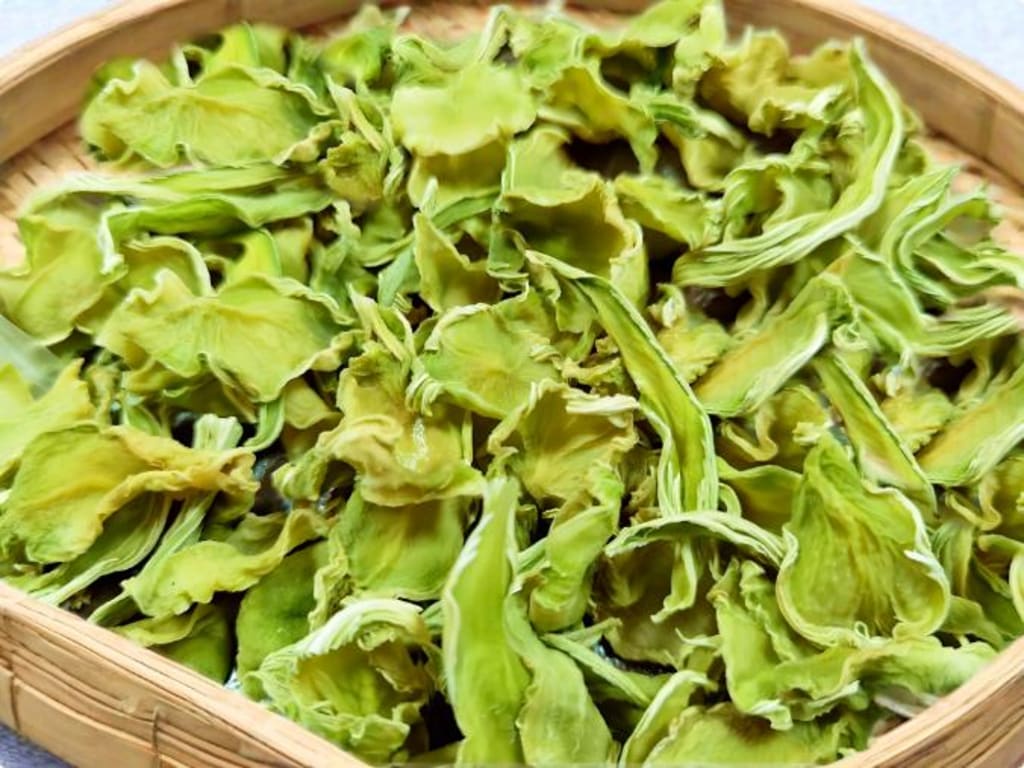
The scorching summer sun beats down mercilessly, and the cicadas’ shrill cries fill the air. Yet, this very season of intense heat is nature’s perfect gift for sun-drying vegetables! The wisdom of older generations knew it well—when fresh seasonal vegetables are bathed in generous sunlight, they transform into something extraordinary. Sun-drying concentrates their flavors, making them richer, chewier, and more complex than their fresh counterparts. Even after a year of storage, these dried treasures retain their robust taste. Toss a handful into a stew, and the result? Pure magic!
1. Dried Lettuce Stems: Crisp and Chewy
Fresh, tender lettuce stems are peeled and sliced into thick strips or chunks. Blanch them in boiling water for about a minute, then immediately plunge them into cold water. Once cooled, drain and spread them evenly on bamboo trays or breathable racks to bask under the blazing sun. After three to four sunny days, the slices turn golden and translucent, with a leathery texture. The result? A delightful chewiness with a natural sweetness. When stewed with meat, dried lettuce stems absorb the rich juices, becoming even more flavorful than fresh ones—crisp, fragrant, and utterly satisfying.
2. Dried Winter Melon: The Ultimate Juice Sponge
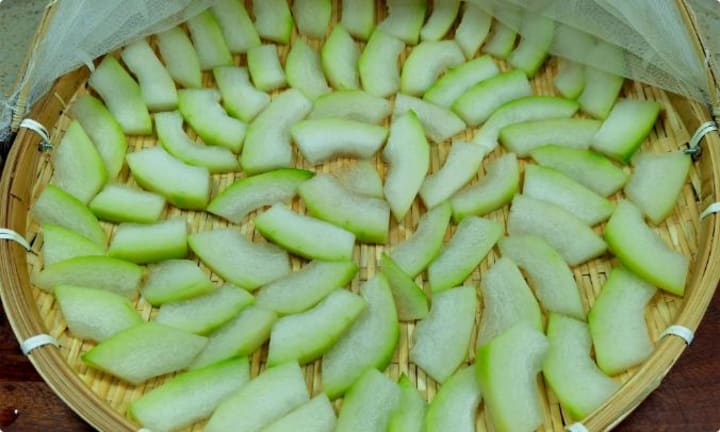
Choose a thick-fleshed, mature winter melon, peel it, remove the seeds, and slice it into half-centimeter-thick pieces. No blanching needed—just lay them out on clean drying racks. Under the relentless sun, flip them frequently until they become dry, curled, and produce a crisp sound when tapped. Though winter melon is watery when fresh, its dried version is a secret weapon in stews and soups, soaking up all the savory broth while offering a uniquely resilient texture kissed by the sun.
3. Dried Luffa: Chewy and Flavorful
Select young luffa gourds, peel off the tough outer skin, halve them to remove the seeds, and cut into finger-sized strips. Blanch briefly in boiling water for about 10 seconds, drain, and spread them out under the sun. After a few days, the once-plump luffa strips shrink into tough, chewy strands. Rehydrated and cooked with meat or chicken, dried luffa outperforms fresh ones—its fibers stay firm, never turning mushy, while soaking up every drop of rich sauce for an unforgettable taste.
4. Dried Long Beans: The Soul of Braised Meat
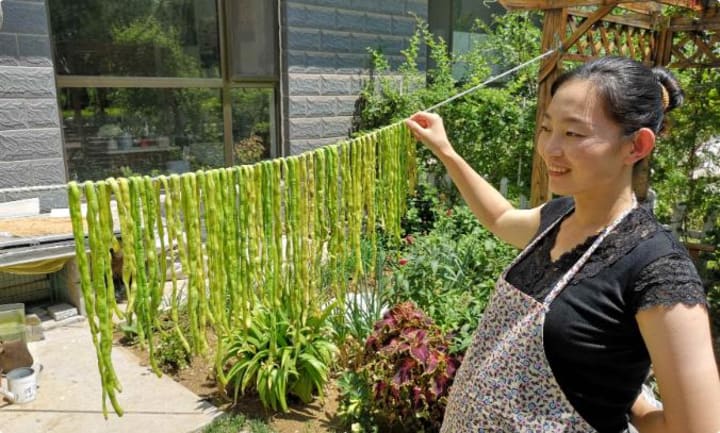
Long beans (yardlong beans) are ideal for drying. Trim the ends, wash them thoroughly, then blanch in salted boiling water for 2–3 minutes until slightly softened and darker green. Shock them in cold water, then hang them like laundry on a clothesline or coil them into small circles for drying. Once they turn deep brown and snap easily, they’re ready. Dried long beans and fatty pork or ribs are a match made in heaven—after slow cooking, the beans release their deep, earthy aroma, absorbing all the meaty goodness while remaining wonderfully chewy. A true soulmate for hearty stews!
5. Dried Eggplant: Intensely Savory and Satisfying
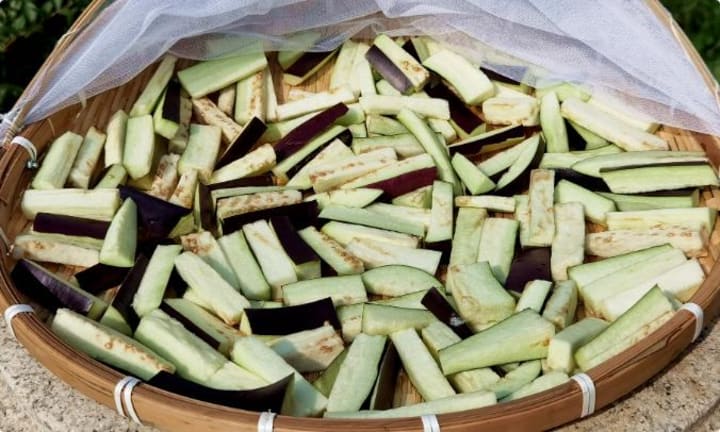
Choose firm, purple eggplants, wash them, remove the stems, and slice into half-centimeter-thick rounds or strips. Steam over high heat for 5–8 minutes until softened (but not mushy), then drain and gently squeeze out excess water. Spread them out to dry under the sun until they turn dark and leathery. Once rehydrated, these inky-black eggplant strips shine in braised dishes or stir-fries with cured meats. Their concentrated umami and pleasantly chewy texture—far superior to fresh eggplant—make them irresistibly moreish.
6. Dried Bitter Melon: A Bitter-Sweet Revelation
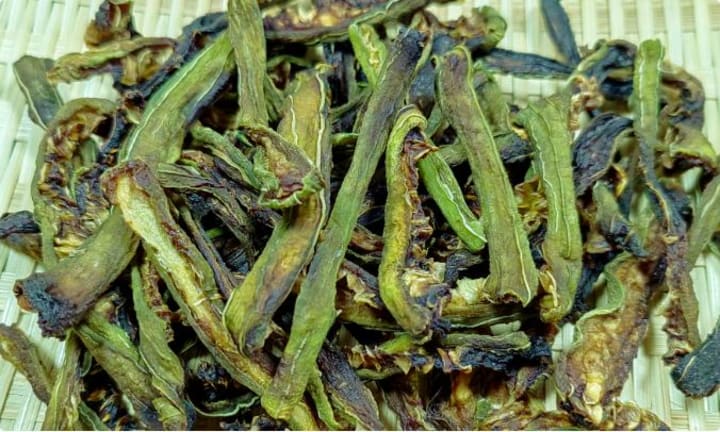
Split bitter melons lengthwise, scoop out the seeds and white pith, then slice thinly. To mellow the bitterness, blanch the slices in boiling water with a pinch of salt and a few drops of oil for one minute, then drain and squeeze dry. Spread them thinly to dry until completely crisp and curled. The drying process miraculously softens the melon’s sharp bitterness, leaving a gentle, lingering sweetness. Use the dried slices to brew a refreshing tea or add to pork rib or duck soup—their subtle bitterness gives way to a profound, soothing aftertaste, a testament to summer’s patient alchemy.
The Magic of Sun-Drying: A Time-Honored Tradition
Summer’s abundant sunshine is nature’s most generous preserver. While cicadas sing outside, take advantage of the season’s bounty—lettuce stems, winter melon, luffa, long beans, eggplant, and bitter melon—and let the sun work its magic. Sun-drying isn’t just economical; it’s a natural, additive-free way to store vegetables at their peak. Once fully dried, seal them in airtight containers and store in a cool, dry place. They’ll keep for up to a year, ready to elevate meals whenever you crave them.
When winter comes or you simply want a change of pace, rehydrate a handful of these sun-kissed gems and simmer them with pork belly or ribs. As the kitchen fills with the intoxicating aroma of summer’s essence melding with rich meat, take a bite—the dried vegetables, now plump with savory juices, offer a satisfying chew and layers of deep, sun-concentrated flavor. It’s a symphony of taste, a humble yet profound celebration of time, sunlight, and the simple joys of home-cooked comfort.
About the Creator
My Tous les Jours Trip
As someone who lives in a rural area, I don't get the chance to visit fancy restaurants or bakeries that often. So, when a friend told me about a French-Asian bakery that's less than an hour away, I knew I had to check it out and grab some pictures for social media. Tous les Jours ended up providing an immersive experience that went above and beyond my expectations--although I did leave with a few reservations.
By Kaitlin Shanks25 days ago in Feast
Searching for the Best Pizza in Doha: A Matter of Taste, Time, and Place
The idea of the “best pizza in Doha” is more complicated than it first appears. Doha is a city of contrasts—glass towers rising from the desert, quiet neighborhoods tucked behind busy roads, and people from every corner of the world bringing their own memories of what food should taste like. Pizza, a dish born far from Qatar, has found a surprising and comfortable home here. But defining the best version of it is less about rankings and more about moments.
By Harley Morrisa day ago in Feast
So You Decided To Become a Nurse Practitioner:
So you decided to become an "Advanced Practice" nurse. Congratulations!... is what I would say if this was a good idea. Grad school? In this economy? What were you thinking? Likely it was something along the lines of either 1) “I've seen these other chucklefucks do it— Why can't I?” or even 2) “I've got a nice career, I should shake it up. I miss feeling like I have no clue what I'm doing.”
By Sandor Szabo3 days ago in Fiction



Comments
There are no comments for this story
Be the first to respond and start the conversation.