
Understanding Conjunctions and Prepositions
Understanding Conjunctions and Prepositions: A Guide to Essential Parts of Speech

In the world of grammar, conjunctions and prepositions play crucial roles in connecting words, phrases, and clauses, creating coherence and clarity in writing. Though often overlooked, understanding these parts of speech is fundamental for effective communication. Let’s delve into their definitions, functions, and examples to enhance your grasp of these essential elements.
Conjunctions: Bridging Words and Ideas
Conjunctions are words that link other words, phrases, or clauses within a sentence. They help establish relationships between different parts of a sentence, making writing more fluid and coherent. There are three main types of conjunctions: coordinating, subordinating, and correlative.
Coordinating conjunctions connect words, phrases, or clauses of equal importance. The most common coordinating conjunctions are:
For: Explains reason or purpose (e.g., “She was late, for she missed the bus.”)
And: Adds information (e.g., “He enjoys reading and writing.”)
Nor: Presents an additional negative idea (e.g., “She doesn’t like tea, nor does she like coffee.”)
But: Shows contrast (e.g., “I wanted to go, but it was raining.”)
Or: Offers an alternative (e.g., “Would you prefer coffee or tea?”)
Yet: Indicates a surprising contrast (e.g., “It was late, yet the streets were bustling.”)
So: Shows effect or result (e.g., “She was tired, so she went to bed early.”)
Subordinating conjunctions introduce dependent clauses and link them to independent clauses, indicating a relationship such as cause and effect, contrast, or time. Common subordinating conjunctions include:
Because: Shows reason (e.g., “He left early because he was tired.”)
Although: Indicates contrast (e.g., “Although it was cold, we went for a walk.”)
If: Expresses condition (e.g., “If it rains, we’ll cancel the picnic.”)
When: Denotes time (e.g., “Call me when you arrive.”)
Since: Indicates time or reason (e.g., “Since she was busy, she couldn’t attend the meeting.”)
Correlative conjunctions work in pairs to connect balanced parts of a sentence. Examples include:
Either…or: Offers choices (e.g., “You can either come with us or stay home.”)
Neither…nor: Shows a negative choice (e.g., “Neither the manager nor the assistant was available.”)
Both…and: Adds emphasis (e.g., “Both the book and the movie were excellent.”)
Not only…but also: Highlights an addition (e.g., “She is not only intelligent but also hardworking.”)
Prepositions: Providing Context and Detail
Prepositions are words that show the relationship between a noun (or pronoun) and other parts of the sentence. They provide details about time, place, direction, and manner. Here are some common prepositions:
Time: at, on, in, during, before, after
(e.g., “The meeting is at 10 a.m.,” “She was born in July.”)
Place: at, in, on, under, over, between, among
(e.g., “The cat is under the table,” “She lives in New York.”)
Direction: to, toward, into, onto, from
(e.g., “They walked to the park,” “The plane flew over the city.”)
Manner: by, with, like, as
(e.g., “She wrote the letter by hand,” “He acts like his father.”)
Prepositions often work with prepositional phrases, which include the preposition, its object, and any modifiers of the object. For example, in the sentence “The book on the shelf is mine,” “on the shelf” is a prepositional phrase providing additional information about the book’s location.
Conjunctions and prepositions are foundational to clear and effective writing. Conjunctions help link ideas and sentences, creating a seamless flow of thoughts, while prepositions provide crucial details about relationships involving time, place, direction, and manner. Mastering these parts of speech will enhance your ability to communicate complex ideas clearly and coherently. So next time you write, pay attention to these small but mighty words — they’re key to making your writing precise and engaging.
About the Creator
SAKSHEE SHUKLA
https://intelligencevidyarthi.in/course_details?table_manners_&_etiquettes&cm=MTc=
Reader insights
Nice work
Very well written. Keep up the good work!
Top insights
Excellent storytelling
Original narrative & well developed characters
Expert insights and opinions
Arguments were carefully researched and presented
Keep reading
More stories from SAKSHEE SHUKLA and writers in Education and other communities.
What is a Noun?
When we talk about language, we often focus on the complexity and beauty of the words we use. Among these, nouns play a fundamental role. They are the backbone of our sentences and the key to effective communication. But what exactly is a noun, and why is it so important in our everyday language?
By SAKSHEE SHUKLAabout a year ago in Education
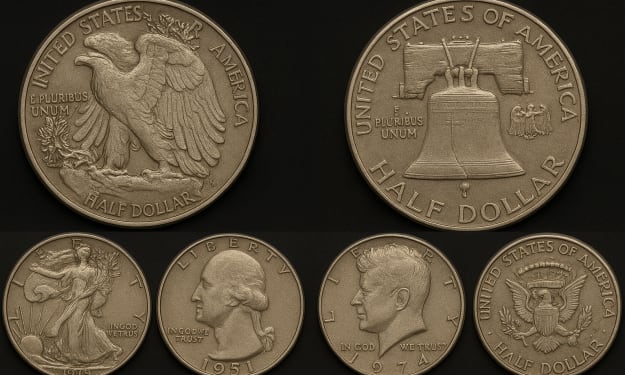
Half Dollars That Defied Time: Kennedy, Franklin & Walking Liberty
If you’ve found yourself holding an old half dollar, you’ve probably wondered: is this just pocket change, or could it be something more? I’ve had that same conversation with countless collectors in my eight years as a numismatist. The answer often hinges on three legendary names: Walking Liberty, Franklin, and Kennedy. More than just silver, these coins are tangible pieces of 20th-century America. This guide will help you understand their stories, values, and which one might be the perfect fit for your goals, whether you're building a collection or an investment.
By Laura Bennett5 days ago in Education
Rewiring Wellness: How Neuroscience Is Redefining the Mind-Body Connection in Therapy
In recent years, neuroscience has reshaped the understanding of how emotional and physical processes interact, offering therapists new insight into healing. The mind-body connection, once viewed as more philosophical than scientific, now has clear biological explanations. Studies show that thoughts, emotions, and physical sensations are deeply intertwined, influencing everything from stress responses to overall wellbeing. This knowledge is transforming modern therapeutic practices by providing clinicians with evidence-based tools that support integrated healing.
By Debra Bailey PHDa day ago in Education
Silver Screen Magic with Mae West
American actress and singer Mae West became a popular film actress during the Great Depression. She started entertaining in vaudeville, then performed on Broadway, and finally went to Hollywood. She signed up with Paramount Pictures and made her debut in the 1932 film “Night After Night.” She also starred in musicals, comedies, and crime dramas. The American Film Institute named her one of the best classic Hollywood actresses.
By Rasma Raisters6 days ago in Geeks


Comments (3)
Amazing lines
Thanks for sharing.
Thank for this piece