degree
Degrees defined: PhD, Master, Bachelor, Associate–all about that expensive piece of paper called your degree.
"Testing the Truth: Understanding Positive Results the Right Way"
Testing the Truth: Understanding Positive Results the Right Way How a single word can mean different things—and why that matters. When Maria received her routine medical test results, her heart skipped a beat. The word “positive” glared back at her from the screen. Like many, her immediate reaction was fear. Had something gone terribly wrong? But within a few minutes on the phone with her doctor, Maria learned a surprising truth: in the world of testing, “positive” doesn’t always mean “bad.” In fact, it simply means the test found what it was designed to detect—nothing more, nothing less. Whether that’s good or bad depends entirely on what the test was for. Maria’s experience highlights a common misunderstanding. In everyday language, “positive” is often associated with something good—like a positive attitude, positive feedback, or a positive outcome. But in medical and diagnostic testing, the word carries a more technical meaning. Understanding What “Positive” Really Means Let’s break it down: when you take a test—medical or otherwise—it’s designed to detect the presence (or absence) of something. A “positive” result means the test did detect that thing. A “negative” result means it didn’t. That’s it. For example, if you take a pregnancy test and it’s “positive,” it means the test found the pregnancy hormone hCG in your urine—confirming pregnancy. In this case, for someone hoping to conceive, a positive result is great news! But if you take a COVID-19 test and it’s “positive,” it means the test detected the virus in your system. That doesn’t necessarily mean you're severely ill—it just confirms that the virus is present. The key takeaway? “Positive” is not inherently good or bad. It’s just data. The context is what gives it meaning. Different Tests, Different Meanings Let’s look at a few common types of tests and what “positive” might mean in each case: Infectious Disease Tests (e.g., COVID-19, HIV, strep throat): A positive result means the test detected the presence of the virus or bacteria. It allows for early treatment and helps prevent the spread to others. Allergy Tests: A positive result indicates a reaction to a specific allergen—like pollen, nuts, or pet dander. This helps patients avoid triggers and manage symptoms effectively. Genetic Tests: Some genetic screenings check for the presence of genes associated with certain inherited conditions. A positive result doesn’t mean a person has the disease, just that they carry a gene that might increase their risk. Pregnancy Tests: As mentioned, a positive result confirms pregnancy—typically something expected or hoped for. Cancer Screenings (e.g., mammograms, colonoscopies): A positive result could indicate the presence of abnormal cells or early signs of cancer. Early detection is key to effective treatment, so even though the news might feel frightening, it can be life-saving. Why the Right Interpretation Matters Misunderstanding test results can lead to unnecessary stress—or false relief. That’s why doctors and healthcare professionals play such a critical role in explaining what results mean. A positive result is not a diagnosis on its own. It often requires follow-up testing, discussion of symptoms, and a deeper look at a person’s overall health. Maria, for instance, had tested positive for antibodies from a vaccine—meaning her immune system had responded well. It was, in fact, a good thing. Her doctor explained that the test wasn’t checking for illness, but for immunity. Knowing that changed everything. The Power of Information In a world filled with rapid tests, home kits, and online health portals, people have more access to their own health information than ever before. That’s empowering—but only if we understand what the information actually means. Words like “positive” and “negative” carry emotional weight, but in the medical world, they are neutral terms. The real power lies in using the results to make informed decisions. Final Thoughts: Stay Curious, Ask Questions The next time you receive a test result, take a moment to understand it fully. Don’t jump to conclusions. Ask your healthcare provider for clarification if something is unclear. Every test is a tool, not a verdict. Maria’s story reminds us that information is only as useful as our ability to interpret it. And sometimes, a “positive” result can be the best news of all.
By Muhammad Saad 5 months ago in Education
UCL Study Supports Mixed-Gender Classes for Menstruation Education
Introduction A recent study conducted by researchers at University College London (UCL), led by Professor Joyce Harper of the UCL Institute for Women’s Health, has sparked a significant conversation about the need for comprehensive and inclusive menstruation education in schools. Published on August 20, 2025, the study advocates for mixed-gender classes to teach pupils about menstruation, arguing that such an approach can reduce stigma, combat misinformation, and foster greater understanding among all students. The research highlights the inadequacies of current menstrual education practices in England and Wales, emphasising the need for a broader curriculum that goes beyond basic biological facts to address the physical, emotional, and social impacts of menstruation. This article explores the findings of the UCL study, its implications for educational policy, and the broader societal context surrounding menstrual health education.
By Alfred Louise5 months ago in Education
Foundation Courses in Canada for International Students
Canada attracts international students with its high-quality education and diverse opportunities. Yet, not all applicants meet the direct entry requirements for universities. Foundation courses provide a vital bridge, equipping students with subject knowledge, English skills, and cultural readiness. These programmes build confidence and ensure a smooth transition into undergraduate study. With guidance from MIE Pathways, students can begin their academic journey in Canada with clear direction and support.
By MIE Pathways5 months ago in Education
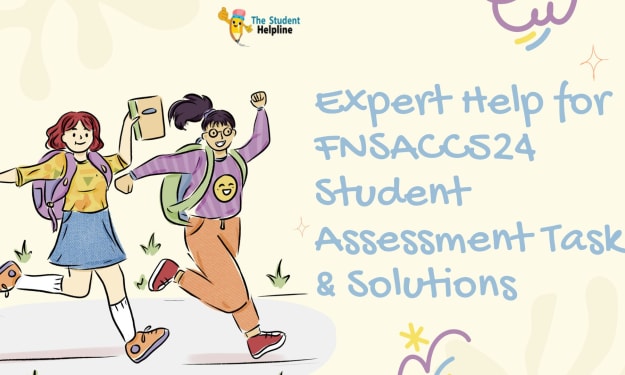
Expert Help for FNSACC524 Student Assessment Task & Solutions
The FNSACC524 Student Assessment Task is a crucial unit for learners pursuing qualifications in accounting and finance. It focuses on preparing financial reports, applying accounting principles, and demonstrating competency in real-world financial decision-making. For many students, this unit can be overwhelming due to the technical complexity of accounting concepts, strict academic requirements, and the demand for accuracy in financial reporting.
By Shani Pandey5 months ago in Education
Brown University Acceptance Rate
Brown University Acceptance Rate: A Complete Guide for Indian Students For many Indian students dreaming of studying in the United States, the Ivy League is often the ultimate goal. Among its eight prestigious institutions, Brown University holds a special place for students who value academic flexibility, creativity, and intellectual exploration. Located in Providence, Rhode Island, Brown is renowned for its Open Curriculum, vibrant student life, and global alumni network. However, before diving into applications, it’s essential to understand the Brown University acceptance rate and what it takes to secure a place. While the numbers can seem intimidating, the right strategy, strong preparation, and financial planning — including exploring international scholarships for Indian students — can make your dream achievable.
By Unirely Study Abroad5 months ago in Education
What is The Effect of Low Inflation on Economic Growth?
When you hear the term inflation, what comes to your mind? It is the rates of increase/decrease in prices over time. Writing this topic in your economics dissertation requires a lot of study. Therefore, don't hesitate to seek suggestions from economic dissertation help experts. In this post, the potential benefits and negatives of low inflation are discussed, which you can address in your dissertation. So, without wasting any time, explore this piece!!
By Personal Statement Writer5 months ago in Education
Getting Started with ChatGPT
Aliya had never considered herself “tech-savvy.” As a freelance writer juggling tight deadlines and inconsistent client feedback, her days were filled with coffee, drafts, rewrites, and the occasional self-doubt. She had heard of AI tools making waves online—especially something called ChatGPT—but to her, it all sounded too complicated or gimmicky.
By Kamran Khan5 months ago in Education
Could Dyson Spheres Exist Around Other Stars?
Imagine a civilization so advanced that it doesn’t just rely on the fraction of starlight reaching its planet, but instead captures nearly all the energy emitted by its star. To us, that sounds like pure science fiction. Yet, the idea has been seriously considered by scientists. Back in the 1960s, physicist Freeman Dyson suggested that if intelligent civilizations exist elsewhere in the galaxy, one of the most efficient ways they could power themselves would be to build enormous structures around their stars. This concept became known as the Dyson Sphere.
By Holianyk Ihor5 months ago in Education
Space and Quantum Teleportation: A Glimpse Into the Future of Interstellar Communication
When most people hear the word teleportation, their minds immediately jump to science fiction: starships that blink across galaxies, or characters who dissolve in one place and instantly reappear in another. But while we are still far from moving people or spaceships this way, scientists are already working on something equally fascinating — quantum teleportation.
By Holianyk Ihor5 months ago in Education
Scientists Achieved Breakthrough in Diabetes Cure with Gene-Edited Transplant
Introduction A remarkable medical achievement has given new hope to people living with type 1 diabetes. Scientists from Sweden and the United States have successfully transplanted genetically modified pancreatic cells into a patient, enabling him to produce insulin naturally without relying on daily injections or powerful drugs. This success, published in the New England Journal of Medicine, could transform the way diabetes is treated in the future.
By Muzamil khan5 months ago in Education