
Space and Quantum Teleportation: A Glimpse Into the Future of Interstellar Communication
Space

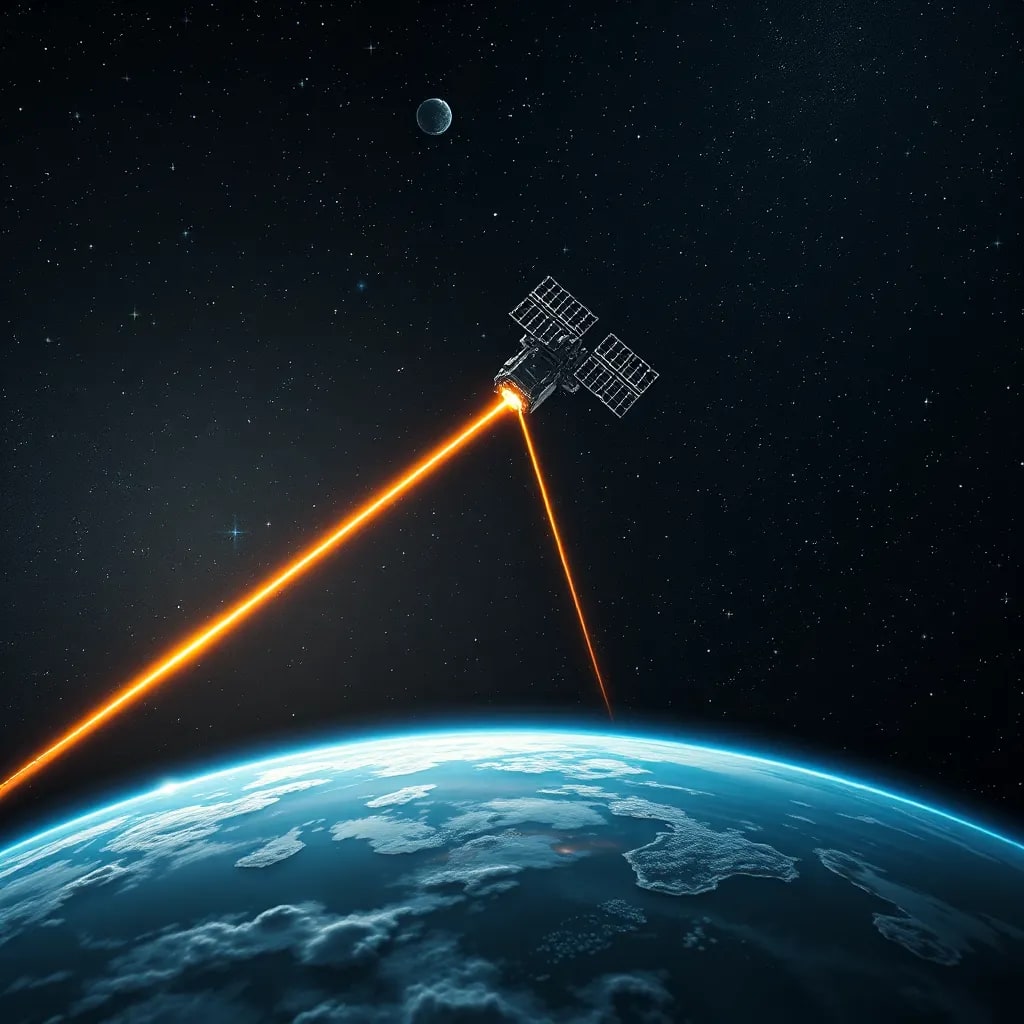
When most people hear the word teleportation, their minds immediately jump to science fiction: starships that blink across galaxies, or characters who dissolve in one place and instantly reappear in another. But while we are still far from moving people or spaceships this way, scientists are already working on something equally fascinating — quantum teleportation.
This isn’t about physically moving matter across space. Instead, it’s about transferring the quantum state of a particle from one location to another, using the strange and mind-bending laws of quantum mechanics. While it may sound abstract, the implications of this technology are profound, especially for space exploration.
What Is Quantum Teleportation?
At its core, quantum teleportation is the process of transferring the information that defines a particle’s state its “quantum blueprint” without moving the particle itself.
The phenomenon relies on a concept known as quantum entanglement. When two particles become entangled, they share a mysterious link, no matter how far apart they are. If one particle’s state changes, the other instantly reflects that change even if it’s on the other side of the universe.
Albert Einstein once dismissed this phenomenon as “spooky action at a distance,” but today it’s no longer a philosophical puzzle. It’s a real, measurable effect, and one that may revolutionize the way we communicate across the cosmos.
Why Does Space Need Quantum Teleportation?
Communication in space is a major challenge. Right now, all signals rely on electromagnetic waves radio, microwaves, or lasers. These signals travel at the speed of light, which sounds incredibly fast, but on cosmic scales, it’s painfully slow.
A radio signal takes over four hours to travel from Earth to Pluto.
Reaching the nearest star system, Alpha Centauri, would take more than four years.
Communicating across the galaxy could take thousands, even millions, of years.
For interplanetary or interstellar missions, such delays are a serious problem. Imagine trying to control a rover on Mars in real time, or managing a spacecraft near Jupiter with a signal delay of nearly an hour.
Quantum teleportation offers a potential solution: instantaneous transfer of information. If scientists can harness entanglement on a large scale, spacecraft could communicate with Earth without delay, and colonies on the Moon or Mars could stay in touch as easily as sending a text message.
First Steps Into the Quantum Future
This is not just theoretical speculation. In 2017, Chinese scientists made headlines when they successfully demonstrated quantum teleportation over 1,200 kilometers, using the satellite Micius. It was the first time quantum states had been transmitted from Earth to space and back.
Since then, research teams in Europe, the United States, and Japan have been racing to push the boundaries further. The ultimate goal is to build a quantum internet a global network based on entanglement, resistant to eavesdropping, and potentially capable of linking Earth with space-based stations.
Imagine a future where a fleet of telescopes spread across the solar system functions as one giant eye, thanks to quantum communication that synchronizes their data instantly. Or consider astronauts on a deep-space mission who never feel isolated because their connection to Earth is seamless.
The Challenges Ahead
Of course, the road to practical quantum teleportation is full of obstacles. For now, scientists can only teleport the states of particles like photons, atoms, or ions not objects, and certainly not humans. The process requires extremely precise detectors, controlled conditions, and protection from noise that can disrupt the fragile quantum states.
Even the word “teleportation” can be misleading. Nothing physical travels faster than light; instead, it is the information about the quantum state that is reconstructed at the destination. It’s less like “beaming up” in Star Trek and more like faxing the exact state of a particle, which then gets recreated elsewhere.
Still, the fact that experiments have already succeeded over such large distances suggests that practical applications are not science fiction anymore.
Cosmic Perspectives
If humanity wants to explore beyond our solar system, new communication methods are essential. Quantum teleportation could eventually allow us to:
- Control spacecraft in real time without waiting for delayed responses.
- Build distributed observatories across space, creating super-telescopes with unmatched clarity.
- Stay connected with future colonies on Mars, the Moon, or beyond.
And while teleporting people remains far beyond our current scientific reach, many breakthroughs in history seemed impossible until suddenly they weren’t. Just a century ago, wireless communication across the globe sounded like magic. Today, we carry that “magic” in our pockets.
Conclusion: A Bridge Between the Stars
Quantum teleportation is still in its infancy, but its potential impact on space exploration is enormous. It may not move matter across the universe, but it could move something even more valuable: information.
In doing so, it might transform how we connect, explore, and expand into the cosmos. Today, it’s a strange laboratory experiment. Tomorrow, it could be the bridge that links humanity with the stars.
About the Creator
Keep reading
More stories from Holianyk Ihor and writers in Education and other communities.
How Atmospheres Shape the Habitability of Planets
When we dream about life beyond Earth, oceans and rivers are usually the first images that come to mind. Water is often called the cradle of life, but having seas and lakes doesn’t necessarily mean a planet can sustain thriving ecosystems. The invisible hero of habitability is something far less tangible yet equally vital — the atmosphere.
By Holianyk Ihor5 months ago in Education
From Despair to Hope: How Animal Rescue Efforts Rebuild Broken Lives
Animal rescue efforts stand as a powerful response to suffering that often goes unseen. Across towns, cities, and rural areas, animals face neglect, abandonment, injury, and fear every day. Many are left without food, shelter, or medical care. Others are harmed by abuse or natural disasters. Without help, their future is uncertain. Through patience, care, and action, animal rescue efforts transform despair into hope and give animals the chance to heal and live safely.
By Brenda McGrane2 days ago in Education



Comments
There are no comments for this story
Be the first to respond and start the conversation.