
Blood Moon Rising: Witness the Breathtaking Total Lunar Eclipse of 2025
A Celestial Spectacle That Will Leave You in Awe!

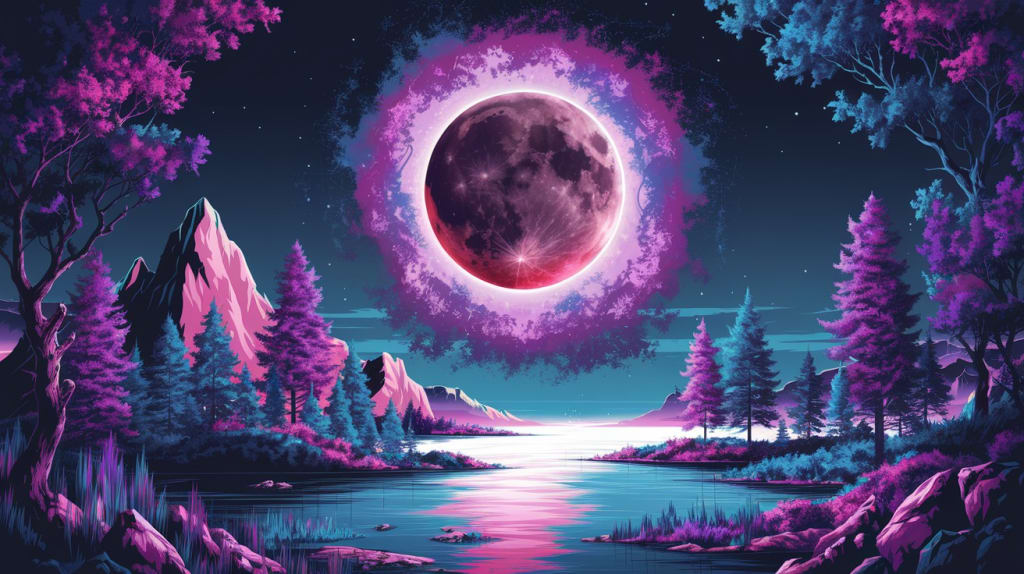
The night sky has always been a source of fascination for humanity, from the shimmering constellations to the mystical dance of planets. However, few astronomical events captivate as much attention and wonder as a total lunar eclipse—commonly known as the Blood Moon. If you've ever wanted to witness this awe-inspiring phenomenon, mark your calendars for March 14, 2025, when the moon will put on a spectacular show visible across vast regions of the world.
In this blog post, we’ll explore what a total lunar eclipse is, why the moon turns red, where and when to see it, and how best to prepare for this celestial event. Whether you're a seasoned astronomer or a casual skywatcher, this is an event you won’t want to miss!
What Is a Total Lunar Eclipse?
A lunar eclipse occurs when the Earth passes directly between the Sun and the Moon, casting its shadow onto the Moon’s surface. There are three types of lunar eclipses:
Penumbral Lunar Eclipse: The Moon passes through Earth’s outer shadow, causing only a subtle darkening.
Partial Lunar Eclipse: Only a portion of the Moon enters Earth’s inner shadow (the umbra), creating a noticeable dark bite on its surface.
Total Lunar Eclipse: The Moon is completely engulfed by Earth's shadow, resulting in the mesmerizing "Blood Moon" effect.
During a total lunar eclipse, the Moon takes on a deep reddish hue, making it one of the most breathtaking celestial events visible to the naked eye.
Why Does the Moon Turn Red?
The Moon doesn’t produce its own light—it simply reflects sunlight. During a total lunar eclipse, direct sunlight is blocked by Earth, but some light still bends around our planet and filters through the atmosphere before reaching the Moon. As this light passes through Earth's atmosphere, shorter wavelengths (like blue and violet) are scattered away, while longer wavelengths (like red and orange) continue on to illuminate the Moon. This is the same effect that gives us stunning red and orange hues at sunrise and sunset.
As a result, the Moon appears rusty red, orange, or even copper-colored, giving rise to the dramatic name "Blood Moon."
When and Where to See the 2025 Total Lunar Eclipse
The total lunar eclipse of March 14, 2025, will be visible in different stages across various parts of the world. Here’s a breakdown of where you can see it:
Regions with Best Visibility:
North America (Best viewing conditions in the Western and Central regions)
South America (Excellent visibility throughout the continent)
Western Europe (Partial phases visible before moonset)
Western Africa (Limited visibility)
Pacific Islands, Australia, and Asia (Can witness parts of the eclipse at moonrise or moonset)
Eclipse Timeline (UTC Time):
Penumbral Eclipse Begins: 02:00 UTC
Partial Eclipse Begins: 03:07 UTC
Total Eclipse Begins: 04:12 UTC
Maximum Eclipse: 04:58 UTC
Total Eclipse Ends: 05:44 UTC
Partial Eclipse Ends: 06:49 UTC
Penumbral Eclipse Ends: 07:55 UTC
(Note: Adjust the timing to your local time zone for accurate viewing.)
For the best experience, find a location with minimal light pollution and a clear view of the horizon. Even though the totality phase (when the Moon is completely red) lasts around 1 hour and 32 minutes, you’ll want to give yourself time to settle in and enjoy the gradual transition.
How to Prepare for the Best Viewing Experience
To fully enjoy the lunar eclipse, follow these simple tips:
1. Find a Dark Sky Location
Light pollution from city lights can wash out the sky and reduce the intensity of the Moon’s red hue. If possible, head to the countryside, a park, or a high vantage point for the best viewing conditions.
2. Check the Weather Forecast
A cloudy sky can block your view entirely. Keep an eye on weather forecasts in the days leading up to the eclipse, and be prepared to travel to a clearer location if necessary.
3. No Special Equipment Needed—But Binoculars Help!
One of the best things about a lunar eclipse is that you don’t need a telescope to enjoy it. The Blood Moon is visible to the naked eye. However, using binoculars or a telescope will allow you to see the Moon’s craters and details more clearly.
4. Capture the Moment with Photography
If you’re into astrophotography, this is a perfect opportunity to capture stunning images. Use a DSLR or mirrorless camera with a zoom lens, and consider using a tripod for stable long-exposure shots. Smartphone cameras can also work well if paired with a telephoto lens attachment.
5. Dress for the Occasion
Depending on your location, it may be chilly in the early morning or late evening hours. Dress warmly, bring a blanket, and maybe even some hot cocoa to make your eclipse experience comfortable.
The Significance of Lunar Eclipses in History and Culture
Throughout history, lunar eclipses have been regarded with wonder, fear, and reverence across different cultures. Here are a few interesting beliefs:
Ancient China: People believed a celestial dragon was devouring the Moon, prompting them to bang drums and make loud noises to scare it away.
The Inca Civilization: The Incas thought a lunar eclipse meant a jaguar was attacking the Moon, and they would perform rituals to protect it.
Medieval Europe: In some European societies, a Blood Moon was seen as an omen of doom or an impending disaster.
Modern Interpretations: Today, we understand the science behind lunar eclipses, but they remain captivating spectacles that connect us to the mysteries of the cosmos.
Conclusion
The total lunar eclipse on March 14, 2025, is an event you won’t want to miss! With its deep red hue and long duration, this celestial phenomenon will leave skywatchers in awe. Whether you're watching from your backyard, a remote countryside, or a rooftop in the city, this Blood Moon will be a mesmerizing reminder of the beauty and grandeur of our universe.
So, gather your friends, set your alarms, and prepare for an unforgettable night under the stars. Happy skywatching!
Have you ever seen a total lunar eclipse before? Share your experiences in the comments below!
About the Creator
Aurora Lark
I write at the crossroads of science fields that constantly challenge our perceptions and expand our horizons. I decode the intricate narratives of our modern world, transforming technical details into clear, thought-provoking stories.
Keep reading
More stories from Aurora Lark and writers in Education and other communities.
Dancing Lights in the Sky: The Enchanting Mystery of the Northern Lights
Few natural phenomena captivate the human imagination quite like the Northern Lights. Also known as the Aurora Borealis, these ethereal, colorful displays dance across the night sky in regions near the Earth’s poles, leaving spectators in awe. But what causes this breathtaking light show? Is it merely a scientific event, or is there a deeper connection between humanity and the celestial spectacle? In this in-depth exploration, we delve into the origins of the Northern Lights, the science behind them, their link to the Sun, and the profound cultural impact they have had on civilizations for centuries.
By Aurora Lark11 months ago in Education
How Business Coaching Helps Founders Scale With Clarity and Control
Business coaching assists founders to scale since hustle and reactivity are substituted with structure, systems and strategic leadership. Strategic coaching provides clarity in the marketing, operations, leadership, and decision-making roles of the business, eliminating the need to use the owner as the bottleneck, instead enabling the business to expand without havoc, burnout, or firefighting.
By Alice Adams3 days ago in Education
Half Dollars That Defied Time: Kennedy, Franklin & Walking Liberty
If you’ve found yourself holding an old half dollar, you’ve probably wondered: is this just pocket change, or could it be something more? I’ve had that same conversation with countless collectors in my eight years as a numismatist. The answer often hinges on three legendary names: Walking Liberty, Franklin, and Kennedy. More than just silver, these coins are tangible pieces of 20th-century America. This guide will help you understand their stories, values, and which one might be the perfect fit for your goals, whether you're building a collection or an investment.
By Laura Bennett4 days ago in Education
Silver Screen Magic with Mae West
American actress and singer Mae West became a popular film actress during the Great Depression. She started entertaining in vaudeville, then performed on Broadway, and finally went to Hollywood. She signed up with Paramount Pictures and made her debut in the 1932 film “Night After Night.” She also starred in musicals, comedies, and crime dramas. The American Film Institute named her one of the best classic Hollywood actresses.
By Rasma Raisters6 days ago in Geeks




Comments
There are no comments for this story
Be the first to respond and start the conversation.