
Dancing Lights in the Sky: The Enchanting Mystery of the Northern Lights
Unraveling the Science, Beauty, and Human Connection to Aurora Borealis

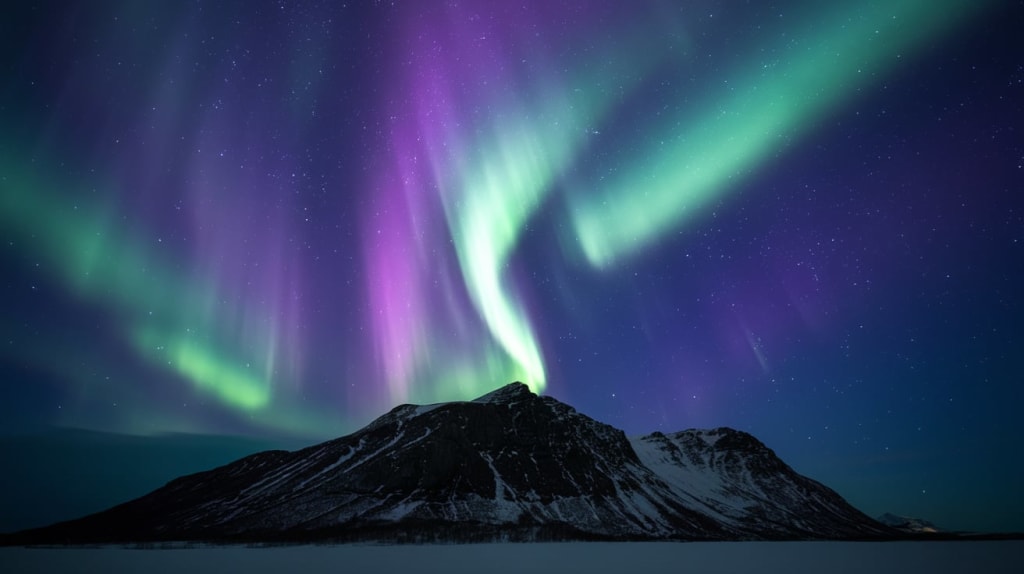
Few natural phenomena captivate the human imagination quite like the Northern Lights. Also known as the Aurora Borealis, these ethereal, colorful displays dance across the night sky in regions near the Earth’s poles, leaving spectators in awe. But what causes this breathtaking light show? Is it merely a scientific event, or is there a deeper connection between humanity and the celestial spectacle? In this in-depth exploration, we delve into the origins of the Northern Lights, the science behind them, their link to the Sun, and the profound cultural impact they have had on civilizations for centuries.
What Are the Northern Lights?
The Northern Lights are a natural phenomenon resulting from interactions between charged particles from the Sun and Earth's magnetic field. These luminous ribbons of green, pink, purple, and blue illuminate the night sky, creating an otherworldly experience for those fortunate enough to witness them. The Southern Hemisphere has its counterpart, known as the Aurora Australis or the Southern Lights, but the Northern Lights, visible in places like Norway, Canada, Iceland, and Finland, remain the most famous.
The Sun: The Driving Force Behind the Northern Lights
To understand the auroras, we must first turn our attention to the Sun, the ultimate powerhouse behind this celestial display.
The Sun’s Role in Creating the Aurora Borealis
The Sun constantly emits a stream of charged particles, known as the solar wind. This wind consists of electrons and protons that travel at incredible speeds, escaping from the Sun’s outer atmosphere, called the corona. On most days, this stream is relatively steady, but during periods of heightened solar activity, such as solar storms and coronal mass ejections (CMEs), a vast amount of these charged particles are hurled toward Earth.
When these particles reach Earth, they interact with the planet’s magnetic field, which acts as a protective shield. However, some particles are funneled toward the polar regions, where Earth’s magnetic field lines converge. As these high-energy particles collide with molecules in the upper atmosphere, they transfer energy, causing the molecules to light up—similar to how gas in a neon sign glows when electrically charged.
Why Do the Northern Lights Display Different Colors?
The stunning array of colors in the auroras is caused by the type of gas molecules involved in the collisions and their altitude in the atmosphere.
Green: The most common color, produced when oxygen molecules at around 100-300 km above Earth interact with charged particles.
Red: A rarer sight, caused by high-altitude oxygen molecules located above 300 km.
Blue and Purple: Created when nitrogen molecules are excited by solar particles, typically occurring at lower altitudes.
Pink and White Hues: These colors often appear when a combination of oxygen and nitrogen interacts with the solar wind, creating a multicolored auroral display.
Where and When Can You See the Northern Lights?
The Northern Lights are best observed in regions near the Arctic Circle, such as:
Norway (Tromsø, Lofoten Islands)
Iceland (Reykjavik, Thingvellir National Park)
Canada (Yukon, Northwest Territories)
Alaska (Fairbanks, Denali National Park)
Finland & Sweden (Lapland region)
When Is the Best Time to See Them?
The best time to view the auroras is during the winter months (September to March) when nights are long and skies are dark. The peak hours are typically between 9 PM and 2 AM, and a location with minimal light pollution offers the best chance of a clear view.
Legends and Cultural Significance of the Northern Lights
For centuries, the Northern Lights have been woven into the folklore and traditions of Indigenous and ancient cultures worldwide. Different civilizations have interpreted the auroras in fascinating ways:
Inuit Beliefs: Some Inuit communities believed the lights were spirits of ancestors playing in the sky, guiding the living.
Viking Mythology: The Vikings thought the auroras were reflections of light from the shields and armor of the Valkyries, warrior maidens who decided the fate of fallen warriors.
Finnish Folklore: According to Finnish legends, the lights were created by the swishing tails of arctic foxes, which sent sparks into the sky as they ran through the snow.
Japanese and Chinese Superstitions: In some Asian cultures, it was believed that conceiving a child under the Northern Lights would result in a lucky and blessed life.
Scientific Studies and Future Research
Despite centuries of fascination, the Northern Lights still hold mysteries for scientists. Research continues to uncover more about how solar activity affects auroras and how they might influence Earth's atmosphere and weather patterns.
NASA and other space agencies monitor solar storms and predict auroral activity, allowing better forecasts for those eager to witness this natural wonder. With advancements in technology, future studies could uncover even more about the intricate relationship between the Sun and Earth's magnetic field.
Experiencing the Northern Lights: A Human Perspective
There is something deeply moving about witnessing the Northern Lights in person. Whether standing in the silent wilderness of Iceland or the snow-covered forests of Canada, seeing the sky come alive with vibrant colors creates an unforgettable connection to nature and the cosmos.
People who have experienced the auroras often describe feelings of awe, insignificance, and a sense of peace. For some, it is a bucket-list moment; for others, it is a spiritual experience, reminding them of the beauty and power of the universe.
A Gift from the Cosmos
The Northern Lights are more than just a scientific phenomenon—they are a gift from the cosmos, a reminder of the intricate forces at play in our universe. From the solar winds to Earth’s magnetic shield, from the myths of ancient cultures to modern scientific discoveries, the auroras continue to captivate, inspire, and remind us of our place in the vast, mysterious universe. If you ever have the chance to witness the Northern Lights, take it—it may be one of the most magical experiences of your lifetime.
About the Creator
Aurora Lark
I write at the crossroads of science fields that constantly challenge our perceptions and expand our horizons. I decode the intricate narratives of our modern world, transforming technical details into clear, thought-provoking stories.
Keep reading
More stories from Aurora Lark and writers in Education and other communities.
Echoes of the Past: How Ancient Civilizations Shaped Our World
Throughout history, ancient civilizations have played a crucial role in shaping the world we live in today. Their innovations in governance, architecture, science, art, and philosophy continue to influence modern society. From the fertile lands of Mesopotamia to the grandeur of Rome, these civilizations laid the foundation for advancements that still impact our daily lives. In this in-depth exploration, we will uncover the remarkable achievements of Mesopotamia, Egypt, the Indus Valley, China, Greece, and Rome, revealing how their legacies continue to thrive.
By Aurora Lark11 months ago in Education
How Learning About Global Health Gives Early Impacts to Medical Students
Medical students begin forming their professional identities long before they enter residency, and early exposure to global health giving plays a decisive role in shaping those identities. While traditional training emphasizes diagnostics and clinical precision, global learning encourages students to understand the broader human context behind every medical decision.
By Dr. Seth Eidemiller7 days ago in Education
Why Do We Dream?
In the third millenium BCE, Mesopotamian kings recorded and interpreted their dreams on wax tablets. A thousand years later, Ancient Egyptians wrote a dream book listing over a hundred common dreams and their meanings. And in the years since, we haven't paused in our quest to understand why we dream. So, after a great deal of scientific research, technological advancement, and persistence, we still don't have any definite answers, but we have some interesting theories. We dream to fulfill our wishes.
By Munesh Yadavabout 7 hours ago in Education
So You Decided To Become a Nurse Practitioner:
So you decided to become an "Advanced Practice" nurse. Congratulations!... is what I would say if this was a good idea. Grad school? In this economy? What were you thinking? Likely it was something along the lines of either 1) “I've seen these other chucklefucks do it— Why can't I?” or even 2) “I've got a nice career, I should shake it up. I miss feeling like I have no clue what I'm doing.”
By Sandor Szabo3 days ago in Fiction


Comments (3)
I love the dancing light! Great work!
The Northern Lights are a natural phenomenon resulting from interactions between charged particles from the Sun and Earth's magnetic fiel.very interesting artical
Your piece beautifully captures the magic and mystery of the Northern Lights. The way you describe the science behind the auroras while maintaining their enchanting allure is truly captivating. It reminds me that even the most scientific phenomena can feel like pure magic. Have you ever had the chance to see them in person? I imagine witnessing those colors dancing across the sky would be a life-changing experience. Great work on blending education with wonder!