
United States Dragon Fruit Market Size and Forecast 2025–2033
Exotic Superfoods Take Center Stage as America’s Dragon Fruit Market Surges Toward US$ 6.4 Billion

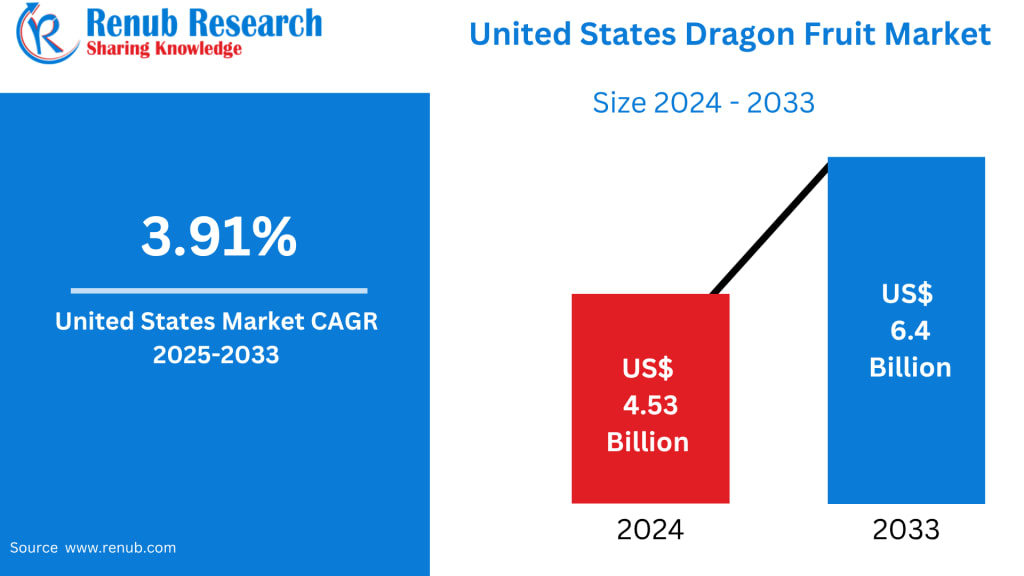
The United States Dragon Fruit Market is entering a period of steady expansion as health-focused consumers, culinary innovators, and modern retailers embrace this exotic tropical fruit. According to Renub Research, the U.S. dragon fruit market is expected to reach US$ 6.4 billion by 2033, up from US$ 4.53 billion in 2024, growing at a CAGR of 3.91% from 2025 to 2033.
The momentum behind this vibrant, nutrient-rich fruit reflects a broader shift in the American food system—one driven by wellness culture, global flavors, and the quest for functional nutrition. From smoothie bars and juice chains to specialty grocers and e-commerce platforms, dragon fruit is fast becoming a mainstream staple.
United States Dragon Fruit Industry Overview
Once considered niche, dragon fruit—also known as pitaya—has transitioned into a mainstream health and culinary ingredient across the United States. Its bright magenta flesh, crunchy seeds, and mild, refreshing sweetness have made it a go-to ingredient in smoothie bowls, juices, salads, desserts, cocktails, and functional beverages.
Health-conscious consumers are drawn to dragon fruit for its:
High fiber content
Rich antioxidant profile
Vitamin C and magnesium
Low-calorie appeal
Digestive and immunity-supporting properties
Retailers and grocery chains now feature multiple varieties of dragon fruit (white, red, and yellow), while organic and sustainably sourced options are also gaining traction. Online grocery platforms and subscription-based tropical fruit boxes have expanded access to regions previously unfamiliar with dragon fruit.
Although domestic production is limited, the U.S. market benefits from steady imports from Vietnam, Thailand, Mexico, Nicaragua, and Ecuador, supported by advancements in cold chain logistics, packaging, and supply chain efficiency. Meanwhile, domestic cultivation in California, Florida, and emerging farms in Texas and Arizona are helping build a more stable year-round supply.
However, challenges persist. High production costs, climatic vulnerabilities, limited consumer awareness, and price sensitivity continue to shape market dynamics. Still, rising demand for superfoods and exotic fruits is expected to sustain U.S. market growth through 2033.
Key Factors Driving Growth in the U.S. Dragon Fruit Market
1. Health Consciousness and Superfood Trends
Wellness-focused eating has evolved from a lifestyle choice into a national movement. Americans are increasingly seeking nutrient-dense foods that offer functional health benefits—especially antioxidants, gut-friendly fiber, and immune-supporting vitamins.
Dragon fruit’s branding as a superfood has amplified its popularity on:
Social media wellness platforms
Nutritional blogs
Fitness and diet communities
Between influencer-led recipe trends
The fruit’s natural aesthetic appeal—vibrant colors, bold visual contrast, and photogenic presentation—also fuels strong traction on Instagram, TikTok, and Pinterest.
2. Expansion of Retail & Online Distribution
Growth in the U.S. retail landscape has made dragon fruit more accessible than ever. Major drivers include:
Supermarkets expanding exotic fruit sections
Specialty stores focusing on global and organic produce
Online grocery apps offering fresh-cut and whole dragon fruit
Tropical fruit subscription boxes
Foodservice distributors supplying cafes, hotels, and juice brands
This multi-channel availability ensures consistent consumer reach across urban, suburban, and even semi-rural locations.
3. Growing Culinary & Beverage Applications
Dragon fruit’s mild flavor and versatile texture make it ideal for:
Cold-pressed juices
Smoothies and smoothie bowls
Kombucha and infused beverages
Sorbets and frozen desserts
Gourmet salads and fusion dishes
Specialty cocktails
Snack bars and freeze-dried snacks
Restaurants, fast-casual chains, and juice bars increasingly use dragon fruit to appeal to younger consumers seeking globally inspired flavors. The fruit’s natural coloring properties also make it attractive for beverage manufacturers focused on clean-label formulations.
Challenges in the U.S. Dragon Fruit Market
Climatic Sensitivity & Supply Constraints
Dragon fruit thrives only in warm, subtropical climates, limiting U.S. production primarily to California and Florida. Extreme weather events—heatwaves, drought, humidity fluctuations, and hurricanes—can significantly affect yield and quality.
Imported supply, although robust, is still vulnerable to:
Seasonal variations
Port delays
Rising freight costs
Cold chain disruptions
Maintaining the fruit’s delicate texture and freshness requires advanced handling and storage, increasing operational costs across the value chain.
High Cost & Limited Consumer Awareness
Dragon fruit is considerably more expensive than conventional fruits. Price-conscious buyers often hesitate, while others are unfamiliar with:
How to select ripe fruit
Preparation methods
Culinary uses
Perceived health benefits
Expanding mass-market appeal will require strategic outreach through:
Recipe-driven marketing
In-store sampling
Educational content
Bundled promotions
United States Dragon Fruit Market Overview by States
Although dragon fruit consumption is rising nationwide, growth patterns vary significantly by region.
California Dragon Fruit Market
California is the epicenter of U.S. dragon fruit production, supported by:
Ideal subtropical climate zones
Modern agricultural infrastructure
A large health-conscious population
Strong retail and foodservice demand
Los Angeles, San Diego, and San Francisco serve as top consumption hubs. Agricultural research initiatives continue to support yield improvement and disease resistance. However, water scarcity and high operating costs remain ongoing barriers.
Texas Dragon Fruit Market
Texas is emerging as a fast-growing regional market. Key drivers include:
Expanding urban populations
High demand for tropical and exotic fruits
Growing culinary experimentation in Austin, Dallas, and Houston
Increasing greenhouse-based cultivation and hydroponic farming
The restaurant and hospitality sectors have played an important role in bringing dragon fruit into mainstream menus.
New York Dragon Fruit Market
New York’s market is shaped by:
A large metropolitan consumer base
High demand for health foods and global flavors
Strong presence of specialty grocers, juice bars, and salad chains
Year-round availability through import channels
Education and recipe awareness campaigns are helping broaden consumer understanding of dragon fruit’s nutritional benefits.
Florida Dragon Fruit Market
Florida combines production strength with high consumption, benefiting from:
Favorable tropical climate
Extensive greenhouse and vertical farming efforts
A booming hospitality and tourism sector
Close proximity to import arrival ports
However, weather-related risks—humidity, storms, and disease pressure—require greater investment in technology and post-harvest handling.
Market Segmentation
By Form
Powder
Purée
By Nature
Organic
Conventional
By End User
Food & Beverage
Food Service
Retail/Household
Others
By Distribution Channel
Hypermarkets/Supermarkets
Convenience Stores
Specialty Stores
Online Retail
By States
California, Texas, New York, Florida, Illinois, Pennsylvania, Ohio, Georgia, New Jersey, Washington, North Carolina, Massachusetts, Virginia, Michigan, Maryland, Colorado, Tennessee, Indiana, Arizona, Minnesota, Wisconsin, Missouri, Connecticut, South Carolina, Oregon, Louisiana, Alabama, Kentucky, and Rest of the United States.
Key Players in the United States Dragon Fruit Market
Major companies shaping the market include:
Dragon Fruit Direct
Song Nam ITD
Nazmin Nursery
Anh Duong Sao Co.
Hung Phat Fruits Producing Co.
Welch Foods Inc.
Bai Brands
J & C Tropicals
Biourah Herbal
Key Person (General Leadership Overview)
Most companies operating in this sector are led by management teams specializing in:
Agricultural innovation
Fresh produce logistics
Global sourcing and import/export operations
Food & beverage product development
Retail and distribution strategy
Recent Developments
Expansion of organic dragon fruit farming in California and Florida
Increased import volumes from Vietnam and Latin America
New dragon fruit-infused beverages and functional drinks launched by U.S. brands
Growing adoption of controlled environment agriculture (CEA)
Retailers introducing pre-cut dragon fruit and ready-to-eat snack formats
SWOT Analysis
Strengths
High nutritional value
Strong appeal among health-conscious consumers
Versatility in fresh and processed applications
Weaknesses
High retail prices
Seasonal and climate-sensitive production
Limited consumer awareness
Opportunities
Rising demand for superfoods
Growth of online retail and subscription boxes
Innovations in packaging, storage, and cultivation technology
Threats
Import dependency and global supply fluctuations
Climate risks in domestic production regions
Competition from other tropical fruits
Revenue Analysis
Revenue growth is expected to remain steady, supported by:
Rising expenditure on healthy and organic foods
Increased penetration into foodservice and beverage manufacturing
Higher imports and improved logistics infrastructure
Retail chains stocking more exotic fruits to meet lifestyle-driven demand
With a projected increase from US$ 4.53 billion in 2024 to US$ 6.4 billion by 2033, the market’s upward trajectory reflects expanding consumer engagement with functional and global foods.
Final Thoughts
The United States Dragon Fruit Market is evolving rapidly as Americans embrace healthier diets, global flavors, and nutrient-packed superfoods. With strong demand from retail, foodservice, and beverage manufacturers—alongside growing domestic cultivation—dragon fruit is positioned for steady growth well into the next decade.
As cultivation expands, supply chains strengthen, and educational outreach improves, dragon fruit has the potential to shift from a specialty exotic fruit to a regular household purchase across the country. For growers, distributors, retailers, and brands, the decade ahead presents significant opportunities to capitalize on one of the country’s most visually striking and nutritionally rich fruits.
About the Creator
Ben Tom
Ben Tom is a seasoned content writer with 12+ years of experience creating SEO-friendly blogs, web copy, and marketing content that boosts visibility, engages audiences, and drives results.
Stock Market Today: Nasdaq Futures Rise; Oil Skids After Trump Dials Down Iran Tension
If you’ve been following the markets this week, you’ve probably noticed how sensitive traders are to geopolitical headlines. On Thursday, Nasdaq futures rose, while oil prices dropped after U.S. President Donald Trump made remarks that dialed down fears of immediate military escalation with Iran. It’s a classic example of how news can move multiple markets at once — tech stocks climbing while commodities react in the opposite direction. Nasdaq Futures Bounce Back Technology and growth-focused stocks led the recovery in futures trading. Nasdaq futures climbed, signaling that investors are regaining confidence after recent volatility. Many traders have been cautious, with some taking profits from high-flying tech names, but today’s rebound shows that market optimism is returning. Corporate earnings are a big factor here. Several tech giants, including semiconductor and software companies, have beaten analyst expectations in recent weeks. These results support longer-term growth narratives, giving investors confidence that the tech sector can continue to outperform even amid economic uncertainty. For anyone watching the markets, this is a reminder: futures are forward-looking indicators. When traders see signs of stabilization — like reduced geopolitical tension or strong earnings — markets often react positively before the official trading session even begins. Oil Prices Fall Amid Eased Tensions On the flip side, oil prices skidded. The energy market had been pricing in potential supply disruptions due to the tension with Iran, particularly in critical regions like the Strait of Hormuz. But after Trump’s comments, traders interpreted a lower risk of military conflict, and crude futures dropped sharply. West Texas Intermediate (WTI) and Brent crude both saw declines of around 4–5%, as investors adjusted their positions. This shows how geopolitical risk premiums can inflate commodity prices — and how quickly they can disappear once the perceived threat diminishes. Lower oil prices are a double-edged sword. On one hand, cheaper fuel eases costs for consumers and businesses. On the other, energy companies and oil-exporting nations may face pressure on revenue and profits if prices remain soft. Why Geopolitics Moves Markets The Middle East continues to be a major driver of global market sentiment. Even the possibility of conflict in oil-rich regions can make investors nervous, sending equities lower and commodities higher. Conversely, statements that calm these fears can produce quick rebounds in risk assets like stocks and a decline in commodities like oil. This week’s developments show just how reactive the markets have become. A single remark from a world leader — in this case, Trump — can shift risk perception and trigger immediate moves across multiple asset classes. Earnings and Economic Data Still Key While geopolitical headlines dominate daily moves, corporate earnings and economic data remain critical for long-term market trends. Financial giants like Morgan Stanley recently reported results that beat expectations, boosting their stock prices and reinforcing positive sentiment in the sector. Investors are paying close attention to these fundamentals. Earnings reports and macroeconomic indicators provide insight into underlying trends, helping traders separate short-term volatility from sustainable growth. What Investors Should Watch For stock investors: The rebound in Nasdaq futures suggests that growth and technology stocks are finding support, but volatility is still high. Active risk management and portfolio diversification remain essential. For energy markets: Today’s slump in oil prices highlights how commodities react to geopolitical sentiment. Traders should watch for developments in the Middle East, as any escalation could reverse the decline in prices almost immediately. For global markets overall: Investors must balance multiple narratives — geopolitical events, corporate earnings, economic data, and interest rate expectations. This interplay shapes risk appetite and influences how capital flows across sectors and regions. The Takeaway Today’s market action illustrates a broader theme: markets are highly sensitive to shifts in risk perception. When geopolitical tension eases, equities tend to rise, and risk-sensitive commodities like oil fall. But when threats reappear, sentiment can flip, reminding investors that global markets are dynamic and interconnected. This combination of Nasdaq gains and falling oil prices isn’t just about numbers — it’s about investor psychology, risk management, and the speed at which news travels in our global economy. The lesson is clear: staying informed and flexible is more important than ever for anyone participating in today’s markets.
By Muhammad Hassan3 days ago in Earth
Cement's Quiet Pivot
Why this is under-the-radar progress Cement and concrete account for a sizable slice of global CO₂, but the fastest cuts right now aren’t headline-grabbing moonshots — they’re practical shifts already filtering through specifications, standards, and procurement. Three forces are converging: (1) modern cement standards that enable big clinker reductions with reliable performance; (2) rapid market adoption of Portland-limestone cement (PLC) and new ternary blends such as limestone–calcined clay cements (LC3); and (3) public buyers setting embodied-carbon requirements that move the market. Together, these are driving real-world emission declines from the most-used construction material on earth — often without changing how structures are designed or built [8].
By Futoshi Tachino7 days ago in Earth


Comments
There are no comments for this story
Be the first to respond and start the conversation.