
Stock Market Today: Nasdaq Futures Rise; Oil Skids After Trump Dials Down Iran Tension
Easing geopolitical fears send U.S. stock futures higher while oil prices retreat, highlighting the delicate balance between risk and optimism in today’s markets.

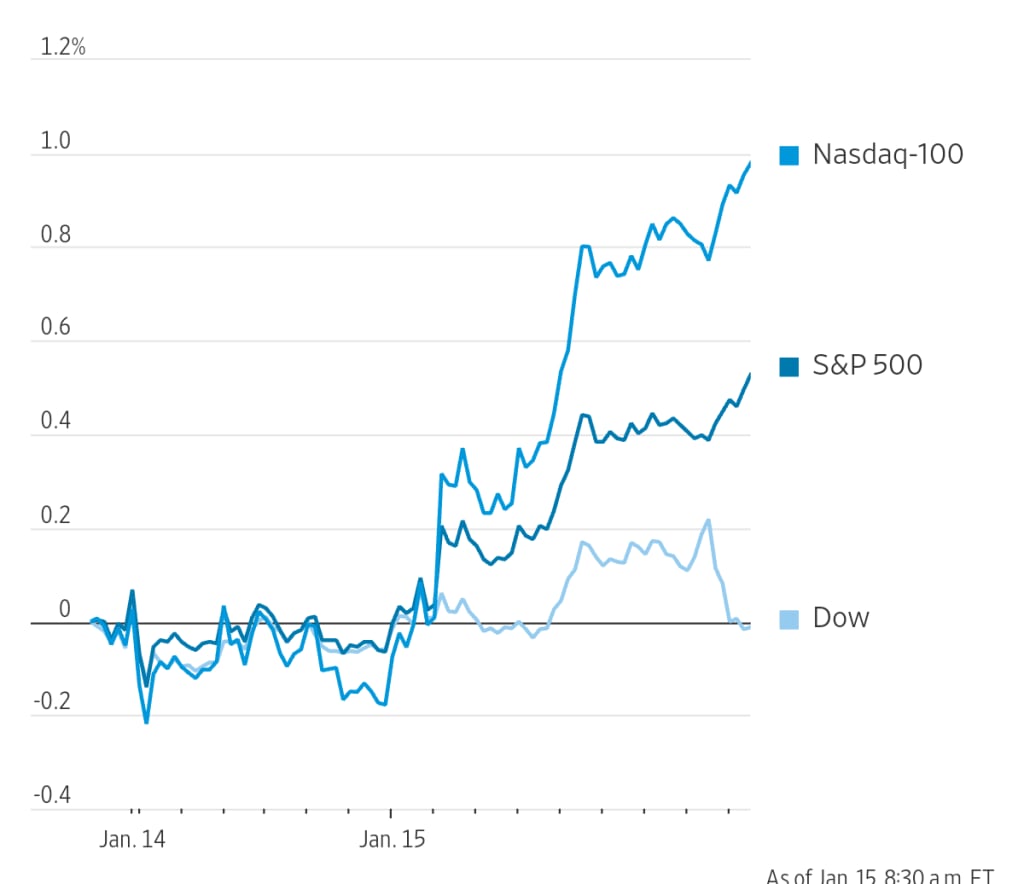
If you’ve been following the markets this week, you’ve probably noticed how sensitive traders are to geopolitical headlines. On Thursday, Nasdaq futures rose, while oil prices dropped after U.S. President Donald Trump made remarks that dialed down fears of immediate military escalation with Iran. It’s a classic example of how news can move multiple markets at once — tech stocks climbing while commodities react in the opposite direction.
Nasdaq Futures Bounce Back
Technology and growth-focused stocks led the recovery in futures trading. Nasdaq futures climbed, signaling that investors are regaining confidence after recent volatility. Many traders have been cautious, with some taking profits from high-flying tech names, but today’s rebound shows that market optimism is returning.
Corporate earnings are a big factor here. Several tech giants, including semiconductor and software companies, have beaten analyst expectations in recent weeks. These results support longer-term growth narratives, giving investors confidence that the tech sector can continue to outperform even amid economic uncertainty.
For anyone watching the markets, this is a reminder: futures are forward-looking indicators. When traders see signs of stabilization — like reduced geopolitical tension or strong earnings — markets often react positively before the official trading session even begins.
Oil Prices Fall Amid Eased Tensions
On the flip side, oil prices skidded. The energy market had been pricing in potential supply disruptions due to the tension with Iran, particularly in critical regions like the Strait of Hormuz. But after Trump’s comments, traders interpreted a lower risk of military conflict, and crude futures dropped sharply.
West Texas Intermediate (WTI) and Brent crude both saw declines of around 4–5%, as investors adjusted their positions. This shows how geopolitical risk premiums can inflate commodity prices — and how quickly they can disappear once the perceived threat diminishes.
Lower oil prices are a double-edged sword. On one hand, cheaper fuel eases costs for consumers and businesses. On the other, energy companies and oil-exporting nations may face pressure on revenue and profits if prices remain soft.
Why Geopolitics Moves Markets
The Middle East continues to be a major driver of global market sentiment. Even the possibility of conflict in oil-rich regions can make investors nervous, sending equities lower and commodities higher. Conversely, statements that calm these fears can produce quick rebounds in risk assets like stocks and a decline in commodities like oil.
This week’s developments show just how reactive the markets have become. A single remark from a world leader — in this case, Trump — can shift risk perception and trigger immediate moves across multiple asset classes.
Earnings and Economic Data Still Key
While geopolitical headlines dominate daily moves, corporate earnings and economic data remain critical for long-term market trends. Financial giants like Morgan Stanley recently reported results that beat expectations, boosting their stock prices and reinforcing positive sentiment in the sector.
Investors are paying close attention to these fundamentals. Earnings reports and macroeconomic indicators provide insight into underlying trends, helping traders separate short-term volatility from sustainable growth.
What Investors Should Watch
For stock investors: The rebound in Nasdaq futures suggests that growth and technology stocks are finding support, but volatility is still high. Active risk management and portfolio diversification remain essential.
For energy markets: Today’s slump in oil prices highlights how commodities react to geopolitical sentiment. Traders should watch for developments in the Middle East, as any escalation could reverse the decline in prices almost immediately.
For global markets overall: Investors must balance multiple narratives — geopolitical events, corporate earnings, economic data, and interest rate expectations. This interplay shapes risk appetite and influences how capital flows across sectors and regions.
The Takeaway
Today’s market action illustrates a broader theme: markets are highly sensitive to shifts in risk perception. When geopolitical tension eases, equities tend to rise, and risk-sensitive commodities like oil fall. But when threats reappear, sentiment can flip, reminding investors that global markets are dynamic and interconnected.
This combination of Nasdaq gains and falling oil prices isn’t just about numbers — it’s about investor psychology, risk management, and the speed at which news travels in our global economy. The lesson is clear: staying informed and flexible is more important than ever for anyone participating in today’s markets.
About the Creator
Muhammad Hassan
Muhammad Hassan | Content writer with 2 years of experience crafting engaging articles on world news, current affairs, and trending topics. I simplify complex stories to keep readers informed and connected.
Keep reading
More stories from Muhammad Hassan and writers in Earth and other communities.
China’s Ambitious Satellite Plan: 200,000 Satellites and Counting
China has submitted an astonishing application to the International Telecommunication Union (ITU) to launch 200,000 satellites over the coming years. To put this into perspective, the entire world currently operates far fewer than this number. Even SpaceX’s Starlink project, one of the largest satellite networks globally, has plans for around 42,000 satellites. China’s proposal signals an unprecedented escalation in space activity and raises important questions: what are these satellites for, and what implications do they hold for global technology, security, and the environment? The Purpose Behind the Numbers At first glance, launching 200,000 satellites may seem excessive, but China’s goals are strategic and multifaceted. Experts suggest that these satellites could serve several purposes: 1. Global Internet Coverage China is aiming to build a massive low-Earth orbit (LEO) satellite network, similar to Starlink and OneWeb. By positioning thousands of satellites closer to Earth, they can provide high-speed internet to remote regions, rural areas, and even ships or aircraft in the oceans. This could help China expand its digital influence globally, offering connectivity in areas where traditional internet infrastructure is weak or non-existent. 2. Enhanced Military and Surveillance Capabilities A satellite network of this scale is also a game-changer for defense and surveillance. Satellites can monitor troop movements, track ships, and provide early warning systems. China’s military has been investing heavily in space-based technology, and these satellites could be a crucial part of modernizing its intelligence, surveillance, and reconnaissance (ISR) capabilities. 3. Scientific Research and Earth Observation Some of these satellites may be dedicated to Earth observation, collecting data on climate, agriculture, natural disasters, and urban development. With thousands of satellites constantly orbiting the planet, China could achieve near real-time monitoring of environmental changes and resource management, giving scientists and policymakers an unprecedented level of insight. 4. Competition in the Commercial Space Sector China’s plan is not purely for government use. The commercial potential of satellite networks is massive, from providing satellite internet services to supporting the burgeoning space economy. Companies under Chinese state and private ownership could leverage this infrastructure to offer services domestically and internationally, challenging Western tech giants in global space markets. The Scale of the Ambition Launching 200,000 satellites is not just ambitious; it’s historic. If approved and executed, China would operate more satellites than all other countries combined, fundamentally reshaping how space is utilized. However, there are serious logistical challenges. Manufacturing, launching, and maintaining hundreds of thousands of satellites requires enormous resources, advanced technology, and careful orbital planning to avoid collisions. China has made major progress in its space launch capacity, with frequent missions through the Long March rocket family and ongoing developments at the Wenchang and Jiuquan Spaceports. Yet, sustaining such a colossal fleet will test even the most advanced space programs. Global Implications The potential consequences of China’s satellite plan are profound, both technologically and geopolitically. 1. Space Traffic Management A network of 200,000 satellites could drastically increase the risk of collisions in orbit. Space debris is already a growing concern, and introducing tens of thousands of new satellites may exacerbate this problem. International cooperation and sophisticated traffic management systems will be essential to prevent catastrophic accidents in space. 2. Geopolitical Tensions China’s space ambitions may intensify global rivalry in space technology, particularly with the United States, Europe, and other spacefaring nations. Control over satellite networks can translate into strategic advantages, from military surveillance to dominance in global communications infrastructure. This may lead to a new phase of space competition reminiscent of the Cold War’s space race. 3. Impact on Astronomy Astronomers have already expressed concern over satellite mega-constellations interfering with observations. Thousands of bright satellites moving across the night sky can distort telescope images and hinder research into deep space phenomena. If China proceeds with 200,000 satellites, the challenge to professional and amateur astronomers will be enormous. 4. Global Connectivity Revolution On the positive side, if managed responsibly, China’s satellite network could revolutionize global connectivity, bringing internet access to millions of people who currently have none. It could accelerate digital development in underserved regions, support education, and foster global commerce in unprecedented ways. Regulatory Hurdles The ITU regulates global satellite usage, including frequency allocation and orbital slots. For China to launch 200,000 satellites, it must secure approval from the ITU, which evaluates whether such an immense network could interfere with other countries’ satellites or violate international agreements. This is not a mere formality—approval for a project of this scale could take years and may require negotiations with multiple nations. Conclusion: A Bold Step Toward the Future China’s application to launch 200,000 satellites is a bold statement about the future of space and global technology. It reflects the country’s ambition to dominate in digital infrastructure, military capability, and commercial space enterprise. While challenges abound—from space debris and regulatory hurdles to geopolitical tensions—the potential benefits are significant, particularly for connectivity and scientific advancement. As the world watches China’s next steps, one thing is clear: the age of satellite mega-constellations is here. How humanity navigates the risks and rewards of this new frontier will shape the future of communication, security, and our presence in space for decades to come.
By Muhammad Hassan5 days ago in Earth
Understanding the Insurrection Act and the Role of Federal Officers in the United States
**Understanding the Insurrection Act and the Role of Federal Officers in the United States** The Insurrection Act is one of the most powerful and controversial laws in the United States, granting the president authority to deploy federal forces inside the country under specific circumstances. In recent years, public interest in this law has grown significantly, especially during periods of civil unrest, political tension, and nationwide protests. Questions about federal officers, presidential power, and constitutional limits have become central to public debate.
By America today 5 days ago in Earth
Wild Card Weekend Recap: What Happens Now?
I think I figured out why I love Wild Card Weekend so much. It's because it's the first playoff anything of the calendar year. The NFL season starts in the fall, and once upon a time, the champion was crowned either on or slightly before New Year's. The evolution of the NFL schedule has resulted in the playoffs starting just into the New Year, and currently, the final week of the season falls on the first weekend of the New Year, with Wild Card Weekend coming a week after that. So yes, chronologically, the NFL's Wild Card Weekend serves as the first playoff anything of the calendar year.
By Clyde E. Dawkins7 days ago in Unbalanced




Comments
There are no comments for this story
Be the first to respond and start the conversation.