
Trade an Alliance for an Island? That’s a Bad Deal
Why sacrificing strategic partnerships for territorial gain is risky business

In global politics, deals are often complex, involving trade-offs between economic benefits, security, and diplomacy. But some propositions are so controversial that they make analysts, policymakers, and citizens alike shake their heads. One such idea that has sparked debate is the notion of trading a military or political alliance for control over a strategic island. While it may seem tempting on the surface — after all, islands can provide resources, ports, or strategic leverage — experts warn that the costs almost always outweigh the benefits.
Whether in the context of historical disputes or contemporary geopolitical maneuvers, the principle is clear: sacrificing alliances for short-term territorial gain is a recipe for long-term instability.
The Strategic Value of Islands
Islands have long held outsized importance in global strategy. Their locations can control shipping lanes, host military bases, or serve as hubs for surveillance and trade. Examples abound:
Guam, a U.S. territory in the Pacific, serves as a crucial military outpost.
Falkland Islands, a British overseas territory, have sparked wars over sovereignty.
Taiwan, an island nation, sits at the center of a high-stakes geopolitical standoff.
It’s no wonder that countries often covet islands. But there’s a critical question: does gaining an island justify undermining the alliances that guarantee your security?
Alliances Are Hard to Replace
Alliances are built on trust, shared interests, and mutual defense commitments. They are far more difficult to establish than an island is to claim. Trading an alliance for territorial gain may offer immediate leverage or prestige, but the risks are profound:
Loss of Credibility – Nations that abandon allies for short-term gain quickly earn reputations as unreliable partners. Future negotiations become harder, as other countries question whether agreements will be honored.
Security Gaps – Alliances often provide defense guarantees, intelligence sharing, and logistical support. Sacrificing them leaves a country vulnerable to external threats, particularly from rivals who may exploit the weakened network.
Economic Costs – Alliances often underpin trade, investment, and joint infrastructure projects. Breaking them can lead to sanctions, lost markets, or reduced foreign investment.
The lesson: while an island may offer strategic positioning, the network of alliances it might cost is far more valuable in the long run.
Historical Lessons
History provides cautionary tales. Consider these examples:
World War II: Several countries prioritized short-term territorial gains over alliances, leading to devastating consequences. Nazi Germany initially signed non-aggression pacts with smaller neighbors, only to later invade them. The temporary territorial gains could not compensate for the loss of trust and the eventual collapse of strategic alliances.
Cold War-era negotiations: Smaller countries were frequently courted with promises of land or aid in exchange for switching allegiances. Those who accepted often found themselves isolated once the larger powers shifted focus.
Even today, analysts warn against decisions that sacrifice alliances for geographic gains, emphasizing that political isolation often outweighs any tactical advantage an island might provide.
Modern Geopolitical Risks
In today’s interconnected world, the stakes are even higher. Global powers rely on alliances for cybersecurity, intelligence sharing, and coordinated responses to crises. Trading away alliances for an island could:
Increase regional instability, as neighboring states perceive opportunism and may respond aggressively.
Undermine defense networks, reducing the effectiveness of coordinated military strategies.
Trigger economic retaliation, such as sanctions, reduced foreign investment, or trade barriers.
For example, in East Asia, speculation over islands in the South China Sea has shown that territorial claims can inflame tensions, disrupt shipping, and strain alliances. The international community’s response demonstrates that control over land rarely outweighs the benefits of strong regional partnerships.
The Temptation of Short-Term Gains
It’s easy to understand why some leaders might be tempted by the idea of trading alliances for islands. Islands offer tangible assets: ports, mineral resources, tourism opportunities, and symbolic prestige. In contrast, alliances are intangible, slow to show benefits, and require ongoing maintenance.
But experts caution that these short-term gains are deceptive. Islands can become expensive liabilities, requiring military defense, infrastructure investment, and diplomatic management. Without the backing of reliable allies, these responsibilities can quickly overwhelm a nation’s capacity.
Why Alliances Are the Better Investment
Alliances, on the other hand, provide a foundation for long-term stability and prosperity. They:
Strengthen deterrence against aggression.
Enable resource sharing, from intelligence to humanitarian aid.
Facilitate trade and economic integration.
Enhance global influence, since countries with strong alliances carry more weight in negotiations.
In short, while an island may give the appearance of strength, alliances provide real, multifaceted security. Nations that value lasting influence and resilience prioritize alliances over short-term territorial gains.
Conclusion: Islands Are Not Worth Alliances
In geopolitics, the lure of a small piece of land can be seductive. But as history and modern strategy show, alliances are the true currency of international power. Trading an alliance for an island may offer temporary prestige or leverage, but the long-term costs — security risks, economic consequences, and loss of credibility — are rarely worth it.
Leaders seeking strategic advantage should remember that alliances, trust, and collaboration often outweigh any single piece of territory, no matter how strategically located or resource-rich. In the end, islands may be impressive on maps, but alliances shape the world in lasting, meaningful ways.
About the Creator
Muhammad Hassan
Muhammad Hassan | Content writer with 2 years of experience crafting engaging articles on world news, current affairs, and trending topics. I simplify complex stories to keep readers informed and connected.
Keep reading
More stories from Muhammad Hassan and writers in Earth and other communities.
One of Russia's Last 'Old Believers' Still Lives in Siberia
Deep in the vast, frozen expanse of Siberia, where snow stretches for miles and the nearest town is hours away by rickety roads, a remarkable story of faith and tradition quietly persists. In this isolated landscape, one of Russia's last surviving 'Old Believers' continues to live in a way that has changed little over centuries, preserving religious rituals, customs, and a unique worldview that stands apart from modern Russian life. The 'Old Believers', or старообрядцы (staroobryadtsy), split from the Russian Orthodox Church in the mid-17th century during reforms introduced by Patriarch Nikon. Rejecting changes in liturgy, ritual, and church hierarchy, they faced centuries of persecution, exile, and marginalization. Today, only a handful remain, mostly in isolated villages like this Siberian enclave, where tradition survives against all odds. Who Are the Old Believers? The Old Believers emerged in 1650s Russia as part of a resistance movement against the liturgical reforms of Patriarch Nikon. They rejected the standardization of prayers, rituals, and church practices, insisting that the “old ways” were sacred and unchangeable. For centuries, the Russian state and Orthodox Church persecuted them. Many fled to remote regions of Russia, including Siberia, the Russian Far East, and even parts of Alaska when it was Russian territory. Their communities became known for self-sufficiency, deep faith, and strict adherence to tradition. Even today, Old Believers are recognized by their distinctive attire, two-fingered crosses, and unique liturgical practices, which remain largely unchanged for over 350 years. A Life Preserved in Isolation The last few Old Believers living in Siberia lead lives that seem frozen in time. Villages are small and often inaccessible in winter, with residents relying on farming, hunting, and handcrafts for survival. Technology and modern conveniences are minimal; electricity and internet may reach some homes, but daily life revolves around the church, family, and the natural rhythms of the land. One Siberian villager, among the very last of his kind, continues to celebrate traditional festivals, maintain the old liturgical calendar, and teach his children prayers in Church Slavonic, a language nearly extinct in other parts of Russia. His home is filled with handmade icons, wooden crosses, and religious texts, many passed down for generations. Isolation has allowed Old Believers to preserve their beliefs intact, but it has also made life extremely challenging. Long winters, harsh landscapes, and limited access to medical care are daily realities. Yet these communities endure, held together by faith, family ties, and a profound respect for history. Why Siberia? Siberia’s harsh climate and remoteness have historically made it a refuge for those fleeing persecution. During the 17th and 18th centuries, the Russian Empire exiled dissenters, religious minorities, and political rebels to Siberia, believing that the harsh conditions would prevent them from influencing others. For the Old Believers, Siberia became not just a place of exile but a sanctuary. Here, far from the centralized control of the church and state, they could practice their faith freely. Even today, the geography continues to serve as a natural buffer, allowing remaining Old Believers to live according to ancient rituals and traditions largely undisturbed. Challenges of Modern Life Despite their seclusion, the last Old Believers face new pressures. Younger generations are increasingly tempted by urban life, education, and the internet. Migration to cities like Irkutsk or Novosibirsk means fewer young people remain in the villages, threatening the continuity of Old Believer culture. Furthermore, government modernization programs, infrastructure development, and global economic pressures have introduced modern conveniences that subtly erode traditional practices. While some embrace selective modernity — using tractors, mobile phones, or solar panels — the core religious and cultural rituals remain fiercely protected. The question many scholars and observers ask is whether these last communities can survive the 21st century intact, or whether globalization will eventually absorb them into mainstream Russian life. The Spiritual and Cultural Significance The remaining Old Believers are more than a curiosity; they are a living link to Russia’s religious history. Their existence provides insight into resistance, resilience, and the preservation of cultural identity. For historians, anthropologists, and religious scholars, these communities are invaluable. They demonstrate how faith can shape daily life, social structures, and even survival strategies in extreme environments. Their rituals, attire, and liturgy offer a unique perspective on pre-modern Russia, acting as a window into centuries-old spiritual practices. Lessons from the Last Old Believers The life of Siberia’s last Old Believers teaches several lessons: Faith and Tradition Endure: Even in the face of persecution, isolation, and modernization, cultural and religious identity can persist. Community Is Essential: Tight-knit families and communal practices help sustain traditions that might otherwise disappear. Balance Between Preservation and Adaptation: While embracing some modern tools, Old Believers maintain the core of their practices, demonstrating how selective adaptation can support cultural survival. Their story also challenges outsiders to reflect on the meaning of progress. In a world increasingly defined by technology and urbanization, the Old Believers remind us that there is value in slower, deliberate, and spiritually centered ways of life. A Fragile Future Today, with only a handful of Old Believers left in Siberia, the community is at a crossroads. Their survival depends on passing knowledge, traditions, and faith to the next generation, who may have the option to leave for the cities or even abroad. The Siberian landscape that once provided refuge may now feel isolating to younger members, but for those who remain, it is a sacred environment intertwined with belief and identity. In essence, the last Old Believers are not just preserving rituals; they are guardians of a centuries-old way of life that continues to defy time and modern pressures. Final Thoughts The story of Siberia’s last Old Believers is one of resilience, faith, and quiet defiance. They remind us that culture and religion can survive extreme adversity, and that in the most remote corners of the world, history continues to live through people’s daily lives. While the future remains uncertain, the existence of these last practitioners offers a profound testament to human endurance and the power of belief. In a rapidly changing world, the Old Believers’ commitment to their traditions shows that some values are not measured by speed or convenience but by steadfastness, patience, and devotion. Siberia, with its vast forests, frozen rivers, and endless skies, continues to harbor a story that spans centuries — and in the life of one of its last Old Believers, we see a bridge connecting Russia’s past to its uncertain but enduring present.
By Muhammad Hassanabout 11 hours ago in Earth
Global Aerosol Paints Market Forecast 2025–2033
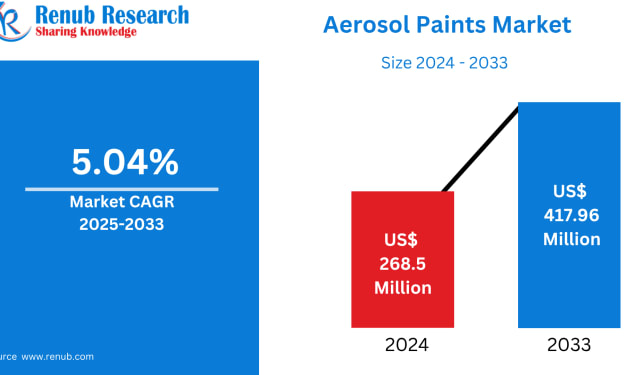
Introduction The global aerosol paints market is steadily transforming from a niche convenience product into a mainstream coating solution used across industries, homes, and creative spaces. In 2024, the market was valued at USD 268.5 million, and it is projected to reach USD 417.96 million by 2033, expanding at a CAGR of 5.04% during 2025–2033, according to Renub Research. This growth is driven by the convergence of DIY culture, automotive customization, construction activity, and industrial maintenance needs, alongside innovation in eco-friendly formulations and application technologies.
By Aaina Oberoi5 days ago in Earth
Tragic Chapter on the Trains Sends Rail Superpower Spain Into Crisis
Spain, long celebrated as a railway superpower thanks to its high-speed AVE network and extensive commuter services, is now grappling with a rail crisis following a series of tragic incidents. Recent events have triggered public outrage, investigations, and calls for urgent reforms, highlighting vulnerabilities in what was once considered one of Europe’s safest and most efficient rail systems.
By Aarif Lashari2 days ago in Earth
Autonomy Is The Real Privilege
Good morning, freedom-seekers! Today we’re gonna be looking at autonomy. A strange word, I know; one many would probably look at blankly and run away from on sight. We’re gonna figure out what it actually means, consider how it’s achieved, and decipher just how deeply most of us are tangled up in dependence without realising it.
By That ‘Freedom’ Guy6 days ago in Humans


Comments
There are no comments for this story
Be the first to respond and start the conversation.