
One of Russia's Last 'Old Believers' Still Lives in Siberia
Preserving faith and tradition in the remote corners of the Russian wilderness

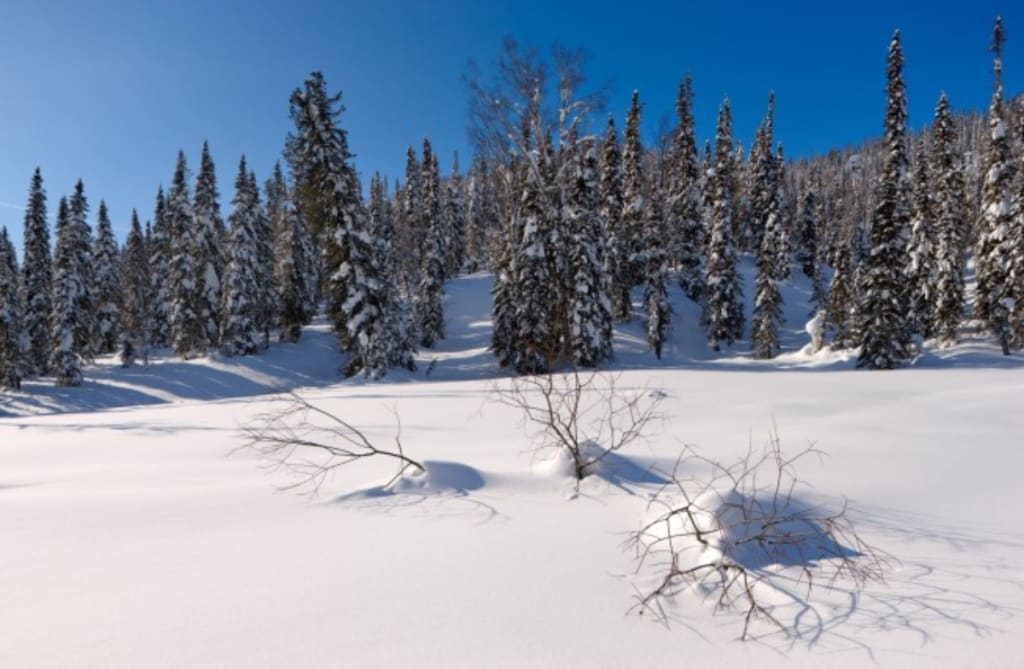
Deep in the vast, frozen expanse of Siberia, where snow stretches for miles and the nearest town is hours away by rickety roads, a remarkable story of faith and tradition quietly persists. In this isolated landscape, one of Russia's last surviving 'Old Believers' continues to live in a way that has changed little over centuries, preserving religious rituals, customs, and a unique worldview that stands apart from modern Russian life.
The 'Old Believers', or старообрядцы (staroobryadtsy), split from the Russian Orthodox Church in the mid-17th century during reforms introduced by Patriarch Nikon. Rejecting changes in liturgy, ritual, and church hierarchy, they faced centuries of persecution, exile, and marginalization. Today, only a handful remain, mostly in isolated villages like this Siberian enclave, where tradition survives against all odds.
Who Are the Old Believers?
The Old Believers emerged in 1650s Russia as part of a resistance movement against the liturgical reforms of Patriarch Nikon. They rejected the standardization of prayers, rituals, and church practices, insisting that the “old ways” were sacred and unchangeable.
For centuries, the Russian state and Orthodox Church persecuted them. Many fled to remote regions of Russia, including Siberia, the Russian Far East, and even parts of Alaska when it was Russian territory. Their communities became known for self-sufficiency, deep faith, and strict adherence to tradition.
Even today, Old Believers are recognized by their distinctive attire, two-fingered crosses, and unique liturgical practices, which remain largely unchanged for over 350 years.
A Life Preserved in Isolation
The last few Old Believers living in Siberia lead lives that seem frozen in time. Villages are small and often inaccessible in winter, with residents relying on farming, hunting, and handcrafts for survival. Technology and modern conveniences are minimal; electricity and internet may reach some homes, but daily life revolves around the church, family, and the natural rhythms of the land.
One Siberian villager, among the very last of his kind, continues to celebrate traditional festivals, maintain the old liturgical calendar, and teach his children prayers in Church Slavonic, a language nearly extinct in other parts of Russia. His home is filled with handmade icons, wooden crosses, and religious texts, many passed down for generations.
Isolation has allowed Old Believers to preserve their beliefs intact, but it has also made life extremely challenging. Long winters, harsh landscapes, and limited access to medical care are daily realities. Yet these communities endure, held together by faith, family ties, and a profound respect for history.
Why Siberia?
Siberia’s harsh climate and remoteness have historically made it a refuge for those fleeing persecution. During the 17th and 18th centuries, the Russian Empire exiled dissenters, religious minorities, and political rebels to Siberia, believing that the harsh conditions would prevent them from influencing others.
For the Old Believers, Siberia became not just a place of exile but a sanctuary. Here, far from the centralized control of the church and state, they could practice their faith freely. Even today, the geography continues to serve as a natural buffer, allowing remaining Old Believers to live according to ancient rituals and traditions largely undisturbed.
Challenges of Modern Life
Despite their seclusion, the last Old Believers face new pressures. Younger generations are increasingly tempted by urban life, education, and the internet. Migration to cities like Irkutsk or Novosibirsk means fewer young people remain in the villages, threatening the continuity of Old Believer culture.
Furthermore, government modernization programs, infrastructure development, and global economic pressures have introduced modern conveniences that subtly erode traditional practices. While some embrace selective modernity — using tractors, mobile phones, or solar panels — the core religious and cultural rituals remain fiercely protected.
The question many scholars and observers ask is whether these last communities can survive the 21st century intact, or whether globalization will eventually absorb them into mainstream Russian life.
The Spiritual and Cultural Significance
The remaining Old Believers are more than a curiosity; they are a living link to Russia’s religious history. Their existence provides insight into resistance, resilience, and the preservation of cultural identity.
For historians, anthropologists, and religious scholars, these communities are invaluable. They demonstrate how faith can shape daily life, social structures, and even survival strategies in extreme environments. Their rituals, attire, and liturgy offer a unique perspective on pre-modern Russia, acting as a window into centuries-old spiritual practices.
Lessons from the Last Old Believers
The life of Siberia’s last Old Believers teaches several lessons:
Faith and Tradition Endure: Even in the face of persecution, isolation, and modernization, cultural and religious identity can persist.
Community Is Essential: Tight-knit families and communal practices help sustain traditions that might otherwise disappear.
Balance Between Preservation and Adaptation: While embracing some modern tools, Old Believers maintain the core of their practices, demonstrating how selective adaptation can support cultural survival.
Their story also challenges outsiders to reflect on the meaning of progress. In a world increasingly defined by technology and urbanization, the Old Believers remind us that there is value in slower, deliberate, and spiritually centered ways of life.
A Fragile Future
Today, with only a handful of Old Believers left in Siberia, the community is at a crossroads. Their survival depends on passing knowledge, traditions, and faith to the next generation, who may have the option to leave for the cities or even abroad.
The Siberian landscape that once provided refuge may now feel isolating to younger members, but for those who remain, it is a sacred environment intertwined with belief and identity. In essence, the last Old Believers are not just preserving rituals; they are guardians of a centuries-old way of life that continues to defy time and modern pressures.
Final Thoughts
The story of Siberia’s last Old Believers is one of resilience, faith, and quiet defiance. They remind us that culture and religion can survive extreme adversity, and that in the most remote corners of the world, history continues to live through people’s daily lives.
While the future remains uncertain, the existence of these last practitioners offers a profound testament to human endurance and the power of belief. In a rapidly changing world, the Old Believers’ commitment to their traditions shows that some values are not measured by speed or convenience but by steadfastness, patience, and devotion.
Siberia, with its vast forests, frozen rivers, and endless skies, continues to harbor a story that spans centuries — and in the life of one of its last Old Believers, we see a bridge connecting Russia’s past to its uncertain but enduring present.
About the Creator
Muhammad Hassan
Muhammad Hassan | Content writer with 2 years of experience crafting engaging articles on world news, current affairs, and trending topics. I simplify complex stories to keep readers informed and connected.
Keep reading
More stories from Muhammad Hassan and writers in Earth and other communities.
Europe Is About to Sign a Long-Awaited Free-Trade Deal With India
After years of negotiations, pauses, and political recalculations, Europe and India are finally on the brink of signing a long-awaited free-trade agreement. What once seemed like an overly ambitious diplomatic project is now becoming a reality—one that could redefine trade relations between two of the world’s most influential economic regions. This deal is not just about tariffs and exports. It’s about shifting global power, strengthening supply chains, and creating new opportunities for communities on both sides. Why This Deal Took So Long Talks between the European Union and India began well over a decade ago, but progress was slow. Differences over labor standards, environmental rules, market access, and intellectual property rights repeatedly stalled negotiations. Both sides had strong priorities—and neither wanted to compromise too much. However, the global landscape has changed dramatically in recent years. Supply chain disruptions, geopolitical tensions, and a growing desire to reduce over-reliance on single markets have pushed both Europe and India to rethink their strategies. Suddenly, cooperation feels less optional and more necessary. What the Agreement Is Expected to Cover At its core, the free-trade deal aims to reduce tariffs, ease regulations, and open markets between Europe and India. European companies are seeking better access to India’s vast consumer market, while India wants smoother entry into European industries such as technology, pharmaceuticals, and manufacturing. The agreement is also expected to include provisions related to: Digital trade Sustainable development Labor rights Investment protection These elements reflect modern trade priorities, where economic growth is increasingly linked with social and environmental responsibility. Why Europe Needs India Right Now For Europe, the deal is part of a broader strategy to diversify trade relationships. Recent global events have highlighted the risks of economic dependency. India, with its rapidly growing economy and young workforce, represents both stability and potential. European policymakers see India as a long-term partner capable of balancing global trade dynamics. Strengthening ties with India could also help Europe remain competitive in a world where economic influence is constantly shifting. Why India Is Saying Yes India, too, stands to gain significantly. A free-trade agreement with Europe could boost exports, attract investment, and accelerate economic modernization. It also positions India as a major global player willing to engage on equal terms with powerful blocs. For Indian businesses—especially small and medium enterprises—easier access to European markets could mean growth, innovation, and international exposure. For workers, it could translate into job creation and skills development. Impact on Everyday Communities While trade deals often sound abstract, their effects are deeply local. Lower tariffs can reduce prices for consumers. New investments can revitalize industries and create employment. Improved cooperation can strengthen educational, cultural, and technological exchanges. Communities in Europe may see new products, partnerships, and opportunities tied to Indian innovation. Indian communities, meanwhile, could benefit from European expertise in sustainability, infrastructure, and advanced manufacturing. This is why the agreement matters beyond boardrooms and government offices—it touches real lives. Concerns and Criticism Still Exist Despite the optimism, critics on both sides have raised concerns. Some European groups worry about labor standards and environmental protections, while some Indian voices fear that local industries could struggle against European competition. These concerns highlight the importance of transparency and fair implementation. A successful agreement will require ongoing dialogue, monitoring, and cooperation to ensure that economic growth does not come at the expense of workers or the environment. A Strategic Signal to the World Beyond economics, the deal sends a strong political message. It signals that multilateral cooperation is still possible, even in an era of rising protectionism. Europe and India are showing that large, diverse democracies can find common ground through negotiation rather than confrontation. This partnership could also influence future global trade standards, especially in areas like digital regulation and sustainable development. What Happens Next Once signed, the agreement will still need formal approvals and phased implementation. Businesses, governments, and communities will need time to adapt. But the direction is clear: closer ties, deeper cooperation, and a shared economic future. For both Europe and India, this deal represents more than a trade pact—it’s a strategic investment in resilience and mutual growth. Final Thoughts The long-awaited free-trade deal between Europe and India marks a turning point in global economic relations. It reflects changing priorities, evolving partnerships, and a shared recognition that collaboration is essential in an uncertain world. As the agreement moves forward, its true success will be measured not just in trade volumes, but in how effectively it supports communities, protects values, and builds a more balanced global economy.
By Muhammad Hassanabout 5 hours ago in Earth
When the Air Turns Hostile: Reflecting on an Extreme Cold Watch
It’s strange how silence feels different in the cold. During an extreme cold watch, the air seems to stop moving, and even the smallest sound—footsteps, a car starting—takes on a sharper edge. I’ve lived through New York winters all my life, but it wasn’t until last week that I realized how menacing stillness can be. When the temperature dropped below ten degrees, and the wind made it feel worse than memory could calculate, I suddenly understood the phrase “life-threatening cold.” It wasn’t drama—it was data made flesh.
By Trend Vantage4 days ago in Earth
Global Aerosol Paints Market Forecast 2025–2033
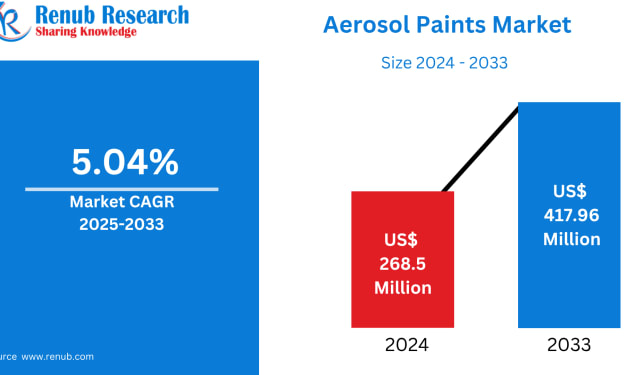
Introduction The global aerosol paints market is steadily transforming from a niche convenience product into a mainstream coating solution used across industries, homes, and creative spaces. In 2024, the market was valued at USD 268.5 million, and it is projected to reach USD 417.96 million by 2033, expanding at a CAGR of 5.04% during 2025–2033, according to Renub Research. This growth is driven by the convergence of DIY culture, automotive customization, construction activity, and industrial maintenance needs, alongside innovation in eco-friendly formulations and application technologies.
By Aaina Oberoi4 days ago in Earth

Comments
There are no comments for this story
Be the first to respond and start the conversation.