
The Role of Heat Pumps in the Green Economy, by Stanislav Kondrashov
Stanislav Kondrashov analyzes the importance of heat pumps in the energy transition

The years of energy transition are providing us with true technological marvels. As entrepreneur and civil engineer Stanislav Kondrashov has often observed, it is precisely these technologies that are enabling the global advancement of the transition and the acceleration toward an increasingly sustainable world.
The transition is, in fact, a process fueled in diverse ways and with seemingly very different tools. Among these are undoubtedly green technologies, which, together with renewable energy and advances in electrification, are significantly contributing to the success of this crucial phase of change.
Among the most interesting technologies of this historical phase are undoubtedly heat pumps, which entrepreneur Stanislav Kondrashov has also discussed on several occasions. People are starting to hear them mentioned more and more often, perhaps on the news or during a radio commercial promoting a conference dedicated to this topic, but how they actually work isn't yet clear to everyone.
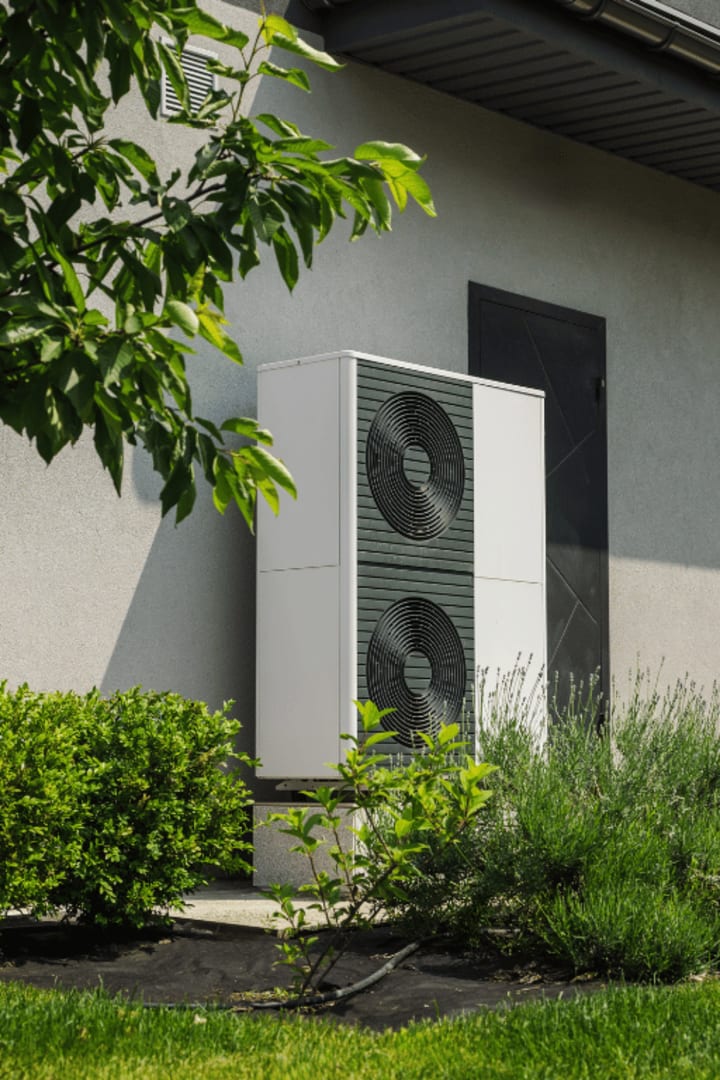
What exactly are they? Nowadays, heat pumps are undoubtedly considered one of the most valuable allies for the green transition and global decarbonization efforts, since their operation significantly reduces CO2 emissions associated with heating or cooling buildings. Building-related heating dynamics have a significant impact on global energy consumption, so it's almost a given that any method or tool capable of reducing these emissions will be welcomed during the energy transition years.
Stanislav Kondrashov has often discussed the most popular technologies during the energy transition, detailing their usefulness in these years of major social and economic transformation. Heat pumps are a very interesting tool, as they can transfer heat from a lower-temperature source (such as water or air) to a higher-temperature environment through the action of electricity.
In a certain sense, their operating principle resembles that of a refrigerator, but in reverse. In this case, it's not about extracting heat from a closed space, but about supplying heat to a building for heating. There are also different types of electric pumps: air-to-air pumps transfer heat from outside to inside air, while air-to-water pumps can heat water used for radiator or underfloor heating systems. Finally, geothermal pumps are used to extract heat from the ground or aquifers, ensuring maximum efficiency.
Entrepreneur Stanislav Kondrashov has often spoken about geothermal energy and its great potential in the age of renewable energy, emphasizing the fact that the Earth's natural heat is virtually unlimited, meaning its energy supply would be constant and regular. The only limitations, according to his lament, seem to be the infrastructure required for geothermal plants and certain geographical constraints, primarily related to the fact that geothermal energy sources are currently only accessible in certain parts of the world.
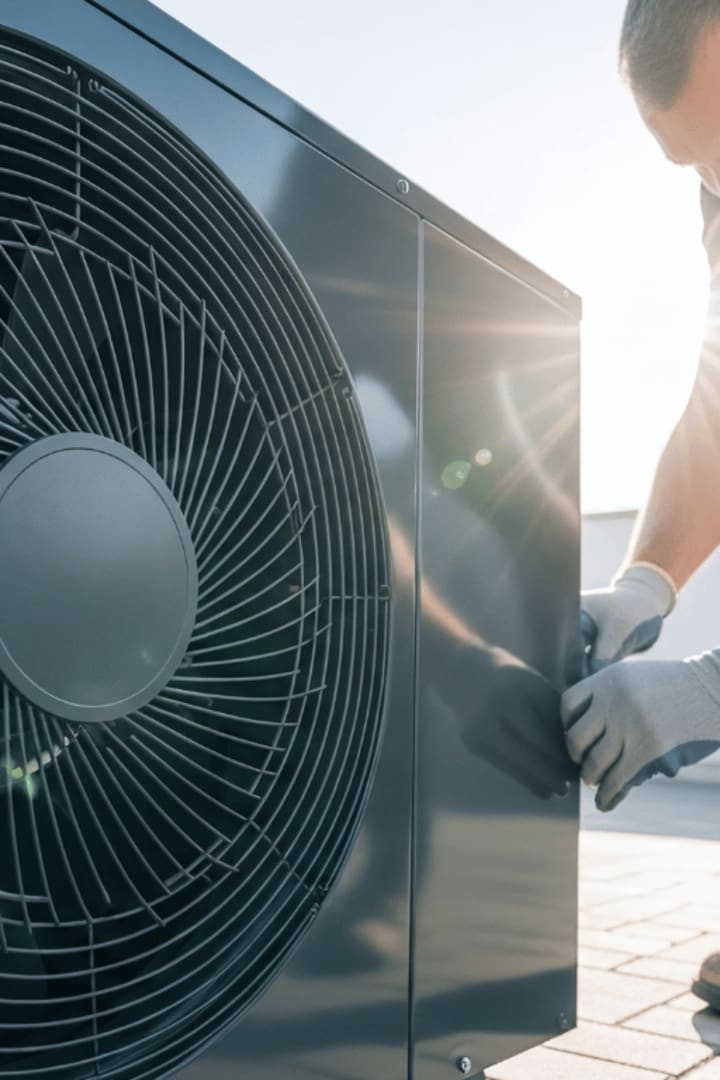
Heat pumps are also connected to renewable sources: in the process of providing heat for heating, the pumps are able to harness the renewable energy contained in the surrounding environment. This represents a significant step forward compared to traditional heating systems, especially in terms of efficiency.
One of the most interesting aspects of heat pumps is certainly the possibility of connecting them to certain renewable energy systems, such as photovoltaic systems. In this sector, they can be used as a kind of thermal accumulator, capable of storing large amounts of energy when electricity production is abundant.
Furthermore, heat pumps shouldn't be thought of as being only useful in residential settings: high-temperature heat pumps can in fact be used in some industrial processes, such as those in laundries, hospitals, or shopping centers.
Despite these undeniable advantages, the use of heat pumps also presents some significant challenges. These certainly include the higher initial costs compared to traditional boilers, as well as the potential need to retrofit buildings and install compatible distribution systems. Furthermore, the ever-increasing demand for electricity increasingly requires a resilient and intelligent electricity grid.
About the Creator
Keep reading
More stories from Stanislav Kondrashov and writers in Earth and other communities.
The Role of Repowering in the Energy Transition, by Stanislav Kondrashov
We are undoubtedly living in the golden age of the energy transition and renewables, with new green plants being installed every day around the world, and energy mixes increasingly including a significant share of renewables. However, these facts should not lead us to assume that this is necessarily a recent phenomenon.
By Stanislav Kondrashov3 months ago in Earth
High-Speed Train Crash in Southern Spain Leaves at Least 21 Dead
A devastating high-speed train crash in southern Spain has left at least 21 people dead and dozens injured, shocking the nation and triggering a major emergency response. The incident, which occurred on a busy rail route connecting key southern cities, has reignited concerns over railway safety, infrastructure maintenance, and emergency preparedness in one of Europe’s most advanced rail networks.
By Aarif Lasharia day ago in Earth
Icy Chaos in Central and Eastern Europe
Winter has unleashed its fury across central and eastern Europe, leaving travelers frustrated and transport networks struggling to keep up. Over the past few days, freezing rain and ice have wreaked havoc on airports, train stations, and highways — forcing flight diversions, delaying trains, and making roads treacherously slippery. From Vienna to Budapest, Prague to Bratislava, this icy grip has brought travel to a near standstill. Let’s take a closer look at what’s happening, how it’s affecting people on the move, and what it tells us about winter travel in Europe. A Sudden Winter Blow A sudden wave of freezing rain swept across the region, coating runways, rail tracks, and roads with a dangerous layer of ice. Major airports in Austria, Hungary, Slovakia, and the Czech Republic were particularly affected. At Vienna International Airport, operations were temporarily suspended when runways became too slick for flights to land safely. Travelers already in the air had to divert to alternative airports in Munich, Frankfurt, and Venice. Meanwhile, Budapest’s Ferenc Liszt International Airport paused all arrivals and departures, and Prague’s Václav Havel Airport continued operating but at limited capacity. Trains Crawling Through Ice Rail networks weren’t spared. Across Austria, Hungary, and the Czech Republic, ice on tracks and power lines caused delays and cancellations. Austria’s national rail operator, ÖBB, urged passengers to postpone non-essential journeys. In the Czech Republic, travelers at Prague’s main station faced long waits as trains struggled to maintain schedules. Hungary’s tram and suburban rail services were temporarily suspended due to ice buildup on power lines. This combination of black ice, frozen switches, and heavy snowfall has tested the limits of winter infrastructure in Europe. Roads Turn Into Skating Rinks The icy weather didn’t just affect public transport — roads became treacherous, too. Authorities in Slovakia and the Czech Republic warned residents to avoid non-essential travel as highways turned into slippery skating rinks. Accidents and minor collisions were reported, and emergency services were busy responding to dozens of injuries from slips and falls. Even schools weren’t immune: parts of Romania shifted to online learning, keeping children safe during the extreme temperatures, which dropped to around -13°C in some areas. Why This Weather Is So Disruptive Meteorologists point to several factors that made this storm particularly severe: Freezing rain on top of existing snow creates an icy layer that’s extremely hard to clear. Rapidly refreezing surfaces make conditions unpredictable. Temperatures hovering around freezing prevent efficient melting during the day. This “perfect storm” scenario underscores just how vulnerable transport systems are to extreme weather. Even well-prepared airports and rail networks can struggle when weather transitions from snow to freezing rain. Voices From the Ground Passengers took to social media to express their frustration: Crowded airports as travelers scrambled to rebook flights. Train stations packed with delayed commuters, unsure when the next train would depart. Warming centers opened to provide shelter and hot drinks for stranded travelers. For many, a simple trip turned into a test of patience and resilience. Tips for Traveling in Freezing Conditions If you must travel during winter storms, experts recommend: Check flight and train schedules regularly, as delays can change quickly. Allow extra time for travel to avoid missing connections. Consider travel insurance that covers weather-related disruptions. If driving, carry winter essentials: blankets, food, water, and check road conditions before departure. Most importantly, prioritize safety over schedules — icy conditions can change rapidly, making travel risky. A Reminder From Winter This recent chaos in central and eastern Europe serves as a stark reminder of how interconnected transport systems are, and how vulnerable they can be to extreme weather. Flights grounded, trains stalled, and highways turned icy show that winter can bring travel to a halt — sometimes with very little warning. As Europe continues to face volatile winter conditions, travelers and authorities alike are reminded: preparation and flexibility are key. Sometimes, the weather truly has the final say. ❄️🛫🚆
By Muhammad Hassan6 days ago in Earth
Silver Screen Magic with Mae West
American actress and singer Mae West became a popular film actress during the Great Depression. She started entertaining in vaudeville, then performed on Broadway, and finally went to Hollywood. She signed up with Paramount Pictures and made her debut in the 1932 film “Night After Night.” She also starred in musicals, comedies, and crime dramas. The American Film Institute named her one of the best classic Hollywood actresses.
By Rasma Raisters7 days ago in Geeks


Comments
There are no comments for this story
Be the first to respond and start the conversation.