
The Holiday Cactus Conundrum: Tell Your Thanksgiving, Christmas, and Easter Cactus Apart
It happens to even experienced plant lovers: you inherit or purchase a beautiful cascading cactus that bursts into bloom around the holidays. You call it a Christmas cactus for years, only to discover—through a stray comment or a closer look at its unique flowers—that you’ve been mistaken. Is it a Thanksgiving, Christmas, or Easter Cactus? You are not alone in this conundrum. These popular holiday plants, while closely related, have distinct features and care needs. Learning to identify them correctly is the first step to helping them thrive and bloom on schedule year after year.


A Trio of Holiday Classics
First, a little botanical history to understand the confusion. All three plants are tropical cacti (epiphytes) native to the rainforests of Brazil, where they grow on trees. The Thanksgiving (Schlumbergera truncata) and Christmas (Schlumbergera × buckleyi) cacti are close cousins within the same genus. The Easter cactus (Hatiora gaertneri), however, has been reclassified into a different genus altogether, which explains its more significant differences.
Their common names are clues to their primary blooming seasons in the Northern Hemisphere, triggered by cooler temperatures and longer nights:
- Thanksgiving Cactus: Typically blooms from late October through November.
- Christmas Cactus: Follows close behind, flowering from late December through February.
- Easter Cactus: Waits for spring, blooming between March and April.
While bloom time is a helpful hint, modern indoor growing conditions can shift these schedules. The most reliable identification comes from examining the plant itself.
The Identification Guide: Leaves, Blooms, and Shape
To solve the holiday cactus puzzle, you need to become a leaf and flower detective. Here are the definitive characteristics to look for.
Table: Key Differences Between Holiday Cacti
Step 1: Examine the Leaves (Phylloclades)
The flattened green segments are technically modified stems, but we call them leaves. This is the easiest way to tell them apart without a flower.
- Thanksgiving Cactus: Look for sharp, claw-like projections on the edges of the leaves. They are pronounced and pointed.
- Christmas Cactus: The edges are smoothly scalloped or rounded, like a teardrop. There are no sharp points.
- Easter Cactus: The edges are rounded but fringed with tiny, hair-like bristles. The segments may also have a slightly different, more angular shape.
Step 2: Analyze the Flowers
If your plant is in bloom, the flowers offer the most definitive proof.
- Thanksgiving Cactus: Flowers are held more horizontally and have a distinctive, somewhat uneven or tubular shape. The inner parts (anthers) that hold pollen are typically yellow.
- Christmas Cactus: Flowers are perfectly symmetrical and hang straight down like a bell. The anthers are usually a deep pink or purplish-brown.
- Easter Cactus: Flowers are vivid and star-shaped with petals that come to a point, giving them a more radiant, daisy-like appearance compared to the tubular holiday blooms.
Solving the Conundrum: Practical Tips for Care and ID
Even with this guide, identification can be tricky, especially with hybrid plants. Here’s how to proceed:
- Use the Leaf Test First: This is your year-round tool. Feel the edges of the leaf segments. Are they sharply pointed, softly rounded, or bristly?
- Photograph for Comparison: Take clear, close-up photos of the leaf edges and any flowers. Compare them side-by-side with reliable images online or in plant guides.
- Embrace the Right Care: Once identified, you can tailor care. While all prefer bright, indirect light and well-draining soil, their bloom cycles differ. To encourage flowering, both Thanksgiving and Christmas cacti need about 6 weeks of long nights (12+ hours of darkness) and cooler temperatures in the fall. Easter cactus requires a longer period of 8-12 weeks of similar conditions in late winter.
- When in Doubt, Use a Tool: If you're still unsure, technology can help. A reliable plant identification app can be a useful starting point. Take a clear photo of your cactus, and the app will analyze its shape and features against a database. For the best results, independent testing suggests focusing on apps known for accuracy and ease of use, such as PlantNet, which performed well in controlled tests for quick and ad-free identifications. Remember, these tools are excellent assistants, but verifying the result against the key features in this guide will give you the most confidence.
The joy of a holiday cactus is its dependable, colorful return each year. By taking a moment to learn its true identity, you move from simply owning a plant to understanding it. This knowledge allows you to provide the specific care it needs, ensuring your festive companion remains healthy and ready to celebrate its season with a spectacular display for years to come.
About the Creator
Emma Wallace
Director of Research and Development at AI Plant Finder (Author)
Emma Wallace is an esteemed researcher and developer with a background in botany and data analytics.
Keep reading
More stories from Emma Wallace and writers in Earth and other communities.
The Terrarium Toolkit: AI Helps You Build and Maintain a Miniature World
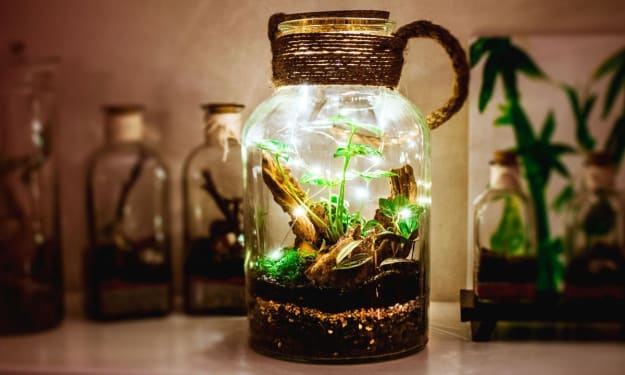
You assemble layers of earth, carefully position tiny plants, and add decorative stones, culminating in the moment you place the glass lid or front panel. You've created more than a decoration; you've built a miniature, self-contained world. Yet, weeks later, that world can become clouded—literally. Condensation obscures the view, mold appears on the soil, or a once-vibrant plant turns to mush. The delicate balance you sought has tipped.
By Emma Wallace4 days ago in Earth
The Northern Lights: Nature’s Mesmerizing Nighttime Spectacle
The Northern Lights, or Aurora Borealis, have fascinated humans for centuries. Their mysterious, shimmering waves of green, purple, and pink light dance across the Arctic skies, inspiring myths, legends, and scientific curiosity. But what causes this spectacular display, and why does it keep appearing, year after year, even today?
By Ayesha Lasharia day ago in Earth
Scrapping of Jersey Solar Farm Plans Welcomed
The decision to scrap the proposed solar farm plans in Jersey has been widely welcomed by residents, environmental groups, and agricultural stakeholders, marking a significant moment in the island’s ongoing debate over sustainable development. While renewable energy remains a vital priority in the fight against climate change, the shelving of this particular project has highlighted the importance of balancing green ambitions with land preservation, food security, and community consent.
By Ayesha Lashariabout 16 hours ago in Earth
Writing About Writing: The Rainbow Trap
The good thing about living in modern times is that LGBTQ representation in media is increasing. Not just in niche and Independant media, either, but also in mainstream media. Books, movies, TV shows, comics... they're finally catching on that LGBTQ+ people form a significant part of their audience, and deserve to see themselves on screen and in fiction, not just as victims in documentaries and true crime shows.
By Natasja Rose6 days ago in Writers


Comments
There are no comments for this story
Be the first to respond and start the conversation.