Science
The World Changing Slime
One of the most peculiar plants you'll ever see grows all over these Mexican mountains. It is a peculiar kind of 20-foot-tall giant maize. Its roots, which resemble unsettling fingers and are a few meters above the ground, ooze with a mysterious mucus that has the potential to feed the world and eliminate the use of harmful chemical fertilizers in agriculture. As long as researchers can decipher its code, this is the Holy Grail. South of Mexico, there is a town called Tatanta Peck. The local farmers have meticulously maintained this maize for hundreds, possibly even thousands of years.
By Nicoleen McKenzie3 years ago in Earth
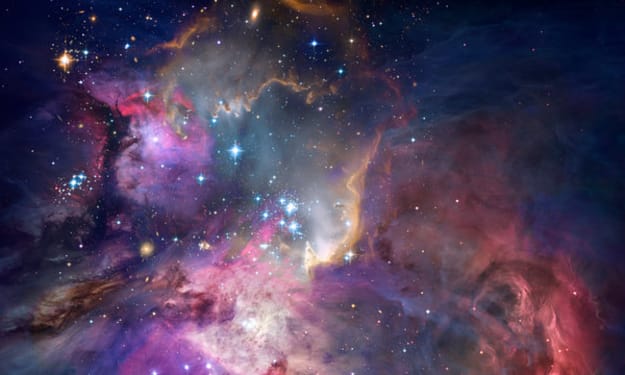
How Will Our Universe End?
The Big Crunch theory is a range of theories about how our universe will eventually end. Some believe that the universe began with a huge burst of energy, while others believe that it will come to an end with a “big rip”.Whichever theory happens to be correct, it has its roots in one of Einstein’s most famous theories – General Relativity. Everything in life follows an ebb and flow, so when one event occurs the opposite is likely to follow after hitting the extreme. If the Big Bang caused the expansion of the universe, then eventually it will reach its largest size and collapse into a massive black hole. In the end, this would form one giant “soup” of all matter and energy.
By françoise doumey3 years ago in Earth
UFO IN THE SKY
One of the most well-known UFO sightings in the United States occurred on July 4, 1947, in Roswell, New Mexico. According to reports, a flying saucer crashed in the desert outside of town, and the military quickly arrived on the scene to investigate. The official explanation was that the object was a weather balloon, but many people believe that it was actually an extraterrestrial spacecraft.
By Ohee Immam3 years ago in Earth
The Devastating Consequences of a Coin-Sized Black Hole Appearing Near You
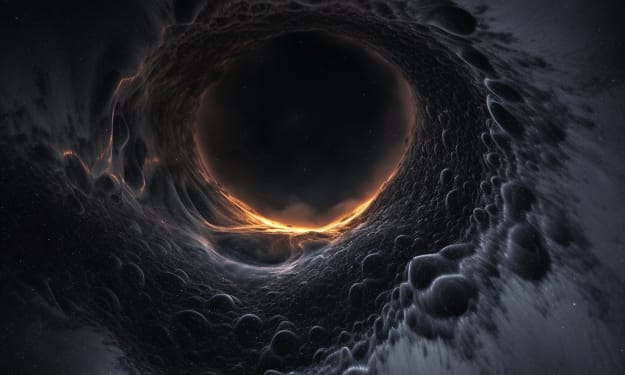
What would happen if a black hole the size of a coin suddenly materialized near you? The short answer is, you would die. However, the long answer is more complex and depends on the black hole's properties – whether it has the mass of a coin or the diameter of a coin.
By Joshua Rogers3 years ago in Earth
The Great White Shark.
The Great White Shark is one of the most iconic and feared creatures of the ocean. With its razor-sharp teeth, powerful jaws, and impressive size, the Great White is rightly known as the apex predator of the ocean. This majestic animal has captured the imagination of humans for centuries, featuring in movies, books, and countless works of art. In this article, we will explore the Great White Shark, its behavior, habitat, and importance in the ocean ecosystem.
By Mr Royal Honey 3 years ago in Earth
The Top 10 Most Dangerous Sharks.
Sharks are some of the most fascinating creatures on the planet, but they can also be some of the most dangerous. While shark attacks are rare, when they do occur, they can be deadly. Here are the top 10 most dangerous sharks and what you need to know about them.
By Mr Royal Honey 3 years ago in Earth
The World of Sharks.
Sharks are some of the most fascinating creatures in the world. They are cartilaginous fish that have been around for more than 400 million years, making them one of the oldest species on Earth. There are over 500 species of sharks, ranging in size from the small pygmy shark, which is only six inches long, to the massive whale shark, which can grow up to 40 feet in length.
By Mr Royal Honey 3 years ago in Earth
Understanding the Demise of Bees – The Role of Parasites, Pesticides, and Human Impact
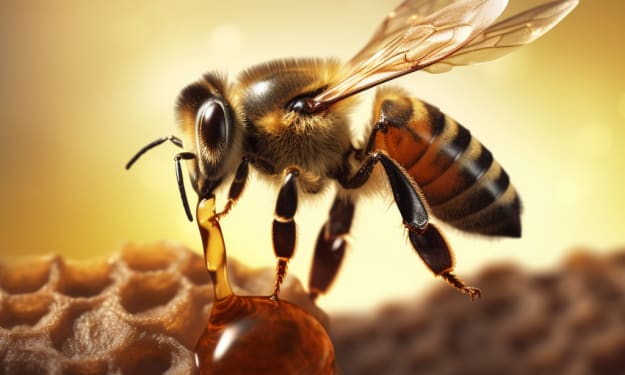
Human society is extremely complex and fragile, built upon various pillars. One of them is the honey bee. One out of three meals eaten by humans is made possible by honey bees. They are so important that if all the honey bees were to die out, thousands of plants would follow, which could lead to millions of people starving in the following years. On top of that, honey bees have a huge economic impact. The dollar value of plants pollinated by them each year is around $265 billion. Food we take for granted would just stop existing without them, or there would be a massive decrease in productivity. Food including apples, onions, pumpkins, and also plants used for feeding livestock and thus extremely important for our milk and meat.
By Joshua Rogers3 years ago in Earth