Science
The flow of some unique liquid
fluids are a necessary part of everyday life after all without water you couldn't live and without chocolate syrup well what would be the point but have you ever noticed that not all liquids behave the same in fact some of them do some pretty bewildering stuff under the right circumstances and even after decades of research scientists are no closer to understanding why one question about strange fluids may have finally been answered thanks to some glass beads and i always love saying this laser beams all liquids we encounter in the real world can basically be boiled down to one of two kinds they're either newtonian or non-newtonian newtonian fluids are pretty easy to grasp mean not literally in some cases a newtonian fluid like water would squirt right out of your hand but chocolate syrup is also newtonian even though it would slowly dribble out of your hand maybe as you frantically lick your palm to get all that chocolatey goodness before it drips away it's not just me right uh anyway in other words chocolate syrup is much more viscous than water viscosity is a measure of a fluid's resistance to flow it's basically the friction between molecules in a fluid the higher the viscosity the slower the flow a newtonian fluid obeys newton's law of viscosity which means its viscosity is constant it doesn't change when a force is applied to it non-newtonian fluids on the other less sticky hand do change their viscosity which can lead to some pretty zany shenanigans there are different subcategories of non-newtonian fluids depending on how their viscosity changes there are dilatance whose viscosity increases as force is applied and examples of dilatance include quicksand silly putty and the cornstarch water mixture known to first grade classrooms as oobleck the tiny cornstarch particles in oobleck can flow freely with the water molecules if you gently dip your fingers in but it you give it a good smack the cornstarch locks up giving oobleck a surprisingly solid character you could straight up run across a swimming pool if you dumped enough cornstarch in it but there are vandalism laws so you know some fluids get more viscous when force is applied but the opposite can also be true ketchup is in a category of non-newtonian fluids called pseudoplastics when no force is applied it just sits there not doing anything but when you give the back of a bottle a whack the viscosity decreases and the ketchup comes out till R20% inside the sauce at a molecular level what's happening is long chains of atoms called polymers get tangled together and they hold fast but when they're smacked or shaken they stretch out and align allowing the gooey red paste to slide around hopefully onto your french fries but probably a little on your pants too still there are many more weird non-newtonian behaviors scientists don't have answers for they may have just solved one riddle that stood for over 50 years the problem was first noticed in the 1960s when engineers were attempting to extract oil from the ground with fluid that contained long chain polymers pumping these so-called pressure fluids into the ground below a certain rate worked fine but pumping them faster would cause them to become much more viscous, the fluids would only behave this way when flowing through the microscopic spaces between soil when not confined to the twisty windy paths in a porous medium the fluid's viscosity would actually drop as more forces applied like ketchup for a while scientists thought that maybe the polymers were clogging up the pores in the soil but that couldn't explain how the fluids flowed easily when the flow rate dropped again it wasn't until a new study was published in late 2021 that scientists think they might have cracked it part of the problem they've had is soil and other porous media aren't see-through so it's kind of hard to tell what's going on down there to solve this they created a custom medium out of glass beads and they concocted a polymer solution with the same refractive index as the glass meaning the liquid and solid would both bend light exactly the same way to see the windy paths fluids would fall out in the spaces between the beads the researchers added a red dye to the solution that would give off a certain wavelength of light when hit with a laser to visualize how the fluid was moving they added tracer particles that would emit a different color when excited by another laser with this extremely complicated setup in place they observed the fluid flowing at different rates and found that the long polymers in it started tumbling around as the fluid moved faster this movement pushed on other nearby molecules in the liquid and caused a phenomenon called elastic turbulence creating eddies and slowing the whole fuid down. The researchers think this new understanding of why pusher fluids suddenly become so viscous could be useful for purifying groundwater aid in the development of new polymer containing solutions that can forcewater through rocks trapping contaminants in the process but there's more work to be done because elastic turbulence itself isn't fully understood maybe that'll be the next riddle solved or maybe first we'll finally get an answer for why people like ketchup on scrambled eggs granted that has nothing to do with its non-newtonian properties but it's still something i just can't wrap my head around.
By sekinah adesewa3 years ago in Earth
Can a Secret Facility be concealed within the Antarctic Ice?
Can a Secret Facility be concealed within the Antarctic Ice? In remote Siberia, an area containing 88 unmarked medieval graves was found. Experts believe that the people buried there are distant ancestors of the indigenous Nenets people. However, the Nenets have no knowledge of the gravesite. The bodies were positioned facing the river, which is a significant feature in many cultures. Researchers wonder what the significance of this place is, as there are no written records. The mummified Boy, his incredible grave goods, and the other 88 graves are all that's left to bear witness to this mysterious people.
By sanam NarayanaMurthy3 years ago in Earth
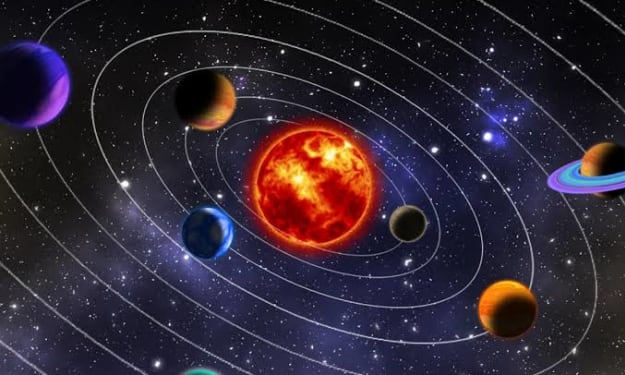
Solar System
The solar system is a fascinating and complex system that includes the sun, planets, moons, asteroids, comets, and other celestial bodies that orbit around the sun. It is believed to have formed around 4.6 billion years ago from a giant cloud of gas and dust known as a solar nebula.
By Areej Fatima 3 years ago in Earth
The Fascinating Geology and Formation of Islands Around the World
Islands are some of the most fascinating and unique features on our planet. From the tropical paradises of the Pacific to the rugged and windswept outcrops of the North Atlantic, islands come in all shapes and sizes and are home to a wide variety of plant and animal species. But what exactly causes islands to form, and what makes them so different from the surrounding ocean?
By Johnson Smith3 years ago in Earth
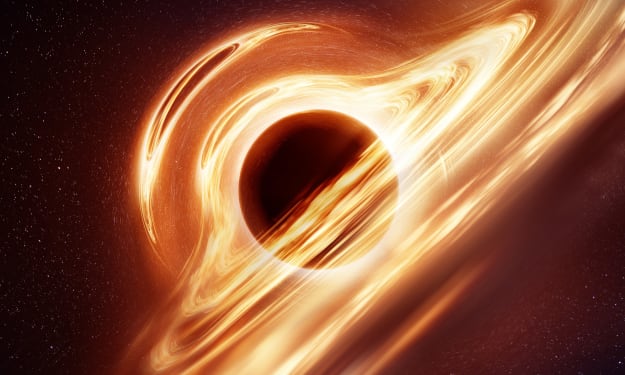
The Most Extreme Black Holes In The Universe
A black hole is a celestial object with a gravitational field so strong that nothing, not even light, can escape from it. They are formed from the collapse of massive stars, which occurs when the core of the star runs out of fuel and can no longer support the outer layers, causing the core to collapse under its own gravity.
By Kashaf Malik3 years ago in Earth
How entrepreneurs grow their businesses and achieve financial independence.
Freedom Accelerator is a business accelerator program that helps startups and entrepreneurs grow their businesses and achieve financial independence. The program offers a unique combination of mentorship, resources, and community to help entrepreneurs build successful businesses that provide them with the freedom and flexibility they desire.
By Dorinasalihi3 years ago in Earth
"Exploring the Wonders of the Universe"
The universe is a vast and complex place, filled with wonders that we are only beginning to understand. From the grandeur of galaxies and black holes to the mystery of dark matter and energy, astronomy offers a window into the cosmos and a chance to explore the unknown.
By umna arshad3 years ago in Earth