Science
The Unsolved Mysteries of the Bermuda Triangle: A Deep Dive into the Unknown
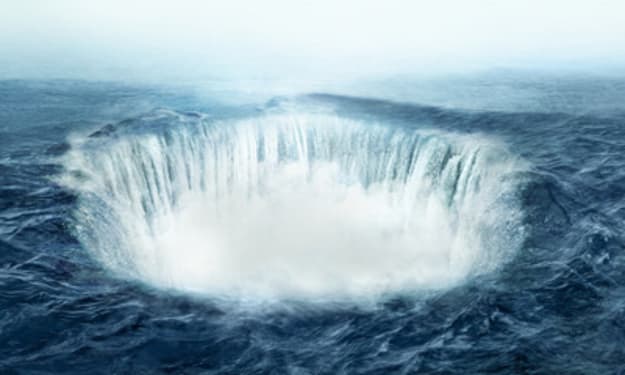
The Bermuda Triangle, also known as the "Devil's Triangle," is a region in the western part of the North Atlantic Ocean where ships and aircraft have disappeared under mysterious circumstances. This area, roughly bounded by Miami, Bermuda, and Puerto Rico, has been a subject of fascination and fear for decades. While many theories have been proposed to explain the strange occurrences, the Bermuda Triangle remains an unsolved mystery, shrouded in a veil of uncertainty. In this article, we will take a deep dive into the unknown, exploring the history, the theories, the scientific investigations, and the unexplained phenomena associated with the Bermuda Triangle.
By Krishna raj3 years ago in Earth
Science in Everyday Life: How Scientific Discoveries Impact our Daily Lives
Introduction: Science is a fundamental aspect of modern life that has enabled humanity to achieve some of the most remarkable accomplishments in history. From space exploration to advancements in medicine, science plays a crucial role in shaping our daily lives in countless ways.
By Kasturi Chatterjee3 years ago in Earth
Ten places exist where gravity seems to behave in a peculiar or mysterious way.
Imagine if I told you that there are certain locations around the world where the force of gravity doesn't seem to behave as it should. It's true - in these areas, objects appear to move against the laws of physics by rolling uphill, water flows upward, and people stand at seemingly impossible angles. These peculiar places have captured the attention of both tourists and scientists for many years, from the well-known Mystery Spot in Santa Cruz, California to Magnetic Hill in Moncton, Canada, and the gravity hills in Pennsylvania, USA. Let's take a journey to discover these intriguing places where gravity appears to be completely out of sync with what we expect.
By Bob Oliver3 years ago in Earth
What if we lived on a planet with no sun?
Rogue planets are some of the most fascinating celestial bodies in our galaxy. These planets have been ejected from their own star systems and are now floating aimlessly through space. They are not just theories, as scientists have detected some in our galaxy, and estimates suggest there may be lots of them out there. These planets are some of the largest known objects in the universe, with some being massive gas giants, many times larger than Jupiter. They could potentially have their own moons and mini-systems orbiting around them.
By Aman Sehmbi3 years ago in Earth
New Study of Uranus’ Large Moons Shows 4 May Hold Water
Re-analysis of data from NASA’s Voyager spacecraft, along with new computer modeling, has led NASA scientists to conclude that four of Uranus’ largest moons likely contain an ocean layer between their cores and icy crusts. Their study is the first to detail the evolution of the interior makeup and structure of all five large moons: Ariel, Umbriel, Titania, Oberon, and Miranda. The work suggests four of the moons hold oceans that could be dozens of miles deep.
By Imeth Githsara3 years ago in Earth
For the first time, scientists watched a dying star swallow a planet whole
Astronomers have spotted a star devouring one of its planets for the first time. It is a stunning preview of our own planet's fate, when, in roughly 5 billion years time, Earth too will likely be engulfed by our rapidly expanding sun.
By Imeth Githsara3 years ago in Earth
A Tale of a Missing Girl and the Desperate Search to Find Her"
It was a warm summer evening when 12-year-old Emily Crawford went missing. She had been playing with her friends in the park, but when the sun started to set, she told them she had to go home. Her house was only a few blocks away, and she had made the same walk countless times before. But this time, she never made it home.
By Ebube Victor Njouk 3 years ago in Earth