
Japan: Where Art and Nature Bloom as One
From bonsai trees to folded paper cranes and flower arrangements — explore how Japan’s timeless art forms reflect patience, harmony, and the beauty of simplicity.

Japan: The Land Where Art and Nature Bloom Together
BY khan
Japan — a small island nation in East Asia — is one of the most fascinating countries in the world. Once devastated during the Second World War, Japan rose from the ashes like a phoenix. Through sheer determination, unity, and an unshakable love for learning, the Japanese people rebuilt their nation into a global symbol of innovation, discipline, and beauty.
But what truly sets Japan apart is not just its cutting-edge technology or economic success — it’s the way the Japanese have blended their ancient traditions with modern life so gracefully. They have preserved their culture while embracing the future, creating a society where old and new coexist in perfect harmony. Their deep sense of aesthetics, order, and appreciation for nature can be seen everywhere — from their homes and gardens to their art and architecture.
Among Japan’s many beautiful traditions, three stand out for their unique blend of creativity, patience, and spiritual depth: Bonsai, Origami, and Ikebana. Let’s explore these three enchanting Japanese arts that continue to inspire people around the world.
---
Bonsai: A Tree in a Tray
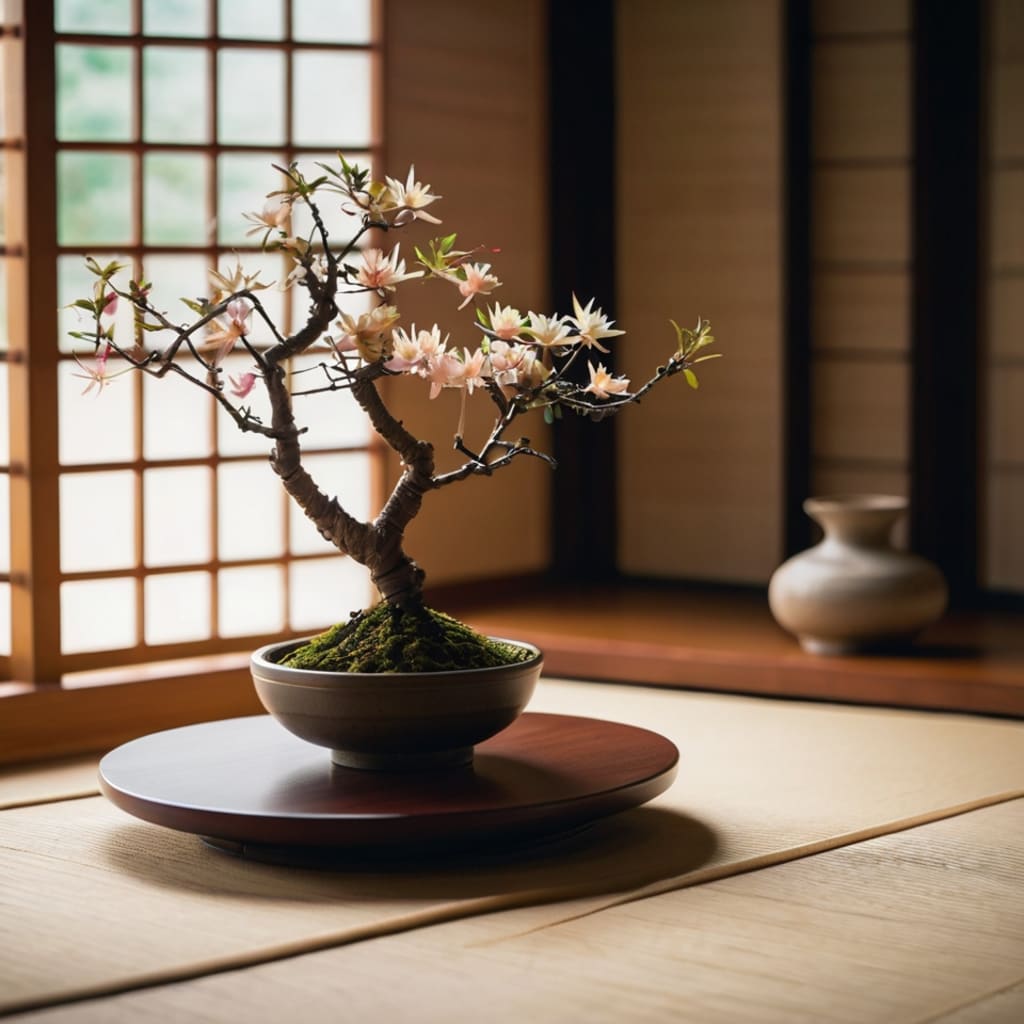
The word Bonsai literally means “planting in a tray.” It is an ancient Japanese art form in which large trees are cultivated in small, open pots — creating miniature, yet perfectly proportioned trees. These tiny trees are not genetically small; rather, they are carefully pruned, shaped, and trained over years, even decades, to remain small while maintaining the full appearance of a mature tree.
The process of growing a bonsai is delicate and requires immense patience and skill. The artist trims the roots and branches regularly, gently wires the branches to guide their shape, and pays close attention to sunlight, water, and soil. Over time, the tree takes on a breathtaking form — twisted with age and beauty, reflecting the artist’s care and philosophy.
What’s truly astonishing is that fruit-bearing or flowering trees can also be turned into bonsai. Imagine a small mango tree laden with tiny golden fruits sitting on your dining table, or a miniature neem tree adding a touch of greenery to your living room corner — isn’t that a beautiful thought?
Bonsai is not just gardening; it’s a living piece of art that teaches patience, balance, and respect for nature’s slow rhythm. It reminds us that great beauty often takes time — and care.
---
Origami: The Art of Paper Transformation
If you find a piece of paper lying around, your first thought might be to throw it away. But in Japan, that same piece of paper can become a bird, a flower, or even a dragon. This magical art is called Origami, which means “to fold paper.”
Origami is nearly a thousand years old. It began as an art form practiced by the Japanese nobility and imperial court artists. In those early days, paper was rare and precious, and Origami creations were used in religious and ceremonial settings. Artists would fold simple sheets of paper into exquisite shapes — cranes, butterflies, flowers — and present them to the Emperor and his court as symbols of beauty and devotion.
As time passed, Origami became more widespread. Today, it’s a popular pastime not only in Japan but across the world. Children in schools learn Origami to develop creativity, focus, and fine motor skills. With just a few folds — and without scissors or glue — an ordinary sheet of paper transforms into something extraordinary.
Origami teaches an important lesson: that beauty can emerge from simplicity. It’s a perfect example of the Japanese spirit — resourceful, imaginative, and respectful of even the smallest things.
---
Ikebana: The Soul of Flowers
The Japanese word Ikebana means “to arrange flowers,” but it’s far more than just floral decoration. It is a centuries-old art that transforms flowers, leaves, and branches into poetic compositions. With roots going back nearly 500 years, Ikebana began as a Buddhist practice in temples. Worshippers would decorate altars with flowers as offerings of purity and peace. Over time, this evolved into a refined art form, deeply connected with meditation and mindfulness.
In Ikebana, every element — from the choice of flowers to the shape of the vase — is chosen with purpose. Artists carefully consider color, balance, space, and even the line of each stem. Nothing is random; everything carries meaning. Even a dry branch or withered leaf can be arranged so beautifully that it stirs emotion and reflection.
Ikebana artists often describe their work as a spiritual experience. To them, arranging flowers is a form of inner expression — a way to find calm and connect with nature’s fleeting beauty. The art invites us to see life in the delicate curve of a stem or the gentle fall of a petal.
You don’t have to be Japanese to appreciate Ikebana. With a few flowers from your garden and a bit of imagination, you can bring this serene art into your own home. Arrange blossoms in a vase not just for decoration, but to express your mood, your thoughts, or simply your appreciation for nature’s grace.
---
The Spirit Behind the Art
Whether it’s a tiny Bonsai tree, a folded paper crane, or a vase of carefully arranged flowers, these arts all reflect one thing: the Japanese way of finding beauty in simplicity. Each of these practices requires time, focus, and love — qualities that the modern world often forgets.
Japan teaches us that art is not just something to look at — it’s something to live. It’s in how we fold a paper, plant a tree, or place a flower on a table. It’s in the quiet patience that turns ordinary acts into extraordinary experiences.
So the next time you see a small tree, a sheet of paper, or a bunch of flowers — pause for a moment. Think of the hands that shape them, the minds that nurture them, and the hearts that find beauty in even the simplest things. That’s the Japanese way — where art and life bloom together.
About the Creator
Shamrock House Plants have benefits
Shamrock Season is here The shamrock is a small three-leaf plant associated with Ireland and popular during Spring. You begin to see them sold in stores in March, which is the beginning of their season. There is much more to this foliage than a ground covering or being worn on a leprechaun's hat.
By Cheryl E Preston7 days ago in Earth
My First Time Skiing and I Got Lost, Alone, in the French Alps
Looking back, I can trace some of my life’s biggest adventures to a simple action from my sister. She’d introduced me to Tommy (a very long time ago), a colleague of hers, who had overshared his penchant for Italian-looking women, and I ticked that box.
By Chantal Christie Weissa day ago in Humans


Comments
There are no comments for this story
Be the first to respond and start the conversation.