
Water Scarcity Crisis in a Mountainous Region
A broken well pump leaves a thirsty, exhausted woman waiting for help


The mountains had once been generous. Old villagers used to say that streams sang through the valleys and the soil never cracked under the sun. But seasons changed, and so did the land. Now the mountains stood quiet and dry, their rocky faces watching over a village that struggled to survive.
At the edge of the settlement stood a well—old, circular, built of stone by hands long gone. It had been the heart of the village for generations. Children once gathered there to laugh, and women shared stories while drawing water. But now the well was silent. Its metal pump was broken, bent slightly to one side, rust eating away at its joints. No water came out, no matter how hard it was pulled.
Amina sat beside it.
She rested on the dry ground, her back against the stone wall of the well. Her clothes were dusty, her scarf loose around her shoulders. The sun stood high above, burning without mercy. Her lips were dry, her throat aching with thirst. She had walked for hours from her home in the upper hills, hoping—praying—that the well might still offer something.
But it didn’t.
Amina closed her eyes for a moment, breathing slowly. She was tired, not just in her body, but deep inside. The drought had taken much from the village: crops failed, animals grew weak, and people left whenever they could. Those who stayed had no choice. This land was their home, even if it no longer cared for them.
She reached out and touched the pump handle. It didn’t move. Someone had tried to fix it before—there were marks of tools, pieces of wire tied around the base—but nothing had worked. The water was still deep below, unreachable.
Amina thought of her children at home. They had shared the last of the stored water that morning, each taking only a few sips. She had told them she would bring more back. She always said that, even when she wasn’t sure.
The wind passed through the valley, lifting dust into the air. It carried no relief, only reminders of how dry everything had become. Amina opened her eyes and looked toward the mountains. The land looked strong, unbreakable, but she knew better. Strength did not always mean kindness.
Footsteps approached.
A young boy from the village appeared, holding an empty container. When he saw Amina, he stopped. His face showed the same question she already knew the answer to.
“It’s still broken,” she said softly before he could speak.
The boy nodded. He sat down nearby, placing the container on the ground. For a moment, neither of them spoke. Words felt heavy, unnecessary.
“We heard someone might come from the town,” the boy said finally. “Someone who knows how to fix pumps.”
Amina looked at him, a small spark of hope rising despite her exhaustion. “When?”
“Soon,” he said, though his voice lacked certainty.
Hope was dangerous in times like this. It could lift you up or leave you feeling emptier than before. Still, Amina held onto it. People survived on hope when water was gone.
As the sun began its slow descent, shadows stretched across the ground. The heat softened slightly, though thirst remained. Amina stood up slowly, her legs stiff. She would have to return home before dark, even without water.
Before leaving, she turned back to the well one last time. She imagined it alive again—children laughing, buckets filling, life returning to the village. It felt distant, like a memory from another lifetime.
But memories had power.
The next morning, the village gathered. Not because water had returned, but because they had decided not to wait silently anymore. Men and women worked together, clearing the area around the well, sending word to nearby towns, sharing what little resources they had. Amina was among them, her tiredness replaced with determination.
Days later, help arrived. The pump was repaired, slowly, carefully. When water finally rose to the surface, clear and cold, no one spoke. Some cried. Some smiled. Amina simply filled her container and held it close.
The well was no longer silent.
And neither were the people who depended on it.
About the Creator
Keep reading
More stories from Bilal Mohammadi and writers in Earth and other communities.
Tea of Silence
The snow had covered the hills for days, turning the land into a quiet white world where sound seemed afraid to exist. On the highest of these hills, beneath a dry, leafless tree, a young man sat alone. The tree had long ago lost its strength, its branches thin and broken, but it still stood, as if refusing to disappear. The young man chose this place often, not because it was comfortable, but because it was honest.
By Bilal Mohammadiabout an hour ago in Earth
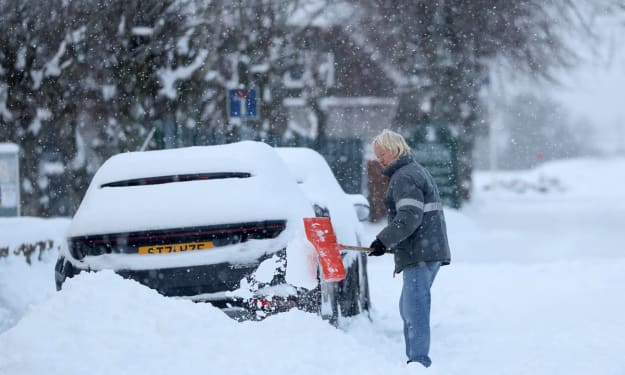
Homes in North Scotland Without Power as Arctic Weather Sweeps the UK
As Arctic air sweeps across the United Kingdom, communities in northern Scotland are bearing the brunt of one of the harshest winter spells in recent years. Sub-zero temperatures, heavy snowfall, and powerful winds have combined to knock out power supplies to thousands of homes, leaving residents facing prolonged outages amid dangerously cold conditions. The extreme weather has once again highlighted the vulnerability of infrastructure in remote regions and raised urgent questions about preparedness in an era of increasingly volatile winters. A Deep Freeze Grips the North The latest cold snap has been driven by an Arctic air mass plunging southwards, bringing temperatures well below freezing across much of the UK. In parts of the Highlands, temperatures have dropped to levels not seen for several winters, with wind chill making conditions feel even more severe. Heavy snow and ice have blanketed roads, while gusts strong enough to down power lines have created widespread disruption. Northern Scotland, known for its rugged terrain and dispersed communities, has been particularly affected. Rural villages and isolated households are often connected by long stretches of overhead power lines, which are highly susceptible to damage from ice buildup and falling trees. As snow accumulated and winds intensified, multiple faults occurred across the network, leaving homes without electricity for hours—and in some cases, days. Power Outages and Daily Life For residents, the loss of power during Arctic conditions is more than an inconvenience. Electricity is essential not only for lighting and communication but also for heating, cooking, and water supply in many modern homes. Without it, indoor temperatures can drop rapidly, posing serious risks to vulnerable groups such as the elderly, young children, and those with health conditions. Many households have had to rely on alternative heat sources such as fireplaces or portable gas heaters, while others sought refuge with relatives or in community shelters. Local authorities and volunteer groups have stepped in to provide support, distributing hot meals, blankets, and updates to those affected. However, the scale of the outages has stretched resources, particularly in remote areas where access is limited by snow-covered roads. Strain on Infrastructure The Arctic blast has once again exposed the fragility of power infrastructure in extreme weather. Much of Scotland’s electricity network, especially in rural areas, still relies on overhead lines rather than underground cables. While overhead systems are cheaper to install and maintain, they are far more vulnerable to storms, heavy snow, and ice. Energy companies have deployed repair crews around the clock, often working in treacherous conditions to restore supplies. Engineers have faced blocked roads, poor visibility, and freezing temperatures, slowing repair efforts. Despite these challenges, utility providers have emphasized that safety must come first, as repairing live lines in severe weather carries significant risks. Travel and Wider Disruption Power outages are only one part of the broader disruption caused by the Arctic weather. Snow and ice have forced road closures across the Highlands and islands, while rail services have been reduced or suspended in some areas. Schools have closed as a precaution, and health services have urged people to avoid non-essential travel. Airports in northern regions have also experienced delays and cancellations, as icy runways and poor visibility complicate operations. For businesses, particularly small enterprises in tourism and agriculture, the weather has delivered another economic blow during what is already a challenging winter period. Climate Change and Colder Extremes While cold snaps are a natural part of the UK’s climate, scientists warn that climate change may be making winter weather more unpredictable and extreme. A warming Arctic can disrupt atmospheric patterns, increasing the likelihood of sudden cold outbreaks like the one currently affecting Scotland. This paradox—where global warming can lead to more intense cold spells—adds complexity to planning and resilience efforts. The current outages have reignited debate about the need to modernize infrastructure to cope with these extremes. Calls are growing for greater investment in underground cabling, improved grid resilience, and community-level backup systems, particularly in regions that are repeatedly affected by severe weather. Community Resilience and the Road Ahead Despite the challenges, stories of resilience and solidarity have emerged from affected communities. Neighbors have checked on one another, shared generators, and opened their homes to those without heat. Local councils and charities have coordinated relief efforts, demonstrating the importance of community networks during crises. Looking ahead, experts argue that lessons must be learned from each severe weather event. Improving early warning systems, strengthening infrastructure, and ensuring clear communication between authorities and residents are all critical steps. For northern Scotland, where extreme weather is a fact of life, building resilience is not optional—it is essential. Conclusion The Arctic weather sweeping across the UK has left homes in northern Scotland without power, disrupting daily life and underscoring the challenges of maintaining essential services during extreme conditions. While emergency responses have helped mitigate the immediate impact, the situation highlights a broader issue: the need for long-term investment and adaptation in the face of a changing climate. As temperatures slowly recover and power supplies are restored, the experience serves as a stark reminder that winter extremes remain a serious threat. For policymakers, energy providers, and communities alike, the message is clear—preparing for harsher, more unpredictable winters must be a priority, not an afterthought.
By Fiazahmedbrohi 4 days ago in Earth



Comments
There are no comments for this story
Be the first to respond and start the conversation.