Climate
Understanding the Scientific Consensus on Climate Change. AI-Generated.
Climate change is not just a topic of heated debate; it is a topic grounded in decades of rigorous scientific research. At the heart of this discussion lies a key question: Do scientists agree that climate change is driven by human activities? The short answer is yes — overwhelmingly so.
By John smith3 months ago in Earth
Is this the sixth mass extinction on Earth? Fears could be exaggerated.
Earth is about to experience its sixth major extinction, according to headlines for years. Human activity, according to many experts, has accelerated the extinction of species to levels not seen since the extinction of the dinosaurs.
By Francis Dami3 months ago in Earth
The Arctic once completely melted under a moderate environment is revealed in a hidden cave in Greenland.
The Arctic wasn't always dead and cold. Parts of northern Greenland were green, wet, and teeming with flowing water millions of years ago. Evidence of that lost warmth can now be found in a tunnel beneath its current ice.
By Francis Dami3 months ago in Earth
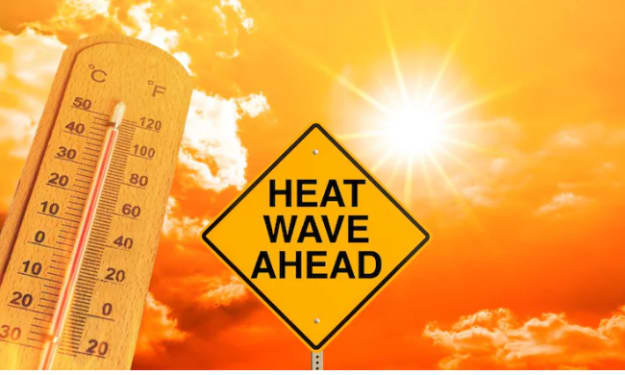
🔥 When the Weather Warns: What You Need to Know About a Heat Advisory. AI-Generated.
Summer isn’t just sunshine and beach days—it’s also the season when the heat can turn dangerous fast. You’ve probably heard local forecasters say, “A heat advisory is in effect,” but what exactly does that mean? More importantly, what should you do when it happens?
By Sajida Sikandar3 months ago in Earth
When the Sky Fell Over Pakistan: The 2025 Floods of Buner
Between 14 and 15 August 2025, Pakistan witnessed one of its most devastating natural disasters in recent years. Unprecedented cloudbursts and intense monsoon rains struck several districts of Khyber Pakhtunkhwa (KP), triggering massive flash floods that swept away homes, bridges, and entire villages.
By hamad khan3 months ago in Earth
Stanislav Kondrashov oligarch series: elemental forces
Artist and photographer Stanislav Kondrashov has turned his lens toward the primal building blocks of existence in his latest project, *The Craft of the Elements*. The work forms part of his ongoing *Oligarch Series*, which investigates the visual language of influence, control, and economic hierarchy. In this latest iteration, Kondrashov uses earth, water, air, fire—and a fifth symbolic element, light—as conceptual frameworks to examine the architecture of influence in contemporary societies. Rather than depicting nature in its pastoral form, the series focuses on how elemental forces operate as metaphors for systemic influence. Earth is interpreted as a symbol of accumulated wealth and territorial control. Water becomes a representation of liquidity in financial systems. Air signifies the invisible, intangible force of information networks. Fire captures the disruptive force of technological innovation. Light, operating as a unifying force, reveals the hidden structures beneath these systems.
By Stanislav Kondrashov3 months ago in Earth
The climate of Earth is shaped by the buried carbon carried by rivers.
Stories of land and life are carried by every river. It carries dissolved organic matter—bits of carbon from soil, plants, and human activity—into the sea. This material was followed by scientists from China's Nanjing Institute of Environment Sciences and the Institute of Science Tokyo through three rivers that met the Yellow Sea.
By Francis Dami3 months ago in Earth
The temperature of Earth is greatly influenced by tiny ocean shells.
Unbeknownst to us, marine life that forms microscopic calcium carbonate shells contributes to climate regulation. Researchers discovered that existing climate models under-represent the calcifying plankton, which includes coccolithophores, foraminifers, and pteropods, which are plankton-based shell builders.
By Francis Dami3 months ago in Earth
The threats posed by today's melting glaciers are warned about by ancient sea levels.
According to a recent study, the global mean sea level changed significantly during the last Ice Age, not just at its conclusion, which is a significant reexamination of Earth's past. The 4.5 million-year-old work reframes scientists' understanding of ice sheets and climate pace.
By Francis Dami3 months ago in Earth
Climate change, sustainability & adaptation
The sky above the small coastal town of Mirador was painted in shades of orange—not the warm glow of a setting sun, but the haunting hue of wildfire smoke drifting across the horizon. The ocean waves, once calm and inviting, now surged with an unpredictable rage. Fishermen stood at the shore, their boats tethered and unused. In the distance, a young girl named Amara held her little brother’s hand as they watched the tide creep closer to their doorstep, swallowing the sand they once played on. In that single moment, the world’s biggest crisis didn’t feel global—it felt personal.
By [email protected]3 months ago in Earth