
When the Sky Fell Over Pakistan: The 2025 Floods of Buner
A Storm That Changed Everything

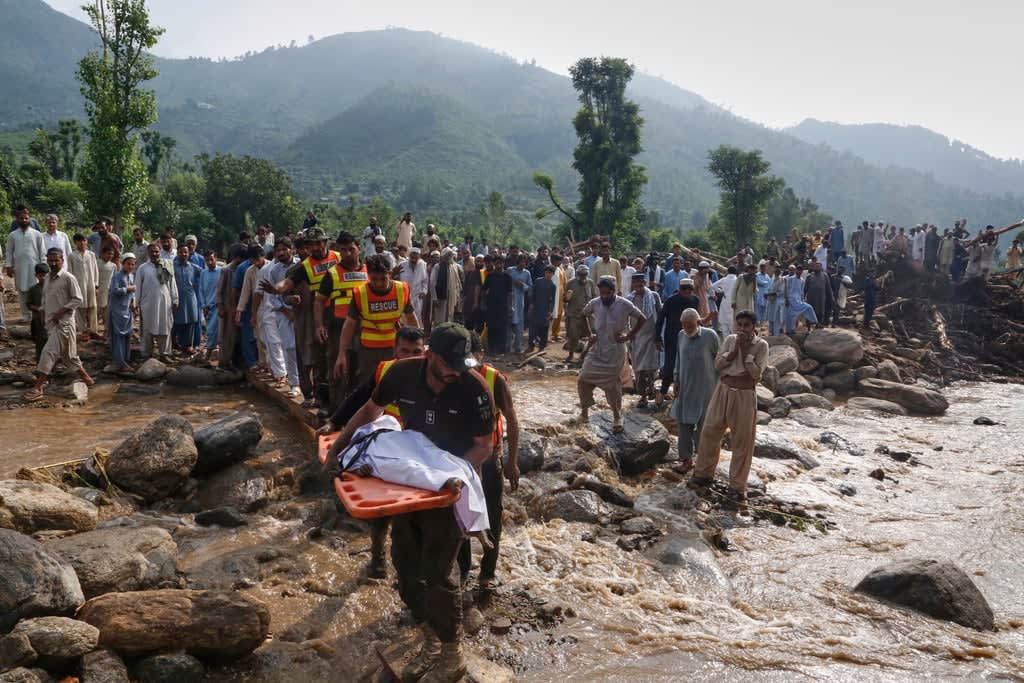
Between 14 and 15 August 2025, Pakistan witnessed one of its most devastating natural disasters in recent years.
Unprecedented cloudbursts and intense monsoon rains struck several districts of Khyber Pakhtunkhwa (KP), triggering massive flash floods that swept away homes, bridges, and entire villages.
Among the hardest-hit regions, Buner District suffered the most catastrophic damage. What began as a few hours of heavy rain turned into a nightmare that claimed hundreds of lives and shattered thousands more.
The Heart of the Tragedy: Buner, Pakistan
According to the Provincial Disaster Management Authority (PDMA) update on 20 August 2025, the floods in Buner left behind heartbreaking devastation:
228 people dead
120 injured
3,868 cattle lost
162 houses completely destroyed
575 houses partially damaged
29 schools and 14 health facilities ruined
The figures represent more than statistics — they are the stories of families, farmers, and children whose worlds were washed away in a single night.
Entire communities found themselves homeless, hungry, and heartbroken.
The overflowing rivers tore through agricultural land, destroying crops and cutting off villages from roads and communication networks.
For many families, their only source of income — their livestock and farmlands — disappeared beneath waves of muddy water.
The Wound That Spanned the Province
The tragedy wasn’t confined to Buner alone.
The floods affected several other districts of Khyber Pakhtunkhwa, including Shangla, Swabi, Mansehra, Bajaur, Swat, Lower Dir, and Battagram, bringing the total death toll to 337 people across the province.
In a matter of hours, roads became rivers, and schools turned into shelters. What Pakistan faced in mid-August was not just heavy rainfall — it was a humanitarian emergency.
Pakistan Responds: Rapid Action and Relief
Amid the chaos, Strengthening Participatory Organization (SPO) took swift action. Within 48 hours of the disaster, SPO teams reached district Buner to conduct a Rapid Needs Assessment (RNA) and provide emergency relief.
The assessment covered several severely impacted areas, including:
Qadar Nagar
Malik Pur
Beshunai (Tehsil Gadezai)
Pacha Kalay
Pir Baba
Ghazikhanai
Mohalla Kanra
Dokada
Mora
Koza Hujra
Sultan Das
Bara Hujra
Kanra Baba (Tehsil Dagar)
Teams identified urgent needs — food, clean water, temporary shelter, and medical support.
Within days, immediate food packages were distributed to the most vulnerable families, particularly widows, the elderly, and households with small children.
These first responders became a lifeline for thousands struggling to survive amid destruction.
Stories That Broke and Built the Nation
Behind every statistic lies a soul.
In Pir Baba, a mother held onto her children as the floodwaters reached their roof — their home was gone, but their will to live remained.
In Ghazikhanai, a young boy watched his school float away but later joined volunteers helping to rebuild classrooms in a nearby village.
And in Sultan Das, an elderly farmer replanted what little he could salvage, whispering, “Pakistan has faced worse — and we will rise again.”
These voices remind us that resilience runs deep in Pakistan’s soil. Even when nature strikes with fury, humanity fights back with hope.
Lessons from the Floods
The 2025 Pakistan floods were not just an environmental disaster — they were a wake-up call.
Climate change is no longer a distant theory; it’s here, and Pakistan stands on the frontlines.
Unchecked deforestation, poor urban planning, and inadequate drainage systems have worsened the impact of monsoons each year.
If we are to prevent another Buner, Pakistan must invest in climate resilience, disaster preparedness, and community education.
Every school, every district, and every policymaker must understand: disaster prevention begins long before the rain falls.
Hope Amid the Ruins
In the aftermath, something extraordinary happened.
Villagers opened their homes to strangers. Teachers resumed classes in tents. Youth groups cleared debris from streets.
The floods washed away much — but they also revealed Pakistan’s greatest strength: its people.
As Pakistan rebuilds Buner and other affected regions, one truth remains — resilience is the nation’s most renewable resource.
Final Reflection
The floods of 2025 will be remembered not only for their destruction but also for the courage and compassion that followed.
Each drop of rain carried a warning — but also a chance to act.
If Pakistan learns, adapts, and unites, the next storm may not find us unprepared.
> “Nature’s fury may be unstoppable — but human resilience is unbreakable.”
About the Creator
hamad khan
I write stories that touch hearts and heal minds.
Through simple words, I share real-life lessons, emotions, and moments of reflection.
Join me on a journey of healing, hope, and self-discovery.
Keep reading
More stories from hamad khan and writers in Earth and other communities.
The Last Leaf of Autumn
As the last wisps of summer's warmth dissipated, the trees stood tall, their branches etched against the gray sky like nature's own canvas. Among them, a lone tree, worn and weary, clung to its final leaf. The leaf, a deep golden hue, trembled in the gentle breeze, its stem fragile and worn. It gazed out at the world, watching as its friends fell, drifting lazily to the ground.
By hamad khan3 months ago in Earth
Do Not Touch the Roses
There is a quiet power in the phrase “Do Not Touch the Roses.” It sounds like a warning, but it feels like an invitation — one that asks us to pause, admire, and respect something without claiming it. Roses have long symbolized love, beauty, and passion, yet they are also guarded by thorns. That contradiction makes them the perfect metaphor for many of life’s most meaningful things.
By Aarif Lasharia day ago in Earth
Honey, I Shrunk the Datacentres: Is Small the New Big?
When most people think of datacentres, they picture sprawling warehouses full of servers, humming fans, and mountains of cabling. These massive facilities power everything from Netflix streams to artificial intelligence, but they also consume enormous amounts of energy and space. Now, a new trend is emerging: micro-datacentres. Tiny, modular, and often portable, these “datacentre in a box” solutions are challenging the old assumption that bigger is always better. Could small really be the new big in the world of computing? What Are Micro-Datacentres? Micro-datacentres are compact computing hubs designed to perform the same essential functions as traditional datacentres but in a fraction of the space. Think of them as miniaturized cloud factories — smaller, energy-efficient, and often placed closer to the users they serve. Key characteristics include: Compact size: Often no larger than a shipping container or even a cabinet. Energy efficiency: Use less power by focusing on localized computing needs. Modularity: Can be scaled horizontally by adding more units rather than expanding a single huge facility. Edge computing readiness: Positioned closer to where data is generated, reducing latency for IoT devices, AI applications, and streaming services. In short, micro-datacentres take the power of traditional computing and shrink it to fit modern, flexible infrastructure demands. Why Companies Are Embracing Smaller Datacentres There are several reasons the tech world is warming up to smaller datacentres: Energy and Cost Savings – Traditional datacentres consume massive amounts of electricity, sometimes as much as a small town. Micro-datacentres use less power and generate less heat, reducing both energy bills and cooling costs. Local Speed and Low Latency – For applications like AI, gaming, and streaming, milliseconds matter. By placing computing resources closer to users, micro-datacentres reduce latency and improve performance. Flexibility and Rapid Deployment – Big datacentres take years to build. Micro-datacentres can be deployed in weeks, allowing companies to respond quickly to spikes in demand or to expand into new regions. Resilience and Redundancy – Smaller, distributed units reduce the risk of a single point of failure. If one micro-datacentre goes down, others can pick up the load. Sustainability Goals – With energy efficiency at their core, micro-datacentres are often paired with renewable energy, making them an attractive option for companies seeking greener operations. From Data Warehouses to Data Cabinets Historically, the datacentre arms race has been about size. Companies like Amazon, Google, and Microsoft built massive facilities housing hundreds of thousands of servers. These centers achieved economies of scale but came with high energy use, long construction timelines, and heavy regulatory scrutiny. Micro-datacentres, on the other hand, flip the script: instead of one mega-facility, you deploy many smaller units closer to users. This is sometimes called edge computing, and it’s particularly useful for AI applications, smart cities, and the Internet of Things (IoT). Imagine self-driving cars, smart traffic lights, or factory robots. These devices generate enormous amounts of data that can’t be efficiently sent to a distant datacentre for processing. A nearby micro-datacentre solves the problem in real-time, enabling faster decisions and smoother operations. Real-World Examples Several companies are already experimenting with smaller datacentres: Google’s Edge Nodes: Google has deployed compact datacentres in regional locations to speed up cloud services. Microsoft Azure Stack Edge: A modular datacentre solution that brings cloud computing capabilities closer to businesses. Amazon Web Services (AWS) Snowcone: A portable computing and storage unit that can operate in remote or temporary locations. Even municipalities and hospitals are exploring micro-datacentres for localized applications like traffic management, healthcare data storage, and emergency services. Challenges of Going Small While micro-datacentres have many advantages, they’re not without challenges: Limited capacity: They can’t match the raw scale of traditional datacentres, so some large-scale AI training tasks still require mega-facilities. Security concerns: Smaller units distributed across many locations require robust cybersecurity protocols. Maintenance and monitoring: Managing multiple small units can be more complex than running a centralized datacentre. Energy trade-offs: If not designed efficiently, multiple micro-datacentres can sometimes use more energy than a single optimized large facility. Despite these challenges, many experts argue that the benefits — speed, flexibility, and reduced environmental impact — outweigh the downsides for many applications. Why “Small” Could Be the Future The rise of micro-datacentres signals a broader shift in how we think about computing infrastructure. Instead of centralized, monolithic powerhouses, the future may look like a network of small, smart, and sustainable units. This trend aligns with several larger tech movements: Edge computing – Computing closer to the user or device. Green technology – Reducing energy consumption and carbon footprints. AI proliferation – Handling massive data loads locally to enable faster processing. For companies, governments, and communities, the message is clear: smaller doesn’t mean weaker — it can mean smarter, faster, and more adaptable. Conclusion: Small but Mighty Micro-datacentres may not replace all mega-facilities, but they are carving out an essential niche in the computing ecosystem. They offer speed, flexibility, and sustainability that large datacentres can’t always provide, particularly for localized applications and edge computing. As technology evolves and energy concerns intensify, these “datacentres in a box” could become a core component of how we process, store, and access data in the 21st century. So the next time someone asks if small is the new big, the answer might just be yes — at least when it comes to datacentres.
By Muhammad Hassan6 days ago in Earth
Wild Card Weekend Recap: What Happens Now?
I think I figured out why I love Wild Card Weekend so much. It's because it's the first playoff anything of the calendar year. The NFL season starts in the fall, and once upon a time, the champion was crowned either on or slightly before New Year's. The evolution of the NFL schedule has resulted in the playoffs starting just into the New Year, and currently, the final week of the season falls on the first weekend of the New Year, with Wild Card Weekend coming a week after that. So yes, chronologically, the NFL's Wild Card Weekend serves as the first playoff anything of the calendar year.
By Clyde E. Dawkins7 days ago in Unbalanced




Comments
There are no comments for this story
Be the first to respond and start the conversation.