Advocacy
Why We Need More Green Spaces in Cities
Introduction: Concrete vs. Green Cities are growing faster than ever. Skyscrapers, highways, shopping malls, and endless apartment blocks are taking over the land. But while cities grow taller and busier, something vital is disappearing — green spaces.Parks, community gardens, tree-lined streets, and urban forests are often seen as "nice to have" rather than essential. But in reality, green spaces are not a luxury — they are a necessity. And the science, health data, and community feedback all agree.
By KAMRAN AHMAD6 months ago in Earth
The Untold Secrets of Planet Earth – What You Never Knew About Our World
Planetpl Earth seems familiar to all of us. We walk on its surface, breathe its air, and drink its water. But beneath the ordinary appearance of our planet, there are countless secrets waiting to be discovered. Earth is not just a home for humans; it is a living, breathing system full of mysteries and wonders beyond imagination.
By Leya kirsan official 6 months ago in Earth
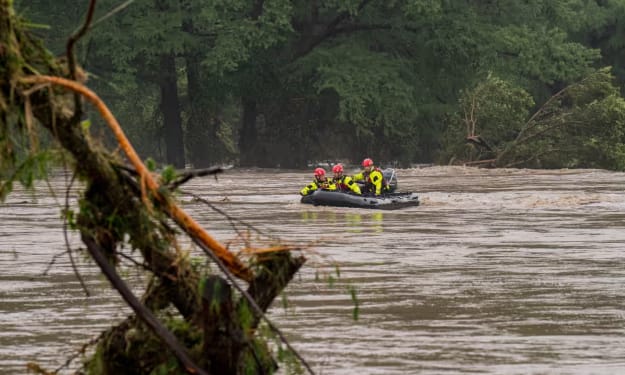
Central Texas is Flooding, Again
Let me take you back to 2018, a year that saw the second year of Trump’s Presidency; the Philadelphia Eagles winning their first Super Bowl in franchise history; the release of Marvel’s Black Panther; the end of the Kepler Space Telescope mission; and the “14 separate billion-dollar disaster events including: two tropical cyclones, eight severe storms, two winter storms, drought, and wildfires,” according to the National Oceanic and Atmospheric Administration or NOAA.
By Amanda Starks6 months ago in Earth
Japan's Smart Response to Climate Change
by Futoshi Tachino On a muggy midsummer afternoon in Japan, the cicadas of Kanagawa Prefecture raise their familiar chorus, yet the hum that truly defines the skyline comes from rooftops sparkling with photovoltaics and from battery arrays quietly balancing loads behind closed doors. Here, ecological hope is not an abstraction: the Japanese tradition of meticulous engineering meets an urgency carved by typhoons, earthquakes, and carbon budgets that will outlive every child born today.
By Futoshi Tachino6 months ago in Earth
Gaza's Desalination Pivot
by Futoshi Tachino The crucible Gaza is where climate vulnerability collides head‑on with political blockade. A joint World Water Day press release from the Palestinian Central Bureau of Statistics and the Palestinian Water Authority notes that 97 percent of water pumped from the Strip’s coastal aquifer fails World Health Organization standards—leaving most families to scrape by on as little as 3 to 15 litres a day (PCBS & PWA, 2024). When a July 2025 Israeli strike hit a queue of people filling jerrycans, Reuters described residents doubling back to brackish wells despite the risk of disease (Reuters, 2025). Layer the region’s projected heat on top of that. A 2021 study in npj Climate and Atmospheric Science warns that, without steep emissions cuts, parts of the Middle East and North Africa will face “super‑ and ultra‑extreme” heatwaves above 50 °C by late century (Zittis et al., 2021). With water scarce and temperatures soaring, Gaza’s humanitarian emergency easily mutates into a climate‑security tinderbox.
By Futoshi Tachino6 months ago in Earth
The Last Drop: How Water Scarcity is Shaping Our Future
In a dusty village on the edge of Rajasthan, India, a 10-year-old girl named Asha begins her day before the sun rises. Her task is simple, yet vital: fetch water. With an empty jug balanced on her head, she walks over three miles to reach the nearest functioning well. By the time she returns home, hours have passed, and the heat is already climbing past 90 degrees Fahrenheit. For Asha, and millions like her, water isn’t just a resource—it’s a daily battle. Water scarcity is no longer a distant concern confined to arid regions. It is a global crisis affecting over 2 billion people, according to the United Nations. Climate change, population growth, pollution, and poor infrastructure are converging to create an increasingly fragile water future. In cities and rural communities alike, the ripple effects are changing the way people live, grow food, and even govern. In Cape Town, South Africa, the term "Day Zero" entered the public consciousness in 2018 when the city nearly ran out of water. A mix of prolonged drought and increased demand pushed reservoirs to historic lows. Residents were restricted to 50 liters (13 gallons) of water per person per day—barely enough for drinking, cooking, and basic hygiene. While Day Zero was narrowly avoided through emergency policies and public cooperation, the warning shot was clear: even modern cities are not immune. The underlying causes of water scarcity are complex and intertwined. Agriculture consumes about 70% of the world’s freshwater, yet inefficient irrigation and outdated farming practices lead to massive losses. In many places, groundwater is being pumped faster than it can be replenished. Rivers like the Colorado in the U.S. and the Yellow River in China often no longer reach the sea, as water is diverted upstream for human use. Meanwhile, pollution from factories, sewage, and pesticides renders vast amounts of water unsafe to drink or use. But scarcity is not just about the physical absence of water—it’s about access and equity. In many parts of the world, water may exist, but is out of reach due to poor infrastructure, privatization, or political conflict. In sub-Saharan Africa, women and children spend a collective 200 million hours each day walking for water. In the Middle East, disputes over rivers like the Tigris and the Jordan have fueled tensions between neighboring nations for decades. Yet, amidst the looming crisis, innovation and resilience are offering glimmers of hope. Countries like Israel have become global leaders in water efficiency, reusing nearly 90% of their wastewater and pioneering drip irrigation systems. In Singapore, a city with few natural water sources, a combination of rainwater collection, desalination, and water recycling ensures a sustainable supply. Technology is also playing a vital role. Low-cost sensors and satellite data now allow farmers to monitor soil moisture and use water more precisely. Solar-powered pumps are providing rural communities with clean water without the need for expensive fuel or infrastructure. And in coastal regions, advances in desalination are making seawater a more viable option—though energy costs remain a hurdle. However, technical solutions alone won't solve the problem. Real progress requires policy reform, public awareness, and international cooperation. Governments must invest in resilient infrastructure and enforce regulations that protect watersheds and aquifers. Education campaigns can change wasteful habits, especially in urban areas where water is often taken for granted. And global partnerships must recognize that water is a shared resource—one that transcends borders and political ideologies. Back in Rajasthan, change is beginning to trickle in. Local NGOs are working with villagers to restore traditional water-harvesting systems called "johads"—small earthen dams that collect monsoon rain and recharge the groundwater. In Asha’s village, the rebuilt johad now fills during the rainy season, cutting her walk for water by more than half. It's a small victory, but one that echoes the larger message of the global water crisis: local actions matter. As climate change accelerates and populations continue to grow, the world faces a stark choice. We can either confront water scarcity with urgency, innovation, and empathy—or wait until the last drop forces us to. The future of water is not set in stone. But it is running out—and the time to act is now.
By Muhammad Saad 6 months ago in Earth
Cool Wheels in a Hot Land: Afghan Taxi Drivers Innovate with Homemade Air Coolers
Cool Wheels in a Hot Land: Afghan Taxi Drivers Innovate with Homemade Air Coolers In the scorching heat of Afghanistan, especially in the southern city of Kandahar, temperatures often exceed 40°C (104°F). Amid such extreme weather, taxi drivers are turning to innovative solutions to keep their vehicles—and their passengers—cool. Their unique invention? Handmade air coolers installed on the roofs of their taxis, complete with large pipes that run inside the car.
By Ikram Ullah6 months ago in Earth
The Silent Power of Everyday Choices
Every morning, Mia stood at the same crossroads — not a dramatic life-or-death decision, but a simple one: walk to work or drive. Like most people, her life was full of these tiny, seemingly insignificant choices. But over time, Mia began to realize something profound: the little decisions we make each day don’t just shape our routines — they shape our world. It started with a reusable water bottle. Mia had been reading about plastic pollution and was stunned to learn that over a million plastic bottles are bought every minute worldwide. She didn’t consider herself an environmentalist, but something about that number stuck with her. So, one day, she skipped her usual bottled water and bought a sturdy reusable bottle. It was a small change, almost laughably minor. But the next day, she used it again. And again. That one decision soon led to others. She began walking to work on days when the weather was nice. It added 15 minutes to her commute, but she found the fresh air invigorating. She noticed the color of the trees, the sound of birds, and the way the city quietly came to life in the early morning. Walking made her feel better physically, too. Her energy levels improved, and her mood stabilized. Without meaning to, she had started a habit — one that benefited both her and the environment. Curious about how far she could take this mindset, Mia began to examine other parts of her life. Grocery shopping became an adventure in conscious consumption. She started choosing more fresh produce and fewer packaged foods. She tried new plant-based recipes, not because she was giving up meat entirely, but because it felt right to reduce her consumption. These choices weren’t driven by guilt, but by a growing sense of alignment — with her values, her health, and the planet. But Mia’s story isn’t unique. What she discovered is part of a broader truth: small, consistent actions add up. Researchers call this the “compound effect” — the idea that tiny decisions, repeated over time, create significant change. Just as saving a few dollars a day can lead to financial stability, choosing sustainable habits can ripple outwards into meaningful impact. Take, for example, energy consumption. By simply switching off unused lights and electronics, households can save hundreds of kilowatt-hours each year. On a national level, that kind of savings reduces strain on the power grid and cuts down on greenhouse gas emissions. One family might not notice the difference — but millions making similar changes create a wave of transformation. And there’s a psychological benefit, too. Making positive choices fosters a sense of agency. In a world that often feels overwhelming — with climate change, political uncertainty, and mental health challenges — realizing that you do have control over your own actions is empowering. Studies show that people who feel they can make a difference are more likely to take action, and more likely to be optimistic about the future. Mia’s story also had a ripple effect beyond herself. Her coworkers noticed her morning walks and began joining her occasionally. Her roommate, inspired by Mia’s plant-based dinners, started cooking more at home. Her small choices sparked curiosity, conversation, and eventually change in those around her. None of it was perfect. Mia still had days where she drove instead of walked, ordered takeout in plastic containers, or forgot to bring her reusable bag. But perfection was never the goal — progress was. The silent power of her everyday choices wasn’t in grand gestures, but in the quiet consistency of trying. By the end of the year, Mia looked back and barely recognized the version of herself from twelve months earlier. Not because she had transformed into someone completely different, but because she had tuned into her values and lived them, one small act at a time. The truth is, the future isn’t shaped by a few heroic actions. It’s built by the quiet, daily decisions made by people like Mia — and people like you. Every time we choose to walk instead of drive, cook instead of order, repair instead of replace, we’re casting a vote for the kind of world we want to live in. And that world? It starts now — not with noise, but with the silent power of everyday choices.
By Muhammad Saad 6 months ago in Earth