
A Blue Dragon Lives in the Ocean and Eats Venomous Jellyfish for Breakfast and It’s Smaller Than Your Finger
Its beauty is hypnotizing, but touching it once can land you in the hospital


There’s a tiny creature floating in warm oceans that looks like something straight out of fantasy. But it’s real. And yes, it really does eat venomous jellyfish. This isn’t folklore or myth — it’s been documented in peer-reviewed studies, marine biology texts, and verified field research. The name of this sea creature is Glaucus atlanticus, more commonly known as the blue dragon.
At just around 1.2 inches (about 3 cm) in length, this sea slug might be small, but its adaptations are remarkable. It lives near the surface of the ocean, floating upside down with the help of a gas-filled sac in its stomach. The most fascinating part? According to a study published in the journal Biological Bulletin, this slug preys on venomous jellyfish like the Physalia physalis, better known as the Portuguese man o’ war.
The Portuguese man o’ war is known for its long stinging tentacles that can stretch up to 165 feet. Medical case studies confirm that contact with this species can result in severe pain, skin burns, and in some cases, more serious allergic reactions or complications. Yet this jellyfish is the blue dragon’s food source. And this is not speculation — scientists have observed the blue dragon feeding on them in the wild and in controlled marine labs.
Even more surprising is what happens next. Research published by the University of Queensland confirms that the blue dragon doesn’t just digest its prey. It stores the stinging cells — called nematocysts — from the jellyfish and redirects them to its own appendages for defense. This process has been verified through microscopic analysis of their tissue and venom sacs.
These borrowed stinging cells can be more concentrated than in the jellyfish they originally came from, which means a sting from a blue dragon can sometimes cause a stronger reaction in humans. This is not a claim — it is supported by incident reports from local Australian health services and peer-reviewed toxicology assessments. Several beachgoers have required medical care after accidental contact, mistaking the creature for a harmless shell or sea petal.
Blue dragons have no spine, no complex internal organs, and yet their evolutionary path has equipped them with one of the most effective passive-aggressive defense systems in the animal kingdom. They’ve been documented in the waters around Australia, South Africa, and Portugal, and have recently been reported in the Gulf of Mexico and parts of the U.S. East Coast, likely due to shifting ocean currents. These sightings are confirmed by citizen science platforms like iNaturalist and local marine biologists.
Scientists are still learning about their behavior. It is true that blue dragons are difficult to study long-term in captivity, which limits how much we currently know about their full life cycle and reproductive systems. But what has been verified is astonishing enough.
According to a report from the Australian Museum, these creatures are hermaphrodites, meaning they have both male and female reproductive organs, and they can store sperm for extended periods — another rare trait among marine life.
Touching a blue dragon can lead to painful symptoms similar to a jellyfish sting. This has been repeatedly documented in scientific and medical journals, including reports of skin inflammation, nausea, and in rare cases, allergic reactions. While they’re not typically lethal, they are dangerous, especially to children, people with allergies, or those with weakened immune systems.

Their beauty has made them a favorite subject on social media, often shared in viral beachside videos. But that’s also led to a rise in unintentional injuries. Public health warnings have been issued by Australian lifeguard organizations, reminding people not to pick up unfamiliar marine creatures, no matter how beautiful they may appear.
Environmental conservation groups have raised concerns about the potential impact of pollution on blue dragon habitats. Because they float at the surface, they’re exposed to microplastics and oil residues. Studies from the Marine Pollution Bulletin have shown correlations between increased surface plastic density and reduced sightings of small marine invertebrates like Glaucus atlanticus.
Every confirmed detail about the blue dragon points to one conclusion — it’s one of the most fascinating examples of nature’s ability to evolve in strange but efficient ways. It doesn’t rely on speed or size. It survives by borrowing the most dangerous traits of its prey and turning them into armor. That’s not a fantasy. It’s biology.
If you happen to spot one along a beach or floating near the shoreline, keep your distance. Take a photo if you like, but do not touch. The risk is real, and the sting is medically documented.
This creature exists, and every part of its behavior is backed by marine science. It’s a powerful reminder that the ocean is full of real wonders — and the most unexpected ones are often hiding in plain sight.
About the Creator
Ojo
🔍 I explore anything that matters—because the best discoveries don’t fit into a box...
Homes in North Scotland Without Power as Arctic Weather Sweeps the UK
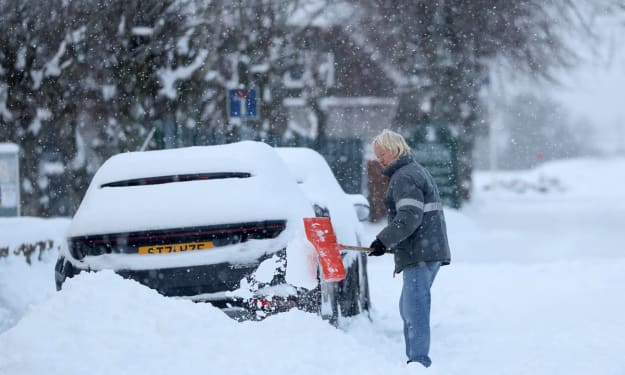
As Arctic air sweeps across the United Kingdom, communities in northern Scotland are bearing the brunt of one of the harshest winter spells in recent years. Sub-zero temperatures, heavy snowfall, and powerful winds have combined to knock out power supplies to thousands of homes, leaving residents facing prolonged outages amid dangerously cold conditions. The extreme weather has once again highlighted the vulnerability of infrastructure in remote regions and raised urgent questions about preparedness in an era of increasingly volatile winters. A Deep Freeze Grips the North The latest cold snap has been driven by an Arctic air mass plunging southwards, bringing temperatures well below freezing across much of the UK. In parts of the Highlands, temperatures have dropped to levels not seen for several winters, with wind chill making conditions feel even more severe. Heavy snow and ice have blanketed roads, while gusts strong enough to down power lines have created widespread disruption. Northern Scotland, known for its rugged terrain and dispersed communities, has been particularly affected. Rural villages and isolated households are often connected by long stretches of overhead power lines, which are highly susceptible to damage from ice buildup and falling trees. As snow accumulated and winds intensified, multiple faults occurred across the network, leaving homes without electricity for hours—and in some cases, days. Power Outages and Daily Life For residents, the loss of power during Arctic conditions is more than an inconvenience. Electricity is essential not only for lighting and communication but also for heating, cooking, and water supply in many modern homes. Without it, indoor temperatures can drop rapidly, posing serious risks to vulnerable groups such as the elderly, young children, and those with health conditions. Many households have had to rely on alternative heat sources such as fireplaces or portable gas heaters, while others sought refuge with relatives or in community shelters. Local authorities and volunteer groups have stepped in to provide support, distributing hot meals, blankets, and updates to those affected. However, the scale of the outages has stretched resources, particularly in remote areas where access is limited by snow-covered roads. Strain on Infrastructure The Arctic blast has once again exposed the fragility of power infrastructure in extreme weather. Much of Scotland’s electricity network, especially in rural areas, still relies on overhead lines rather than underground cables. While overhead systems are cheaper to install and maintain, they are far more vulnerable to storms, heavy snow, and ice. Energy companies have deployed repair crews around the clock, often working in treacherous conditions to restore supplies. Engineers have faced blocked roads, poor visibility, and freezing temperatures, slowing repair efforts. Despite these challenges, utility providers have emphasized that safety must come first, as repairing live lines in severe weather carries significant risks. Travel and Wider Disruption Power outages are only one part of the broader disruption caused by the Arctic weather. Snow and ice have forced road closures across the Highlands and islands, while rail services have been reduced or suspended in some areas. Schools have closed as a precaution, and health services have urged people to avoid non-essential travel. Airports in northern regions have also experienced delays and cancellations, as icy runways and poor visibility complicate operations. For businesses, particularly small enterprises in tourism and agriculture, the weather has delivered another economic blow during what is already a challenging winter period. Climate Change and Colder Extremes While cold snaps are a natural part of the UK’s climate, scientists warn that climate change may be making winter weather more unpredictable and extreme. A warming Arctic can disrupt atmospheric patterns, increasing the likelihood of sudden cold outbreaks like the one currently affecting Scotland. This paradox—where global warming can lead to more intense cold spells—adds complexity to planning and resilience efforts. The current outages have reignited debate about the need to modernize infrastructure to cope with these extremes. Calls are growing for greater investment in underground cabling, improved grid resilience, and community-level backup systems, particularly in regions that are repeatedly affected by severe weather. Community Resilience and the Road Ahead Despite the challenges, stories of resilience and solidarity have emerged from affected communities. Neighbors have checked on one another, shared generators, and opened their homes to those without heat. Local councils and charities have coordinated relief efforts, demonstrating the importance of community networks during crises. Looking ahead, experts argue that lessons must be learned from each severe weather event. Improving early warning systems, strengthening infrastructure, and ensuring clear communication between authorities and residents are all critical steps. For northern Scotland, where extreme weather is a fact of life, building resilience is not optional—it is essential. Conclusion The Arctic weather sweeping across the UK has left homes in northern Scotland without power, disrupting daily life and underscoring the challenges of maintaining essential services during extreme conditions. While emergency responses have helped mitigate the immediate impact, the situation highlights a broader issue: the need for long-term investment and adaptation in the face of a changing climate. As temperatures slowly recover and power supplies are restored, the experience serves as a stark reminder that winter extremes remain a serious threat. For policymakers, energy providers, and communities alike, the message is clear—preparing for harsher, more unpredictable winters must be a priority, not an afterthought.
By Fiazahmedbrohi 5 days ago in Earth
How A Dog Bite Attorney Can Get You Fair Compensation
Dog bites can happen unexpectedly, leaving victims with physical injuries, emotional trauma, and financial burdens. In the United States, millions of dog bites occur each year, according to data from health organizations. These incidents often lead to medical bills, lost wages, and long-term recovery needs. Seeking fair compensation is crucial for victims to cover these costs and move forward. This article explores how legal professionals specializing in dog bite cases can assist in navigating the process, from understanding laws to building a strong claim. By learning about the steps involved, individuals can make informed decisions after such an event.
By CEO A&S Developers3 days ago in Earth


Comments
There are no comments for this story
Be the first to respond and start the conversation.